Commercial Ice Machines & Ice Makers
Source a commercial ice machine for restaurants, hotels, bars, cafés, supermarkets, seafood displays and foodservice projects. PRIME helps overseas buyers compare ice type, daily production capacity, storage-bin volume, cooling method, water conditions, drainage, electrical configuration and export packaging before quotation.
Commercial ice-machine selection should consider more than the nominal kilograms produced in 24 hours. Peak demand, storage capacity, ambient temperature, inlet-water temperature, water quality, drainage and ventilation can all affect the final configuration.
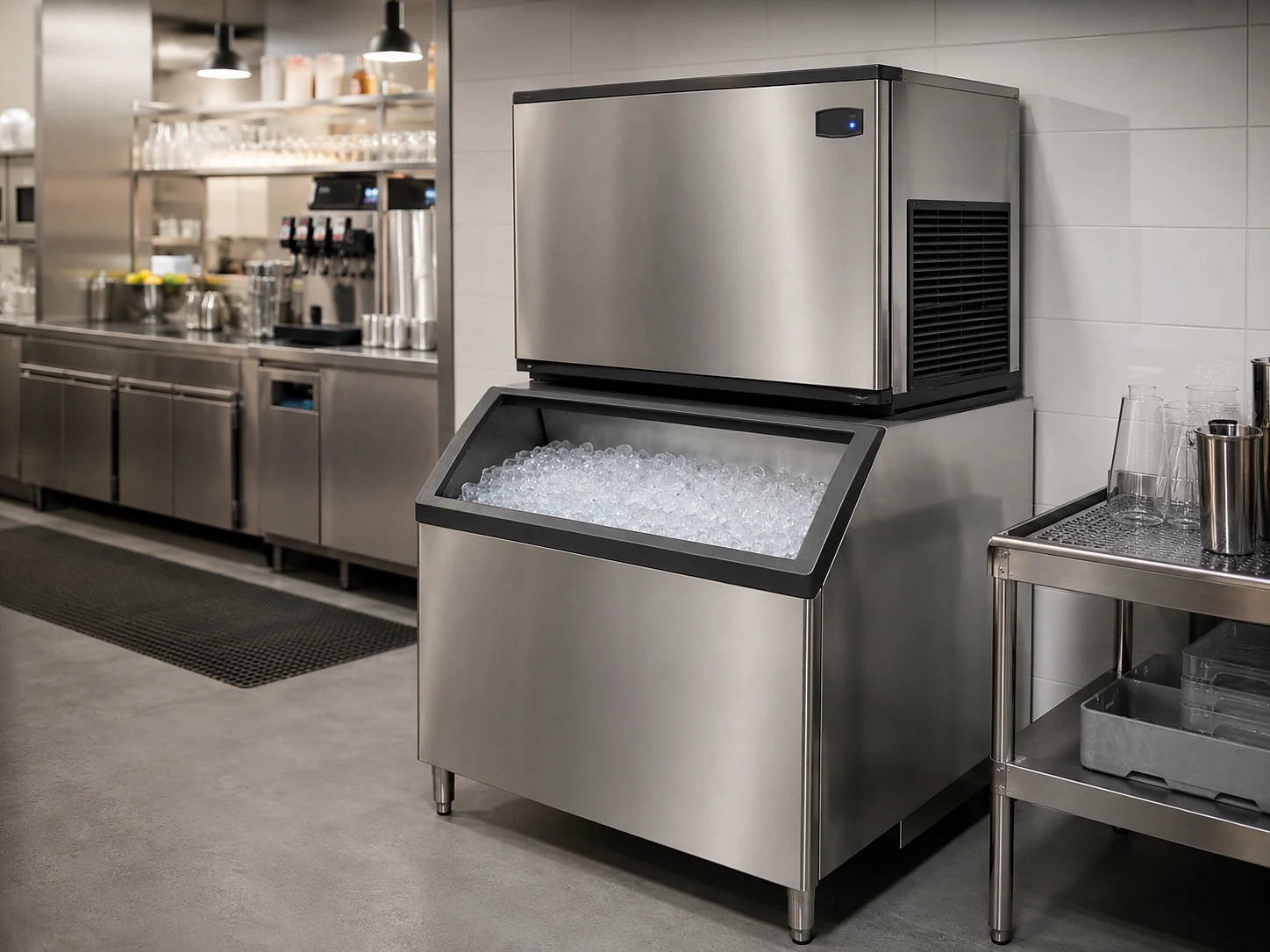
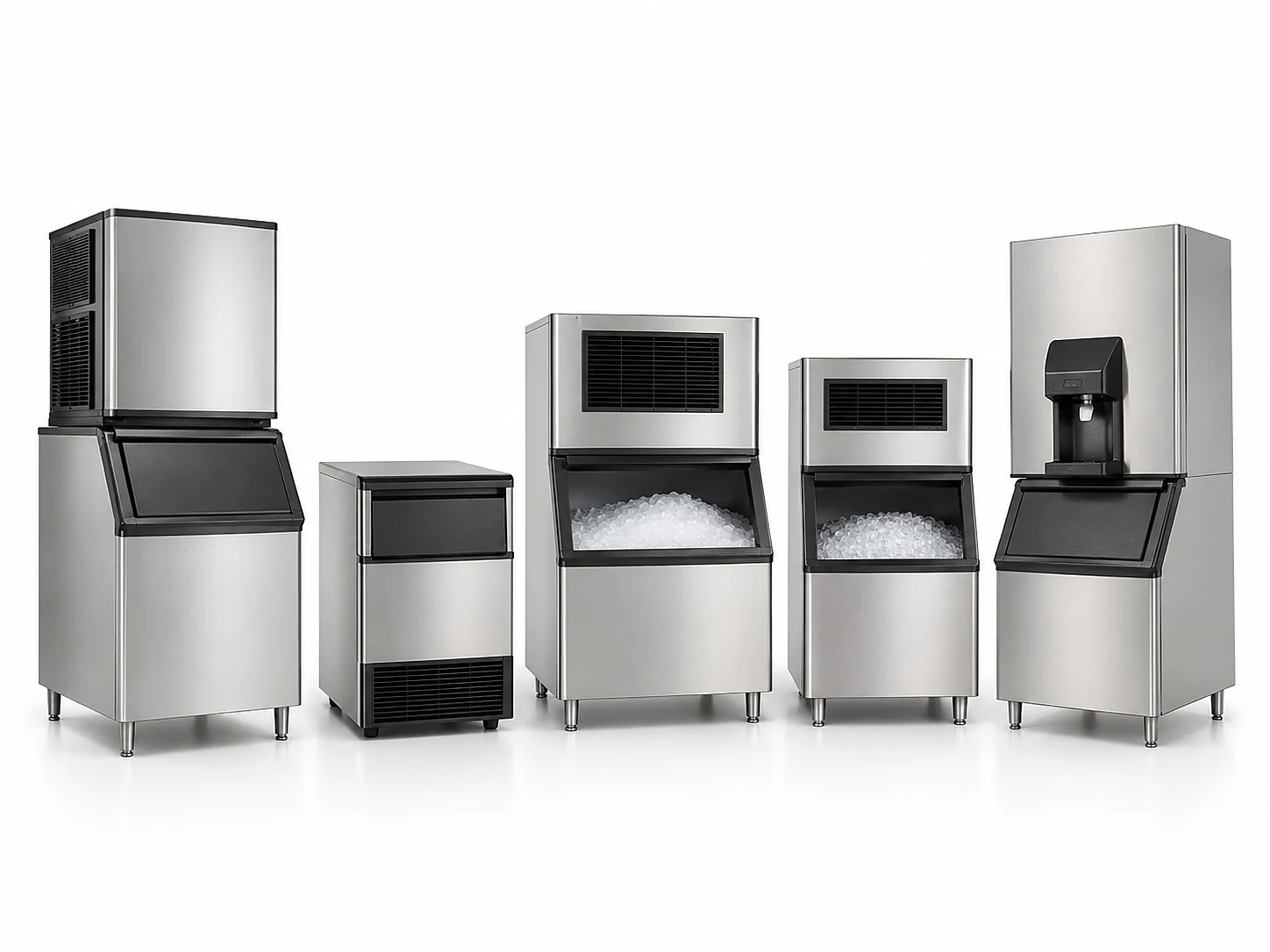
Commercial ice machine configurations for different applications
The correct machine depends on ice shape, daily consumption, peak-hour demand, storage-bin capacity and installation conditions. PRIME helps buyers review five common product directions before matching suitable suppliers.
Commercial ice machines, storage bins and dispensing equipment
Begin with the required ice type and actual application, then compare production capacity, storage, cooling method, water conditions, drainage and electrical configuration.
 01
01
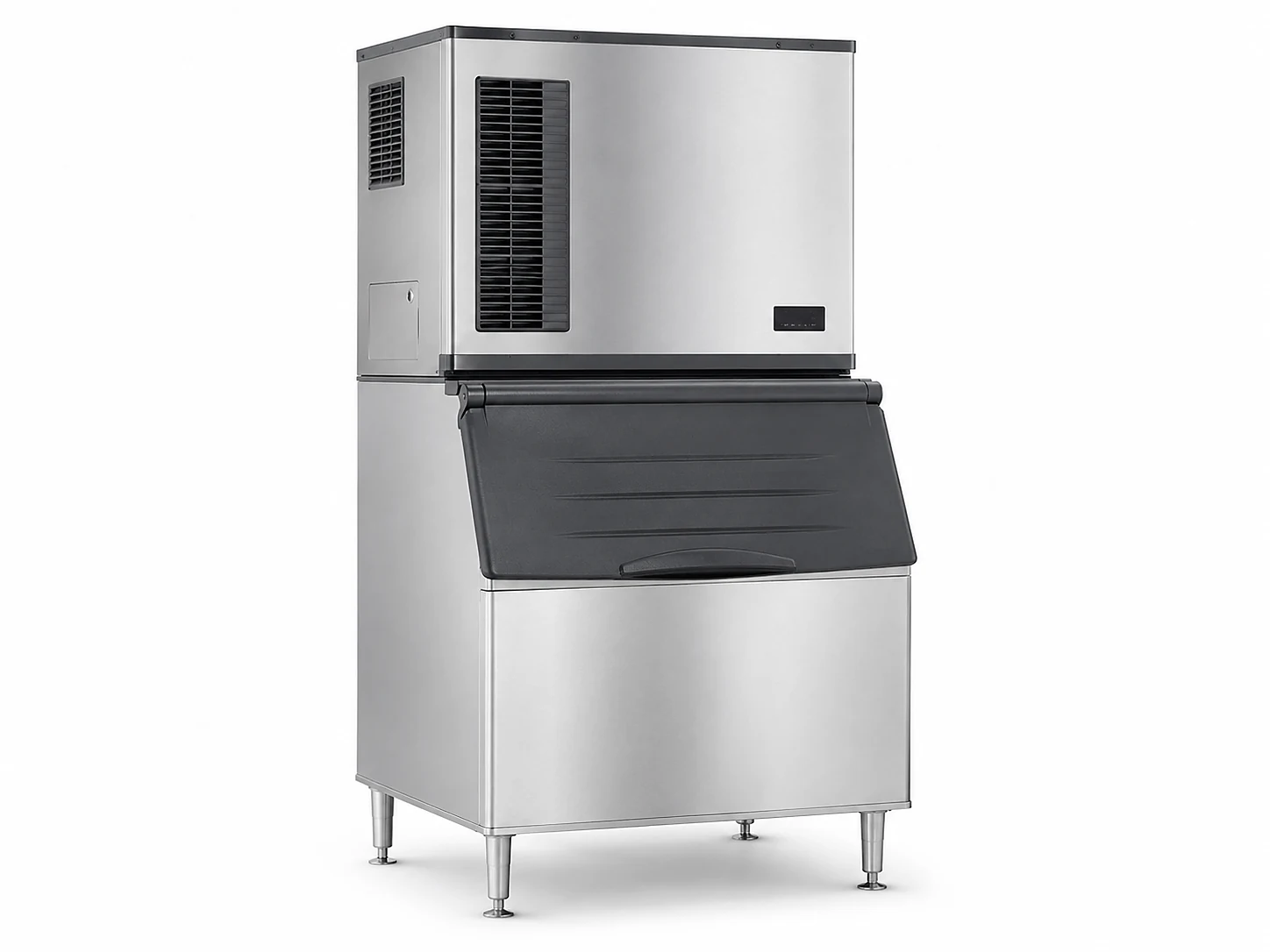
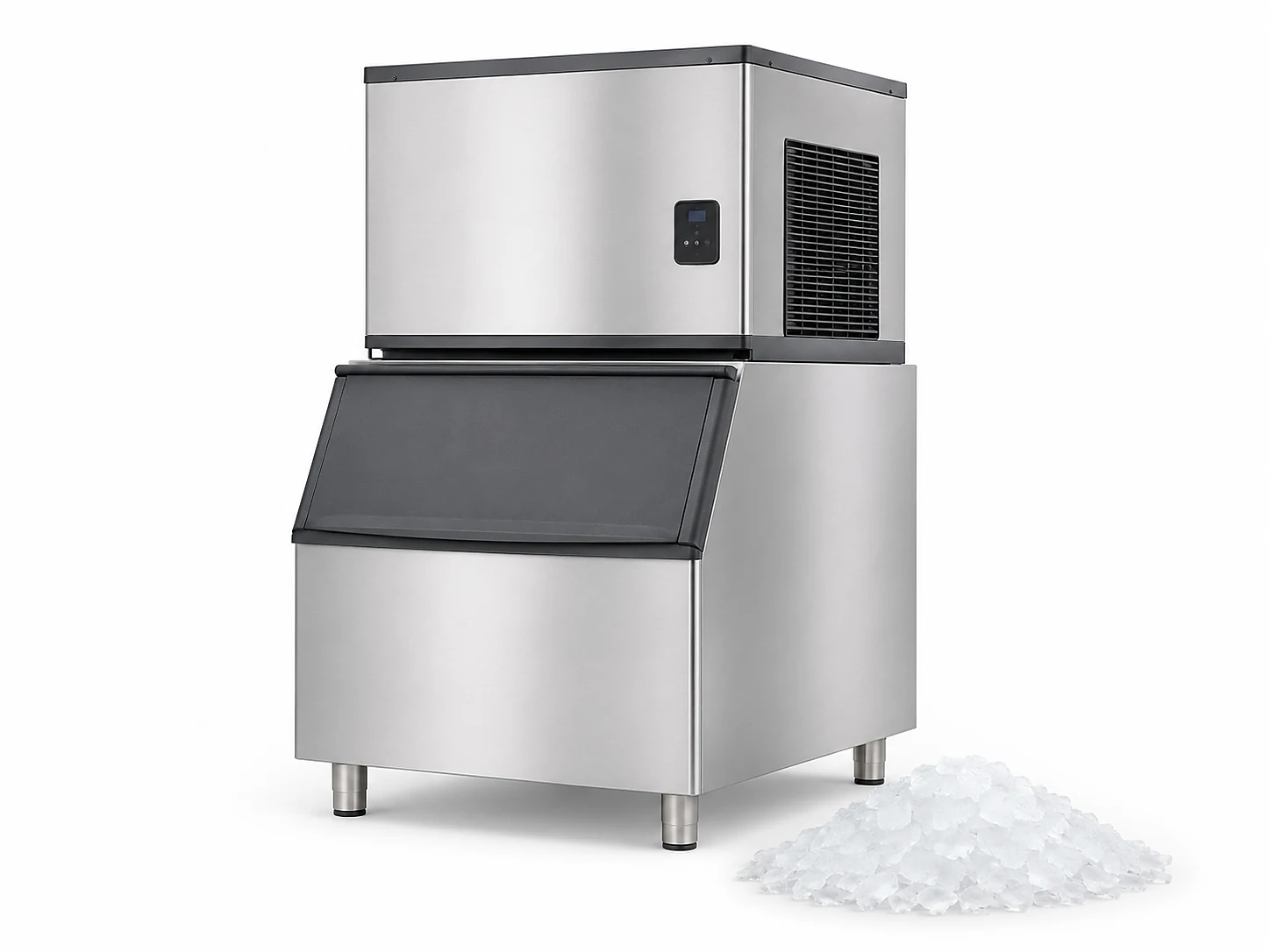
Modular Cube Ice Machines
Separate ice-making heads installed above matched storage bins for restaurants, hotels, bars and high-volume foodservice operations.
 02
02
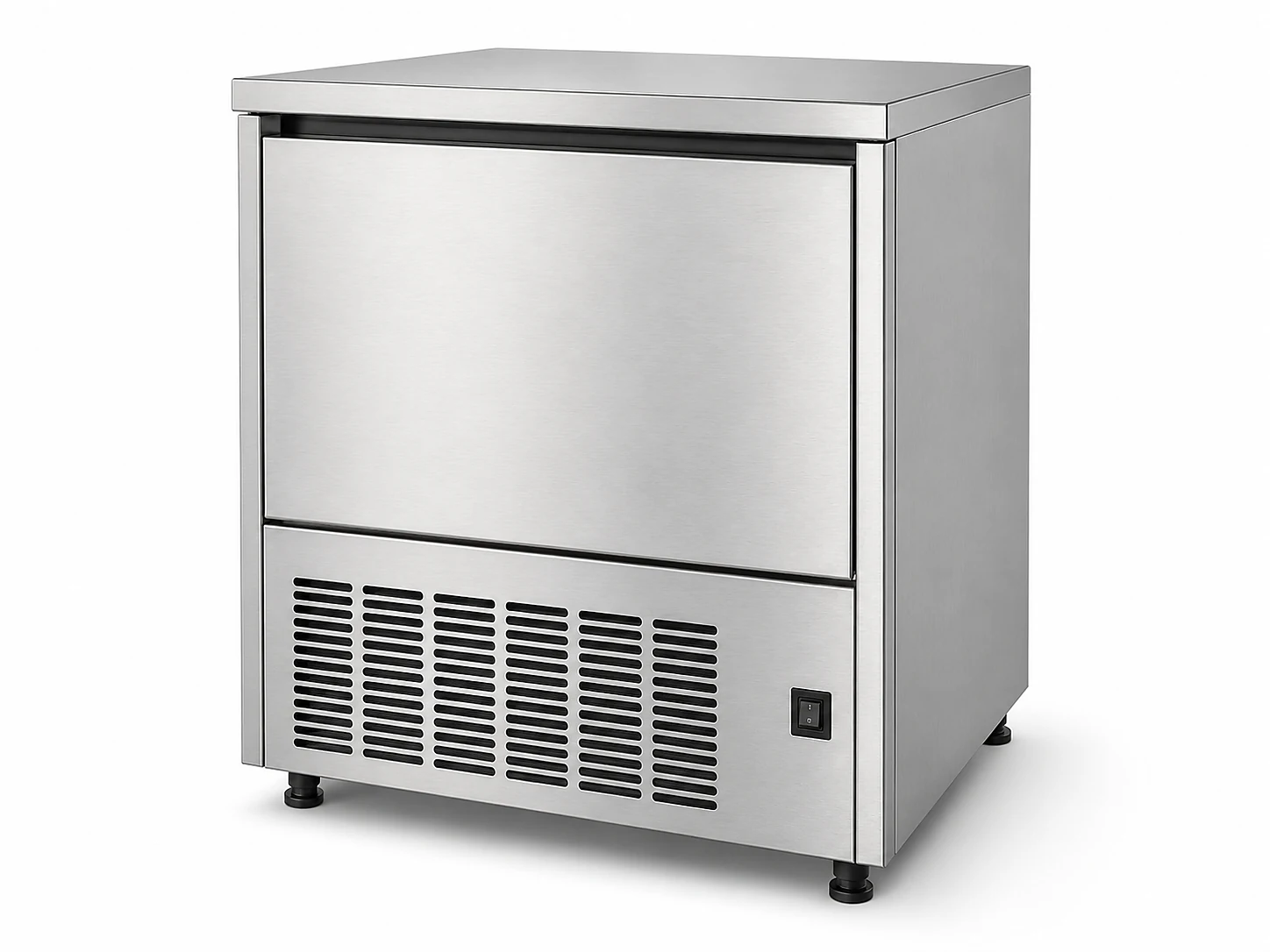
Undercounter Ice Makers
Compact stainless steel units combining ice production and storage for cafés, bars, offices and smaller service areas.
 03
03
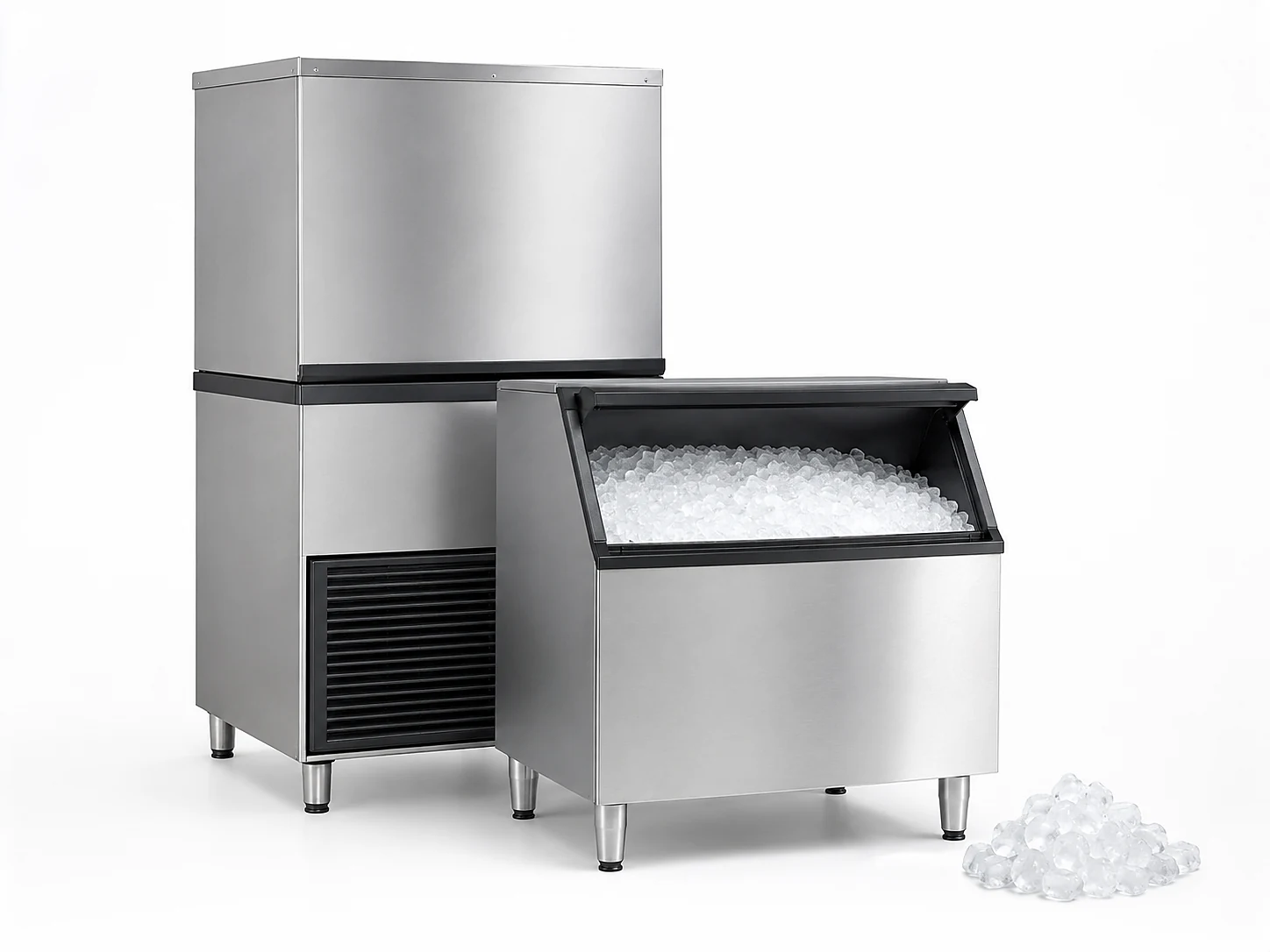
Commercial Flake Ice Machines
Soft, thin and moldable flake ice for seafood displays, meat presentation, salad bars and supermarket food merchandising.
 04
04
Nugget & Cubelet Ice Machines
Small compressed or irregular ice pieces for beverage service, hospitality and applications requiring a softer ice texture.
 05
05
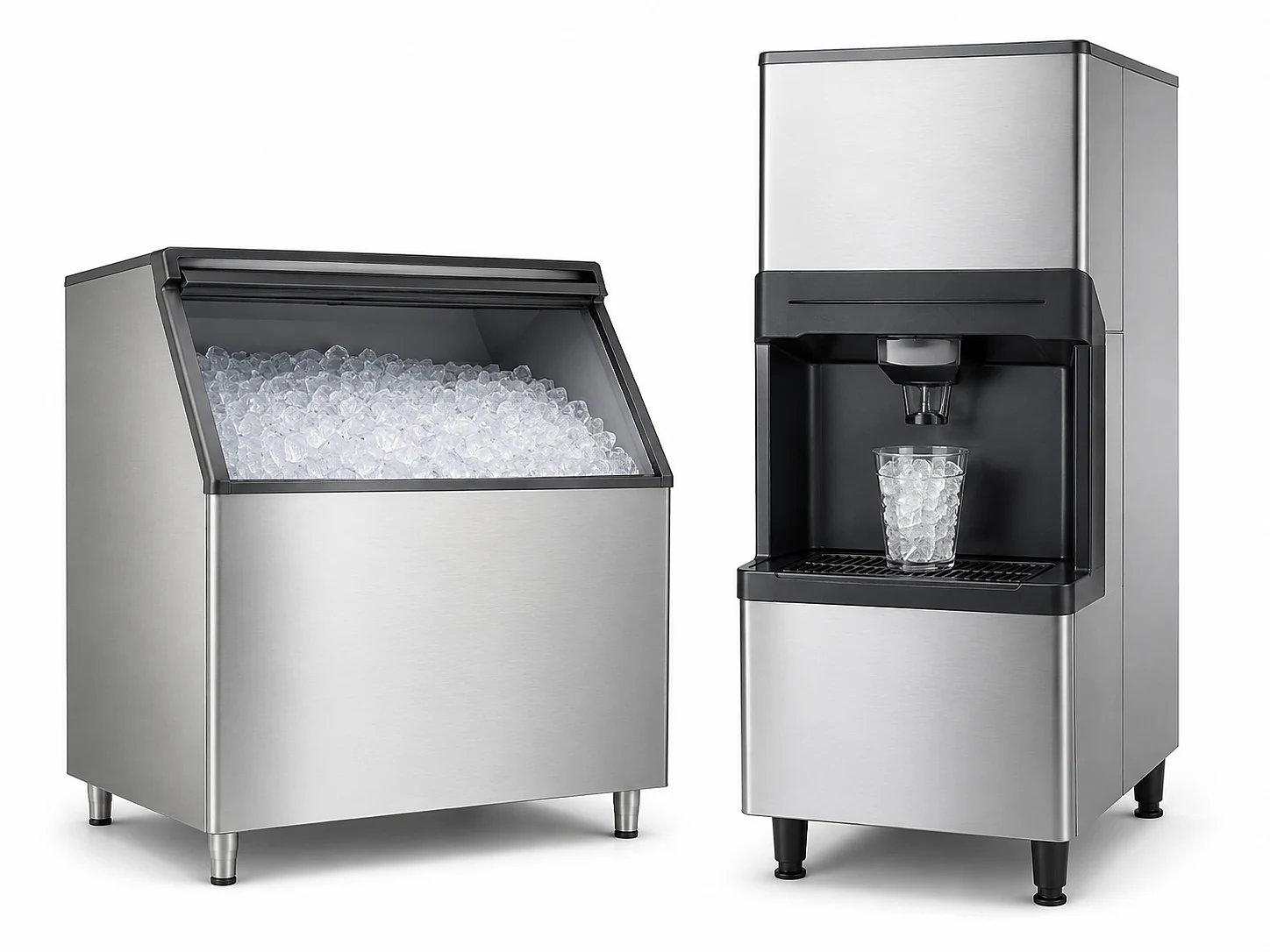
Ice Storage Bins & Dispensers
Storage and controlled dispensing equipment matched to modular machine width, production capacity and user-access requirements.
Modular ice machine vs undercounter ice maker
The installation type affects production capacity, storage flexibility, equipment height, ventilation and maintenance access.
Modular Ice Machine
Undercounter Ice Maker
Choose the ice form according to its final use
Ice shape affects beverage presentation, melting behavior, product-display suitability, storage and the internal ice-making structure.
Cube Ice
Clear or semi-clear cubes are commonly used for drinks, bars, restaurants, hotels and general foodservice.
Flake Ice
Thin, soft ice pieces that spread easily around seafood, meat and chilled products.
Nugget or Cubelet Ice
Small compressed or irregular ice pieces selected for beverage service and softer texture.
Other Ice Forms
Some suppliers may offer bullet, crescent, dice or other shapes for specific markets or applications.
Match the ice machine to the operating environment
Different projects require different ice forms, storage arrangements, access methods and peak-production capacity.
Restaurant & Bar
Cube or nugget ice for beverages, cocktails, kitchen cooling and customer service.
Hotel
Modular machines, dispensers, undercounter units or multiple ice stations across service areas.
Café & Beverage Shop
Compact equipment supporting iced coffee, tea, juice and drink preparation.
Supermarket & Seafood
Flake ice for seafood, meat and chilled-product presentation.
Catering & Canteen
Production and storage planned around peak meal periods and replenishment cycles.
Calculate daily production and peak-hour demand separately
Rated 24-hour production provides a comparison reference, but it should not be treated as the only selection factor.
Daily Consumption
Estimate total demand across drinks, displays, kitchen processes and all service periods.
Peak-Hour Demand
Identify the largest quantity required during the busiest operating period.
Production Recovery
Review how quickly the machine must replace ice removed from the storage bin.
Operating Conditions
Actual production may change when ambient or inlet-water conditions differ.
Capacity Margin
Allow for seasonal peaks, events, maintenance periods and future business growth.
Daily production is not the same as storage-bin capacity
The machine and storage bin must be planned as one system according to peak demand, operating hours and replenishment time.
Daily Production Capacity
This indicates how much ice the machine can produce over a stated period under specified test conditions.
Storage-Bin Capacity
This indicates how much finished ice can be held and available at one time.
Air-cooled, water-cooled or remote-condensing ice machine
Cooling method affects heat rejection, ventilation, water consumption, noise, installation complexity and service access.
Air-Cooled System
Uses surrounding air to remove heat from the refrigeration system.
Water-Cooled System
Uses water to remove condenser heat where the site and local requirements permit.
Remote Condensing System
Places the condenser away from the ice-making head to move heat and noise from the service area.
Ambient and inlet-water conditions affect ice production
Provide actual installation conditions before quotation so the supplier can review equipment suitability and expected performance.
Ambient Temperature
Confirm the expected room temperature around the machine during operation.
Inlet-Water Temperature
Provide the approximate temperature of the incoming water supply.
Installation Position
Clarify whether the unit is in an air-conditioned room, hot kitchen or enclosed space.
Ventilation Conditions
Confirm free space around condenser air inlets and outlets.
Seasonal Variation
Review differences between normal operation and peak summer conditions.
Water quality, filtration and drainage are part of machine selection
Water conditions can affect ice appearance, taste, scale formation, cleaning frequency and the long-term maintenance requirement.
Water Pressure
Confirm whether the available supply pressure meets the selected machine’s installation requirement.
Water Quality
Hardness, minerals and sediment can affect ice clarity, taste and scale formation.
Water Filtration
A suitable filter may help reduce sediment, odors and scale-related maintenance.
Filter Capacity
Size the filtration system according to production, water quality and replacement schedule.
Gravity Drain
A gravity drain requires the machine outlet to remain above a suitable floor or wall drain.
Drain Pump
A pump may be needed when the available drain is higher or farther from the machine outlet.
Match the ice-making head and storage bin as one system
The bin must physically match the machine, provide sufficient storage and support convenient, hygienic ice access.
Machine Width
The ice-making head should align with the storage-bin top or use a confirmed adapter.
Adapter Plate
Confirm whether an adapter is required when machine and bin widths differ.
Storage Capacity
Select capacity according to peak demand, overnight production and available space.
Ice Access
Review door opening, scoop access and employee working height.
Sanitary Scoop Storage
Confirm a clean scoop holder positioned outside the main ice pile.
Technical details to confirm before ordering
Similar-looking machines may use different ice-making systems, compressors, controls, cleaning functions, accessories and storage structures.
Rated Ice Production
Confirm the test conditions used for the published production figure.
Ice Shape and Size
Request photographs, dimensions or samples where the final appearance matters.
Storage Capacity
Review usable ice storage rather than external cabinet size alone.
Refrigeration System
Clarify compressor configuration, cooling method and service access.
Evaporator Structure
Confirm the ice-making mechanism and food-contact material according to machine type.
Control System
Review operating buttons, indicators, alarms and automatic protection functions.
Cleaning Functions
Clarify which flushing or cleaning steps are automatic and which remain manual.
Stainless Steel Construction
Confirm exterior panels, bin liner and food-contact surfaces.
Adjustable Legs or Casters
Select according to equipment height, cleaning access and movement requirements.
Included Accessories
Confirm scoop, hoses, drain pipe, filter parts, adapter plate and manuals.
Plan regular cleaning, descaling and storage-bin sanitation
Ice is a food-contact product, so routine water-system maintenance and internal sanitation should be considered before selecting the machine.
Water Filter
Plan filter inspection and replacement according to water conditions.
Evaporator
Follow the cleaning process for the selected ice-making structure.
Scale Removal
Include descaling frequency based on hardness and mineral content.
Storage Bin
Clean the liner, door, gasket and internal surfaces regularly.
Drain System
Inspect drain pipes and prevent blockage or standing water.
Condenser
Keep air filters and condenser surfaces free from grease and dust.
Ice Scoop
Store and sanitize the scoop outside the main ice pile.
Check the site before confirming machine dimensions
Installation should be reviewed together with water, drainage, ventilation, power, heat sources, floor level and the delivery route.
Available Space
Measure machine width, depth, total height and maintenance clearance.
Ventilation
Confirm whether air enters and exits through the front, side, rear or top.
Water Connection
Review pipe location, shutoff valve, pressure and filtration.
Drain Connection
Confirm gravity-drain height or the need for a drain pump.
Electrical Supply
Review voltage, phase, frequency, plug, cable and breaker capacity.
Floor Condition
The machine and storage bin should stand level for operation and drainage.
Heat Sources
Keep the machine away from ovens, fryers and direct sunlight where practical.
Delivery Route
Compare packed dimensions with doors, corridors, stairs and kitchen access.
Confirm electrical, water and packaging details before production
Export orders require clear confirmation of electrical standards, refrigeration configuration, water connections, drainage components and transportation protection.
From ice demand to a confirmed commercial ice machine order
Available machine types and configurations depend on the selected supplier. PRIME helps organize requirements, compare quotations and confirm technical and export details before order placement.
Application Review
Confirm restaurant, hotel, bar, supermarket, seafood display or other use.
Ice Type Selection
Clarify cube, flake, nugget, cubelet or another required ice form.
Capacity Planning
Review daily demand, peak demand, production and storage volume.
Installation Review
Confirm water, drainage, ventilation, ambient conditions and power.
Supplier Matching
Match production resources to machine type, capacity and destination.
Specification Confirmation
Confirm machine, bin, cooling method, refrigerant and accessories.
Export Coordination
Follow production, identification, packaging and forwarder delivery.
Commercial ice machine buying questions
Final selection depends on ice type, daily and peak demand, storage capacity, cooling method, water, drainage and electrical conditions.
What information is needed for a commercial ice machine quotation?
How do I choose between a modular and undercounter ice machine?
What is the difference between cube, flake and nugget ice?
Does rated daily production equal actual production?
How should the storage-bin size be selected?
Does a commercial ice machine require a drain?
Is a water filter required?
Can voltage and refrigerant be configured for my market?
Can PRIME supply the machine and storage bin together?
Are all ice-machine types available from every supplier?
Need a commercial ice machine for your restaurant, hotel or supermarket?
Send PRIME the required ice type, daily production target, peak-hour demand, storage-bin capacity, cooling method, water conditions, drainage, voltage, quantity and destination country. We will help review the configuration and coordinate suitable supplier quotations.