
Open Chiller vs Glass Door Refrigerator
How commercial buyers compare product access, temperature control, merchandising, maintenance and project fit before selecting refrigeration for a supermarket, convenience store or food-retail project.
Open Chiller vs Glass Door Refrigerator: neither format is the universal winner.
Open chillers and glass door refrigerators solve different retail problems. The right choice depends on how customers shop, what products must be protected, how the aisle is arranged and which operating conditions the equipment must handle.
Choose an open chiller when access and visibility lead
Open multideck cases are often considered for high-turnover supermarket areas where shoppers need to see and reach products quickly.
- Fresh produce, dairy, prepared food and chilled convenience items
- High-traffic aisles with frequent customer access
- Long display runs and flexible merchandising
- Projects where an open presentation supports shopping flow
Choose a glass door refrigerator when enclosure leads
Glass door cabinets are often considered when the project prioritizes enclosed merchandising, product separation or a compact upright format.
- Beverages, dairy, packaged food and convenience-store display
- Stores that prefer closed cabinets along a wall
- Merchandising that benefits from clear product zoning
- Projects where door configuration and cabinet height matter
Compare the decision factors that affect the project.
The table below is a procurement starting point. Actual performance depends on cabinet design, operating temperature, ambient conditions, loading, refrigeration system and manufacturer specifications.
| Buyer factor | Open Chiller | Glass Door Refrigerator |
|---|---|---|
| Customer access | Direct access without opening a door; useful in high-turnover aisles. | Customers open doors; access is more controlled but requires handle and hinge clearance. |
| Product visibility | Large open presentation with strong line-of-sight across the display. | Clear doors preserve visibility while separating the cabinet from the aisle. |
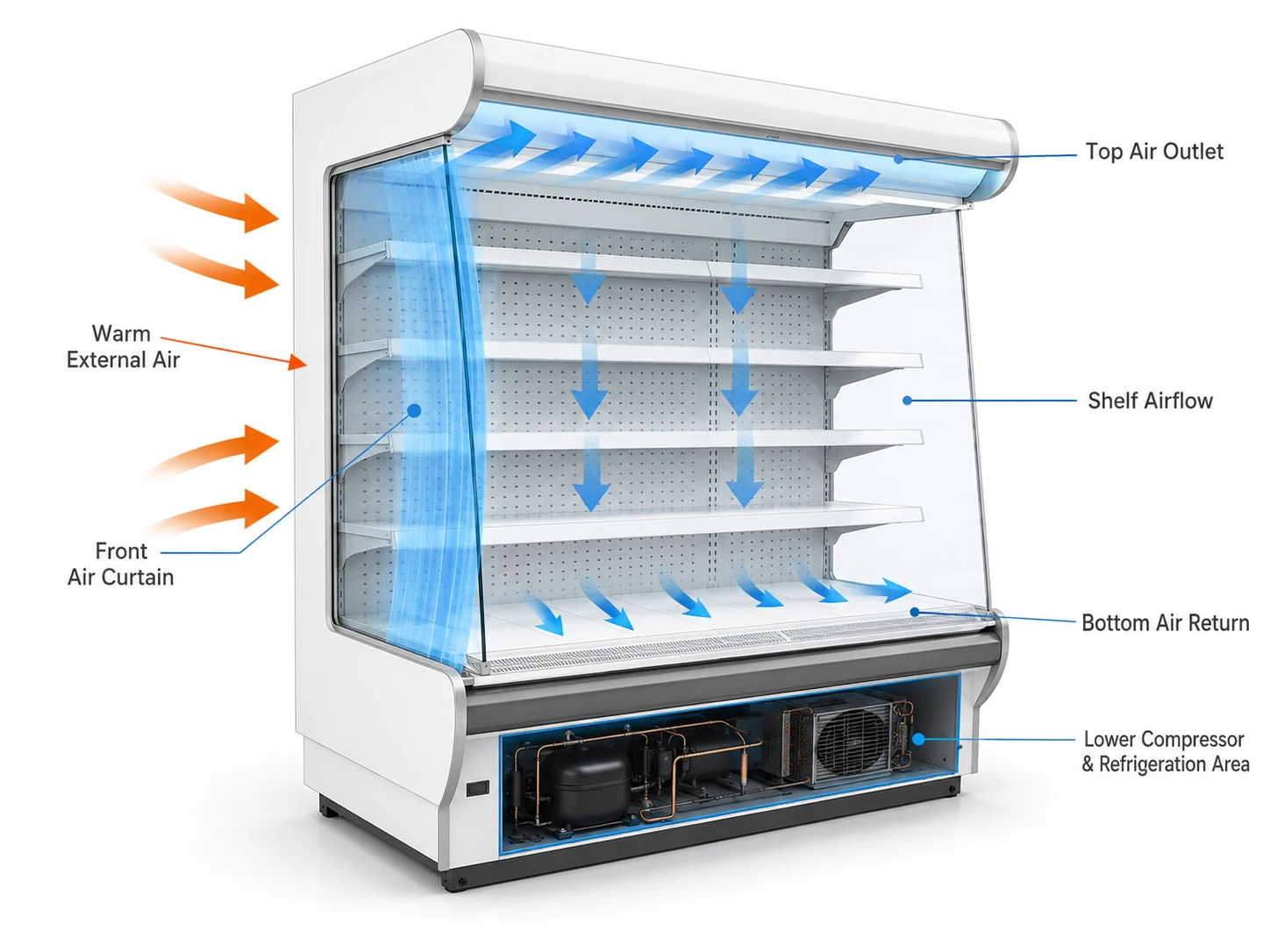
| Temperature management | Uses an air curtain and cabinet airflow; loading and aisle conditions require careful review. | Enclosed doors can help isolate the refrigerated space, but door opening frequency and sealing still matter. |
| Merchandising | Well suited to long runs, multiple shelves and fast product replenishment. | Well suited to upright zoning, beverage display and clearly separated product groups. |
| Store layout | Often placed along an aisle where front access and customer flow are important. | Often placed against a wall or in a defined refrigerated display zone. |
| Maintenance review | Verify air curtain, evaporator, drain, shelf arrangement and condenser access. | Verify door alignment, gaskets, hinges, lighting, evaporator, drain and condenser access. |
| Energy review | Do not assume a result from the format alone; compare actual model data under the intended conditions. | Do not assume that doors automatically determine lower operating cost; request comparable model data. |
For an RFQ, compare equivalent temperature class, ambient rating, length, display area, refrigeration method, voltage and operating schedule—not only the cabinet name.
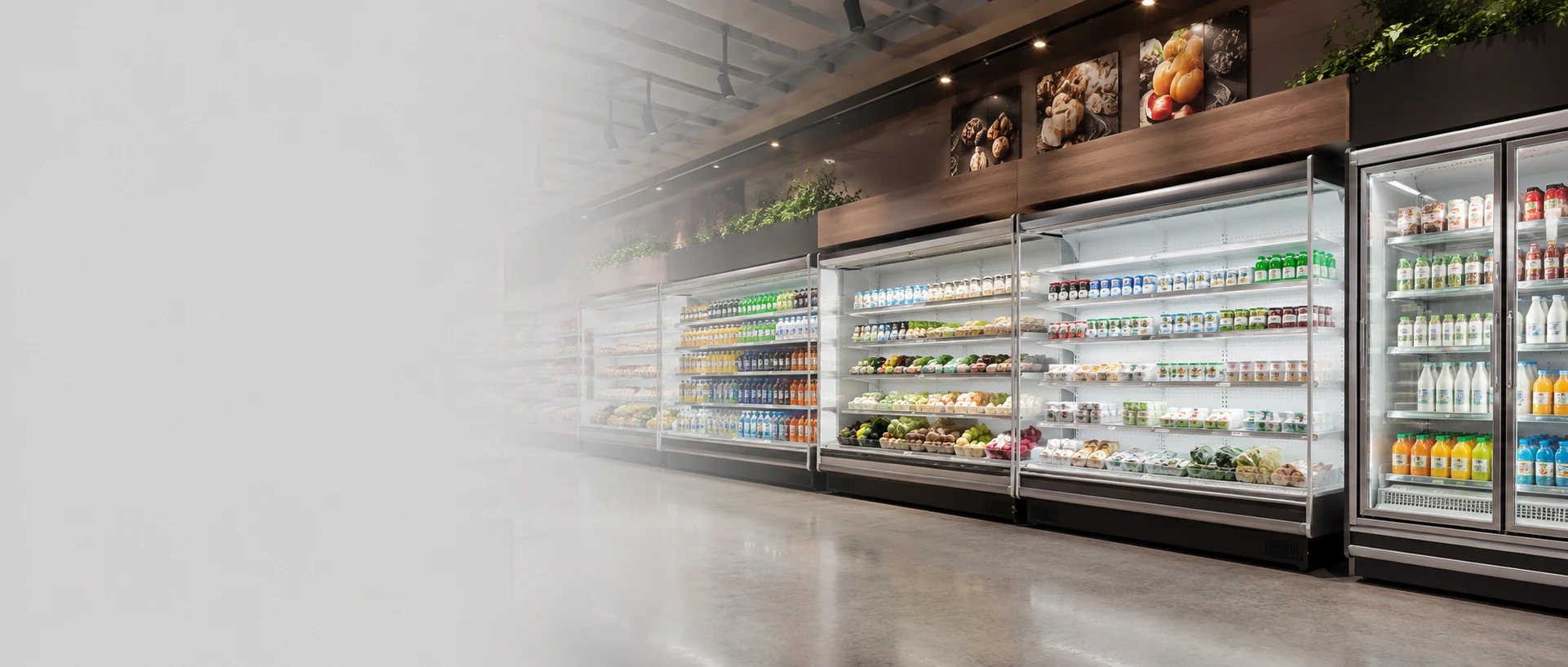
Open access is valuable when shopping speed matters.
For supermarket and food-retail projects, open multideck cases can support fast browsing and high product visibility. The design review should go beyond appearance.
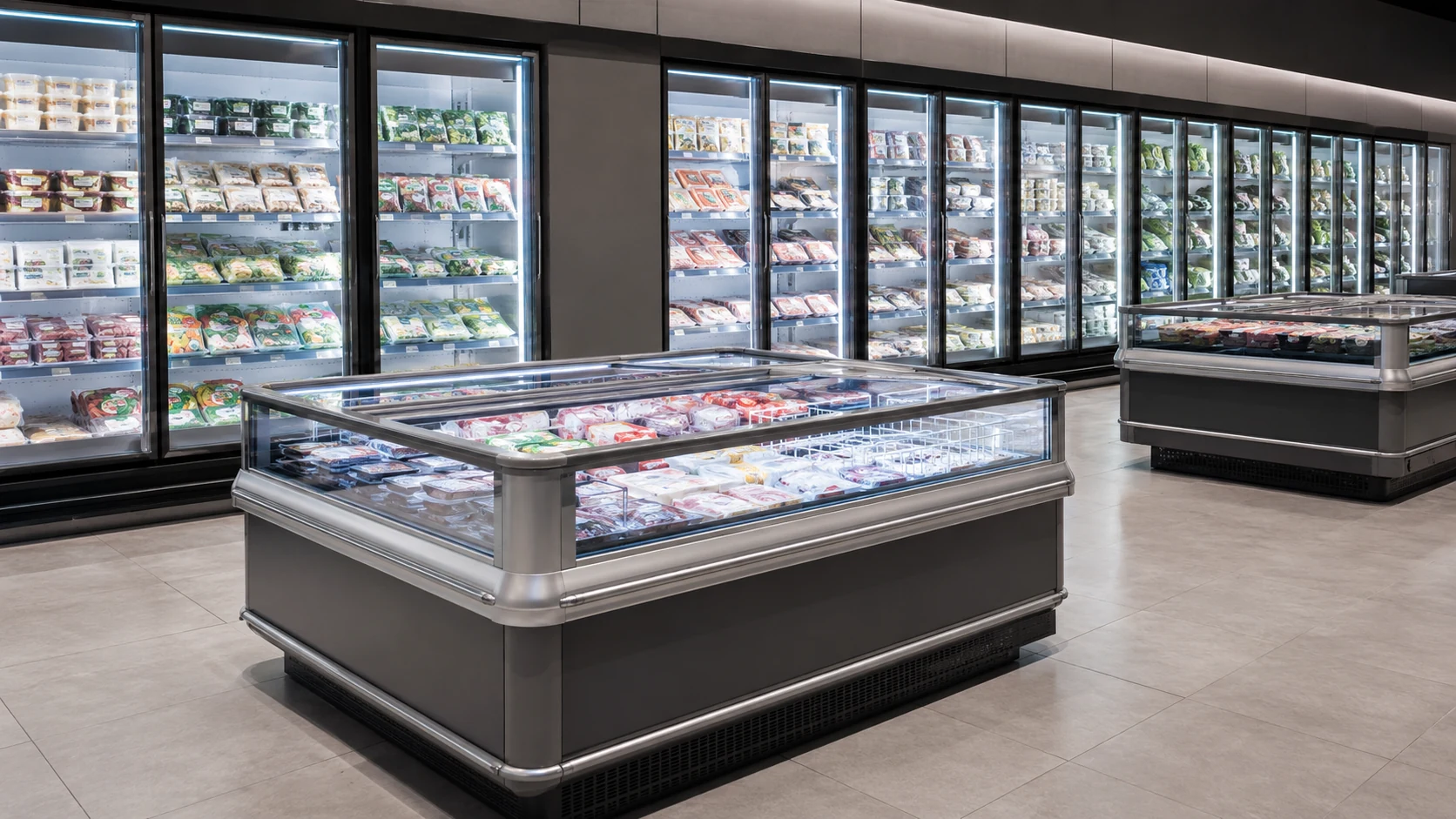
Enclosed display can support zoning and controlled access.
Glass door refrigerators are common in beverage, convenience-store and packaged-food applications. The project brief should define door configuration, cabinet dimensions and service conditions early.
Send the information that makes comparison useful.
PRIME can coordinate a refrigeration sourcing review, but comparable quotations require a clear project brief. The following information helps suppliers quote the right configuration.
Start with the shopping environment, then select the cabinet.
Supermarket fresh food
Open chillers may suit high-visibility fresh food zones where replenishment and direct access are important.
Convenience-store beverages
Glass door refrigerators may suit compact beverage and packaged-food displays with clear product zoning.
Mixed retail projects
Many projects use both formats. A combined layout can separate products by temperature, turnover and customer behavior.
Questions buyers should settle before comparing quotations.
Is an open chiller always more convenient for customers?
Are glass door refrigerators always more energy efficient?
Can a supermarket use both formats?
What electrical information should be included in an RFQ?
Can PRIME compare suppliers for a refrigeration project?
Need help comparing refrigeration options?
Send the product list, dimensions, quantity, destination and electrical requirements. PRIME can organize the sourcing brief and coordinate suitable supplier quotations.