
How to Import Commercial Equipment from China
Importing commercial kitchen, refrigeration, display and washing equipment is not simply a matter of finding a low price. A workable order must connect project requirements, site utilities, supplier capability, destination compliance, inspection, packing, shipping and after-sales handover. This guide shows overseas buyers how to manage that process step by step.
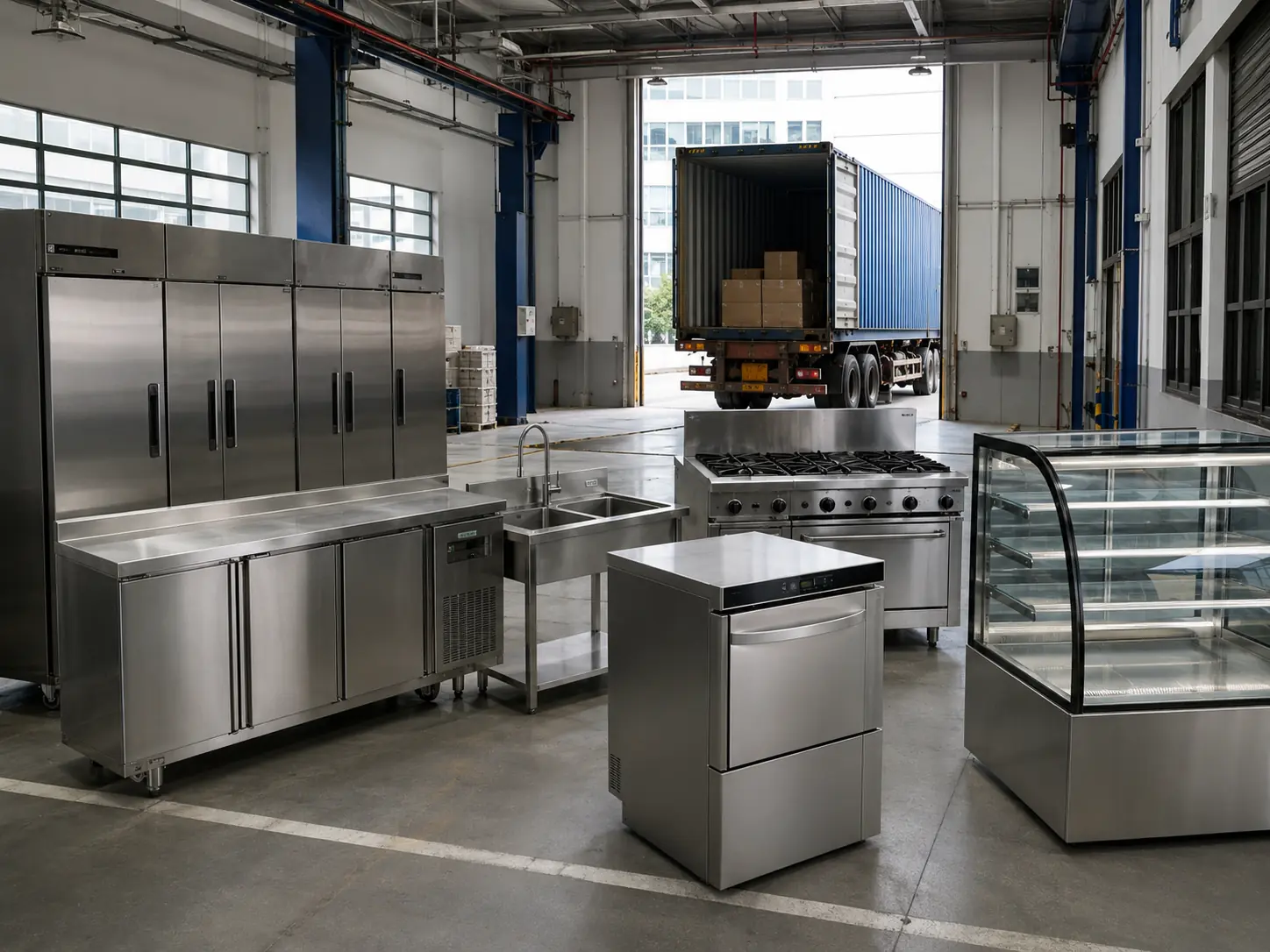
A better enquiry starts with decisions the buyer must make
Supplier quotations become difficult to compare when the application, dimensions, utilities, destination requirements or delivery route are still undefined. Prepare the commercial and technical basis first, then ask suppliers to quote against the same scope.
Minimum information for a useful first review
You do not need a perfect specification at the first contact, but the following information helps turn a general enquiry into a workable equipment schedule.
Three common buyer situations require different import plans
The product may be identical, but the quotation and responsibility split change according to the buyer’s import capability, order size and China-side logistics arrangement.
Full-container importer
Best fit: established importers, distributors and project buyers with their own customs broker or logistics partner. Confirm container type, loading plan, exporter, importer of record and the exact Incoterms rule.
China warehouse consolidation
Best fit: buyers combining equipment from several suppliers at a nominated forwarder warehouse. Warehouse booking, marks, packing dimensions, local delivery and responsibility for export clearance must be agreed.
Door-to-door or DDP request
Best fit: buyers without a direct import setup. Feasibility depends on destination, product, certification and local importer arrangements; DAP may be more workable where DDP cannot be offered compliantly.
Convert the business idea into a quotable equipment scope
The first three steps prevent suppliers from quoting equipment that cannot fit the workflow, utilities or physical site.
Define the operating model
Start with what the project must produce or serve, not with model numbers. A restaurant, hotel buffet, supermarket, bakery, central kitchen and beverage shop require different capacities, duty cycles and equipment combinations.
Audit the site and utilities
Confirm usable floor area, doorways, ceiling height, drainage, water pressure, ventilation, ambient temperature, electrical supply, plug format and gas type before product selection.
Build the equipment schedule
Create one line for each equipment type with quantity, dimensions, capacity, function, preferred construction, utilities and priority. Separate essential specifications from negotiable preferences.
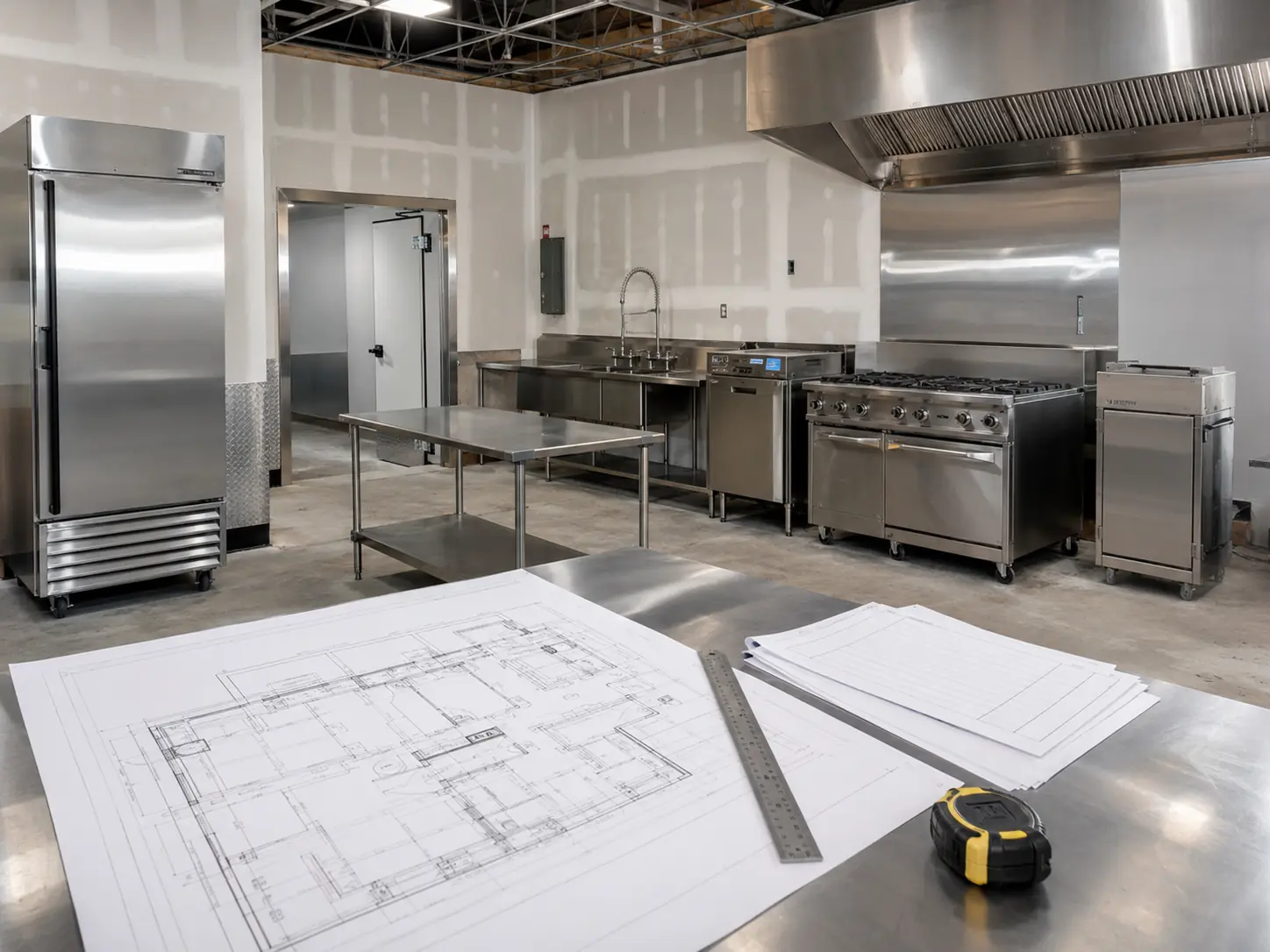
Link the layout, workflow and equipment list
A useful schedule shows how each item supports receiving, storage, preparation, cooking, holding, service and washing. It also makes missing equipment and duplicate capacity easier to identify before quotations begin.
- Use the same item numbers in the layout, BOQ and quotation.
- Record maximum external dimensions and required clearances.
- Mark critical items that affect the rest of the layout.
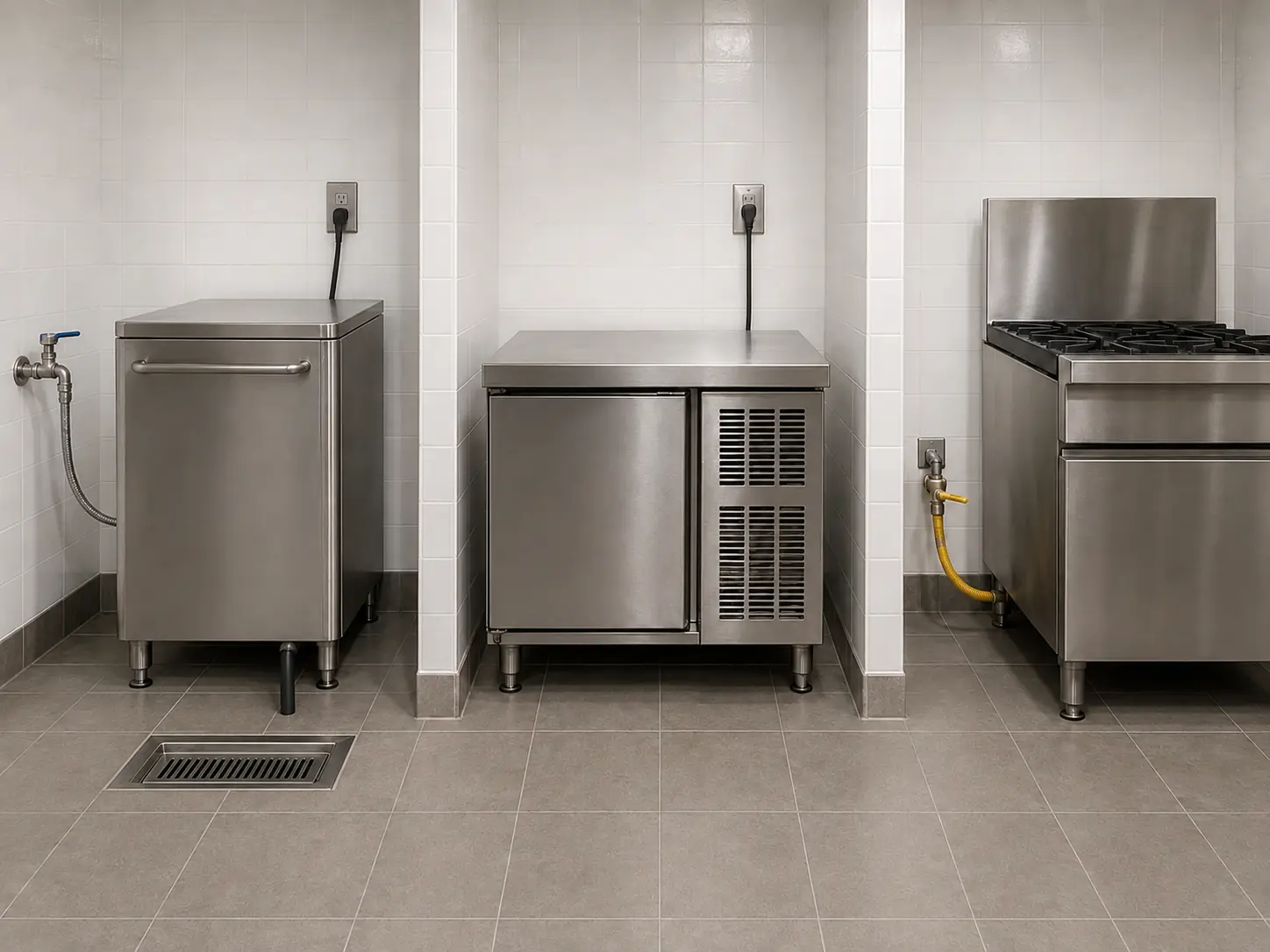
Verify installation conditions before choosing models
Do not assume that a product shown online matches the utilities at the destination. Ask for the connection position, rated input, drainage method, heat rejection, ventilation requirement and maintenance clearance for each powered or plumbed item.
- Match voltage and frequency—not voltage alone.
- Confirm water, drainage, gas and exhaust requirements separately.
- Check how the equipment will pass through doors and corridors.
Compare supply capability and product configuration on the same basis
A professional-looking quotation is not proof that a supplier can manufacture, configure or support the equipment required.
Choose the sourcing structure
Decide whether to buy from one project coordinator, several category specialists or a hybrid structure. Mixed orders often need multiple supply resources, but one controlled specification and communication process.
Evaluate supplier capability
Check whether the supplier actually makes the relevant category, can show comparable products, understands the required configuration and can support drawings, manuals, packing and export coordination.
Normalize every quotation
Compare like with like: dimensions, capacity, material, components, refrigerant, temperature range, accessories, warranty, packing, lead time and Incoterms rule—not only the final price.
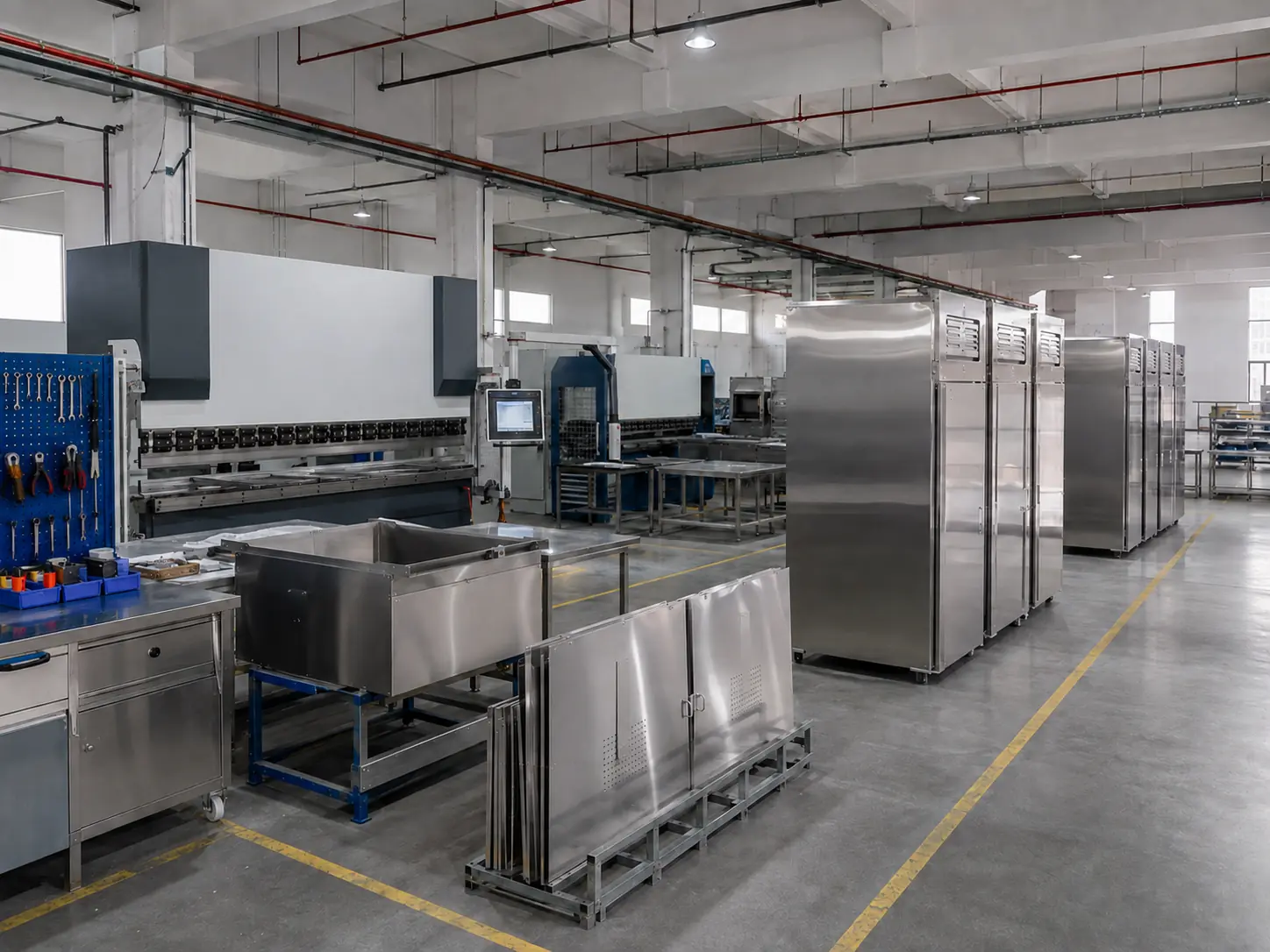
Look for evidence that matches the actual order
General factory photos are weak evidence. Ask for relevant production processes, comparable finished equipment, internal construction details, key component identification and recent packing examples for products of similar size.
- Confirm the factory, trading company and exporter roles.
- Verify who controls drawings, changes and final inspection.
- Record promised documents and support in the order scope.
Compare the configuration hidden behind the model name
Two units with similar external dimensions can use different insulation, controllers, compressors, fan motors, hinges, gaskets, shelves and service layouts. Create a comparison sheet with one row per decision point.
- Treat missing information as “not confirmed,” not as included.
- Separate standard configuration from optional upgrades.
- Compare total landed scope, not an incomplete factory price.
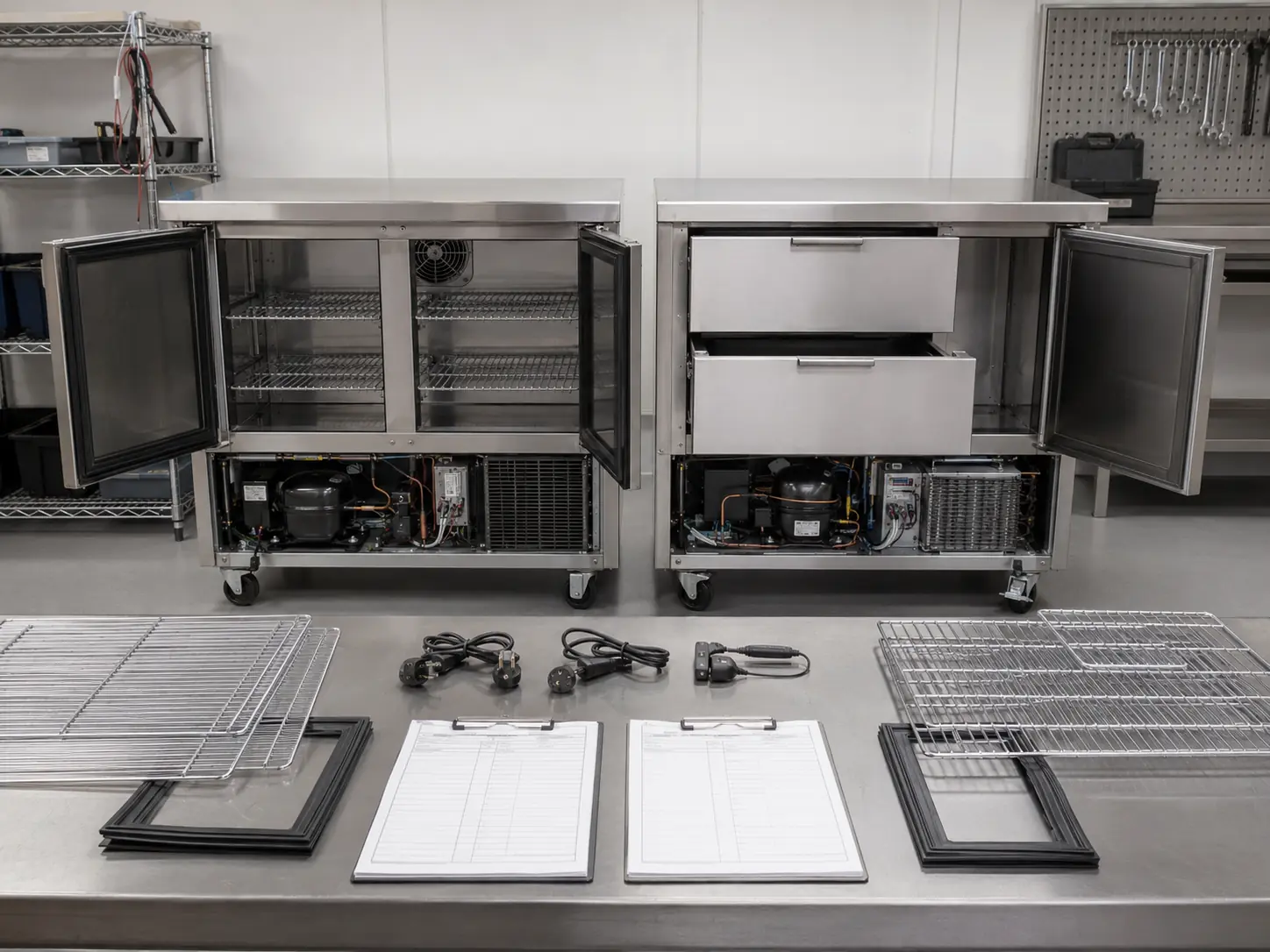
Close compliance, technical and quality gaps before production
Approval should be based on a frozen specification and responsibility matrix, not a collection of chat messages and unmarked product photos.
Review destination requirements
Identify product standards, energy or labelling rules, electrical requirements, refrigerant restrictions, food-contact considerations, importer obligations and customs documentation for the destination market.
Freeze the order specification
Approve the final model, drawings, materials, components, accessories, labels, manuals, spare parts, packing method, warranty basis, delivery term and change-control process in writing.
Set production and QA milestones
Define which photos, videos, tests, serial or model information and progress updates are required before production, during assembly and before final packing.
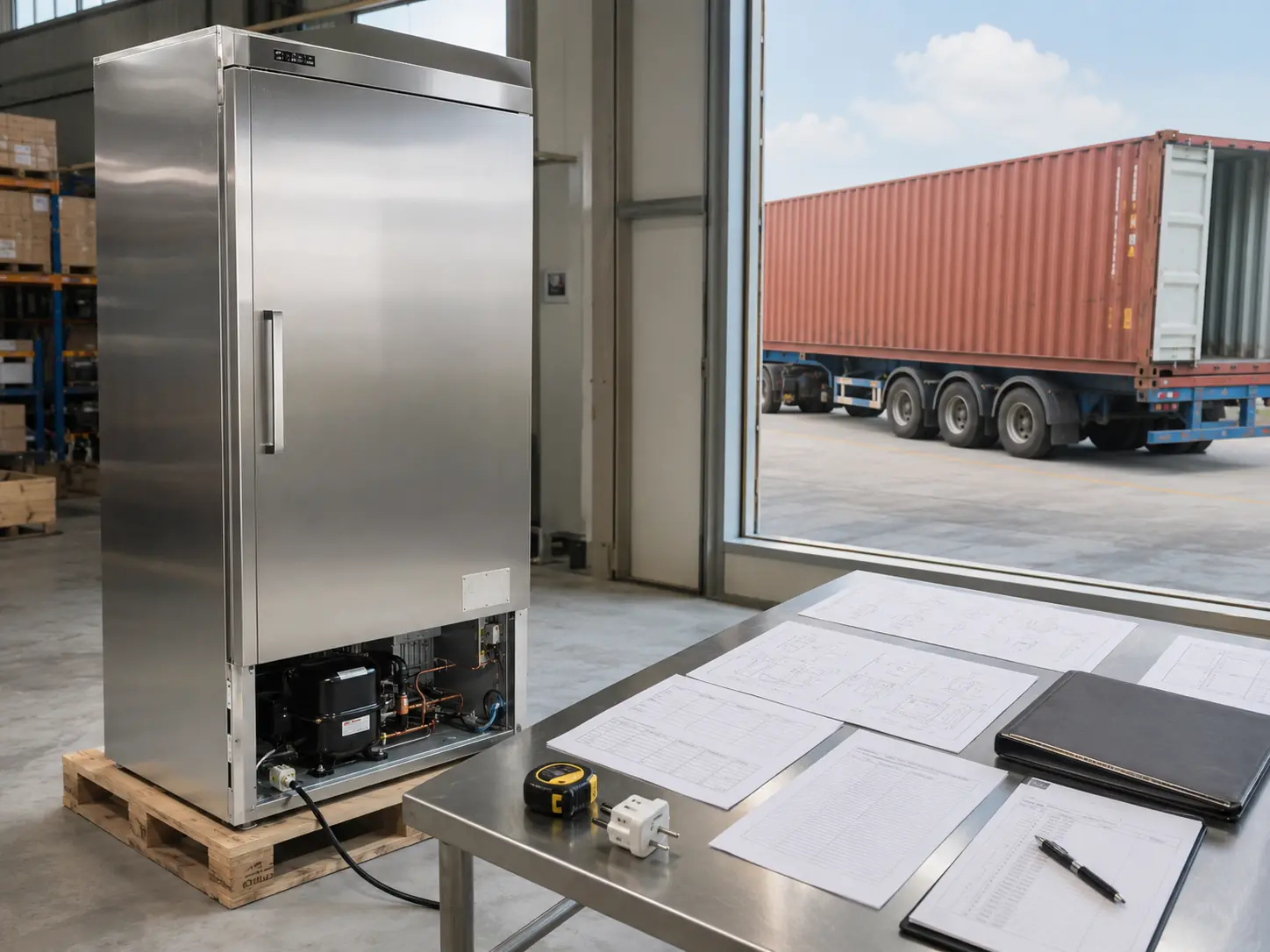
Match documents to the exact product configuration
A certificate, report or manual is useful only when its manufacturer, model scope, ratings and product configuration match the goods being ordered. Destination requirements vary, so the buyer should confirm acceptance with the relevant local authority, importer or qualified specialist before shipment.
- Check manufacturer name, model identity and technical scope.
- Confirm who supplies labels, manuals and declaration documents.
- Do not treat a generic supplier certificate as product approval.
Use one decision table for every shortlisted offer
The exact fields change by equipment category, but the comparison method should remain consistent.
| Comparison area | What to record | Why it matters | Evidence to request |
|---|---|---|---|
| Function & capacity | Application, usable capacity, temperature or output, duty cycle | Prevents an apparently similar product from being undersized | Datasheet, selection basis and comparable model |
| Construction | External and internal material, thickness where critical, insulation, doors and hardware | Affects durability, hygiene, heat loss and service life | Drawings, internal photos and material statement |
| Utilities | Voltage, phase, frequency, rated input, plug, gas, water, drainage and exhaust | Determines whether installation is possible at the destination | Nameplate draft and connection diagram |
| Components | Controller, compressor, fan motor, burner, pump, heater and safety devices | Changes performance, serviceability and spare-parts planning | Component list with exact model where agreed |
| Commercial scope | Quantity, accessories, spare parts, warranty, lead time and validity | Prevents omitted items from appearing later as extra cost | Itemized quotation and approved specification |
| Logistics | Net/gross weight, packing size, packing method, Incoterms rule and delivery point | Supports freight comparison and correct risk allocation | Packing data, loading plan and document list |
Protect the order through inspection, shipping and final receiving
The last phase is where unclear packing, mixed-supplier coordination or incomplete handover information can turn a correct product into a difficult project.
Inspect before final packing
Check identity, quantity, dimensions, appearance, configuration, accessories and agreed functional evidence while the equipment can still be accessed and corrected.
Confirm packing and shipping
Approve protection, carton or wooden-frame construction, shipping marks, packing list, loading sequence, delivery point and the named Incoterms rule with place and version.
Receive, install and hand over
Inspect the shipment on arrival, document damage before unpacking, match equipment to the packing list and preserve manuals, spare parts, settings and supplier contacts for commissioning.
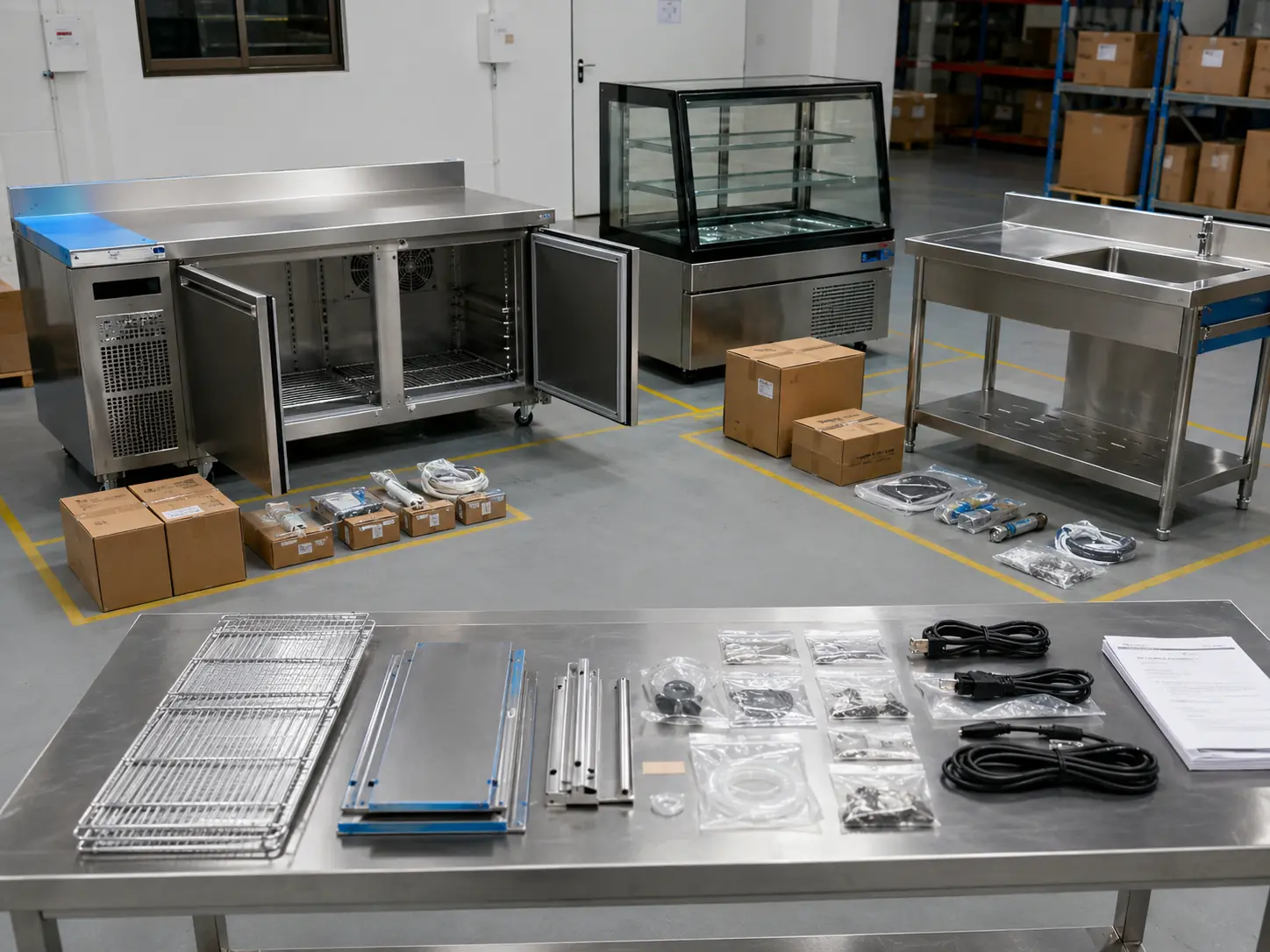
Keep equipment, accessories and supplier lots traceable
When several factories are involved, use item numbers and supplier-lot references on the equipment, accessory cartons, packing list and inspection record. Consolidation should not make it harder to identify missing or mismatched items.
- Inspect accessible equipment before it is fully protected.
- Photograph accessories and labels against the item number.
- Confirm final packed size and weight before freight booking.
Plan the handover before the shipment leaves China
The receiving team should know what is arriving, how it will be unloaded, where each item belongs and which documents or spare parts accompany it. Heavy or oversized equipment may require forklifts, lifting access or staged installation.
- Record external damage before signing the delivery receipt.
- Match cartons, equipment and loose accessories to the packing list.
- Store manuals, component references and spare parts by model.

Four risks that should be closed before shipment
Product details remain in chat messages and the final quotation does not identify the approved configuration.
Voltage, frequency, plug, gas, water, drainage or ventilation differs from the destination site.
Certificates or reports do not match the manufacturer, model or exact product scope being shipped.
The quotation names FOB, CIF, DAP or DDP without a precise place, responsibility split or importer arrangement.
Use Incoterms correctly
Always state the selected rule with the named port, terminal, warehouse or destination and the applicable version—for example, “FOB Qingdao, Incoterms® 2020.” Incoterms allocate delivery, cost and risk responsibilities, but they do not replace the sales contract, payment terms, product compliance review or import documentation. Review the official ICC Incoterms® rules overview.
Explore commercial equipment by project category
Use category pages to narrow the equipment type, then return to this guide to prepare one consistent specification and comparison process.
Importing commercial equipment from China
Answers to the questions buyers commonly face before requesting a final quotation.
What information should I prepare before contacting a commercial equipment supplier?
Prepare the project type, equipment list, quantities, application, preferred dimensions or capacity, destination, voltage, frequency, plug, gas type, layout constraints, required standards and expected delivery route. Reference photos help, but they should not replace written functional requirements.
Can one supplier provide every item for a commercial kitchen project?
Sometimes, but many mixed projects use different category specialists for refrigeration, stainless steel fabrication, cooking, display and washing equipment. The important point is to manage one coordinated schedule, specification and inspection process across all supply resources.
How should I compare commercial equipment quotations from China?
Compare offers against the same dimensions, capacity, construction, components, utilities, accessories, spare parts, documents, warranty, lead time, packing and Incoterms basis. A lower quotation may simply exclude configuration or services included elsewhere.
How do I know which certificates or import documents are required?
Requirements depend on destination, product category, energy or electrical rules, refrigerant, intended use and importer obligations. Confirm the applicable requirements with the relevant destination authority, customs broker, importer or qualified compliance specialist before approving production.
Is a pre-shipment inspection necessary?
Inspection is strongly recommended for project orders, customized products and mixed-supplier shipments. The scope should follow the approved specification and may include identity, quantity, dimensions, appearance, components, accessories, functional evidence, labels and packing.
Do I need to order a full container?
No. Smaller orders may move through a buyer-appointed China warehouse or freight forwarder for consolidation. Door-to-door or DDP arrangements may also be possible for some destinations, but feasibility and importer responsibility must be confirmed before quotation.
What should be prepared for after-sales support?
Keep the final model list, serial or nameplate records, manuals, wiring or connection information, settings, component references, spare-parts list, inspection evidence and supplier contacts. Agree critical spare parts and remote troubleshooting support before shipment.
Send PRIME your equipment list, layout or existing quotation
PRIME can help review the scope, identify missing specifications, coordinate suitable supply resources and organize the next procurement steps for commercial kitchen, refrigeration, display and washing equipment from China.