Commercial Conveyor Dishwashers
PRIME coordinates commercial conveyor dishwashers for hotels, large restaurants, staff canteens, schools, hospitals and institutional foodservice projects. Compare rack capacity, conveyor direction, wash zones, heating method, ventilation, dish tables and utility requirements before quotation.
Commercial conveyor dishwashers for high-volume rack washing
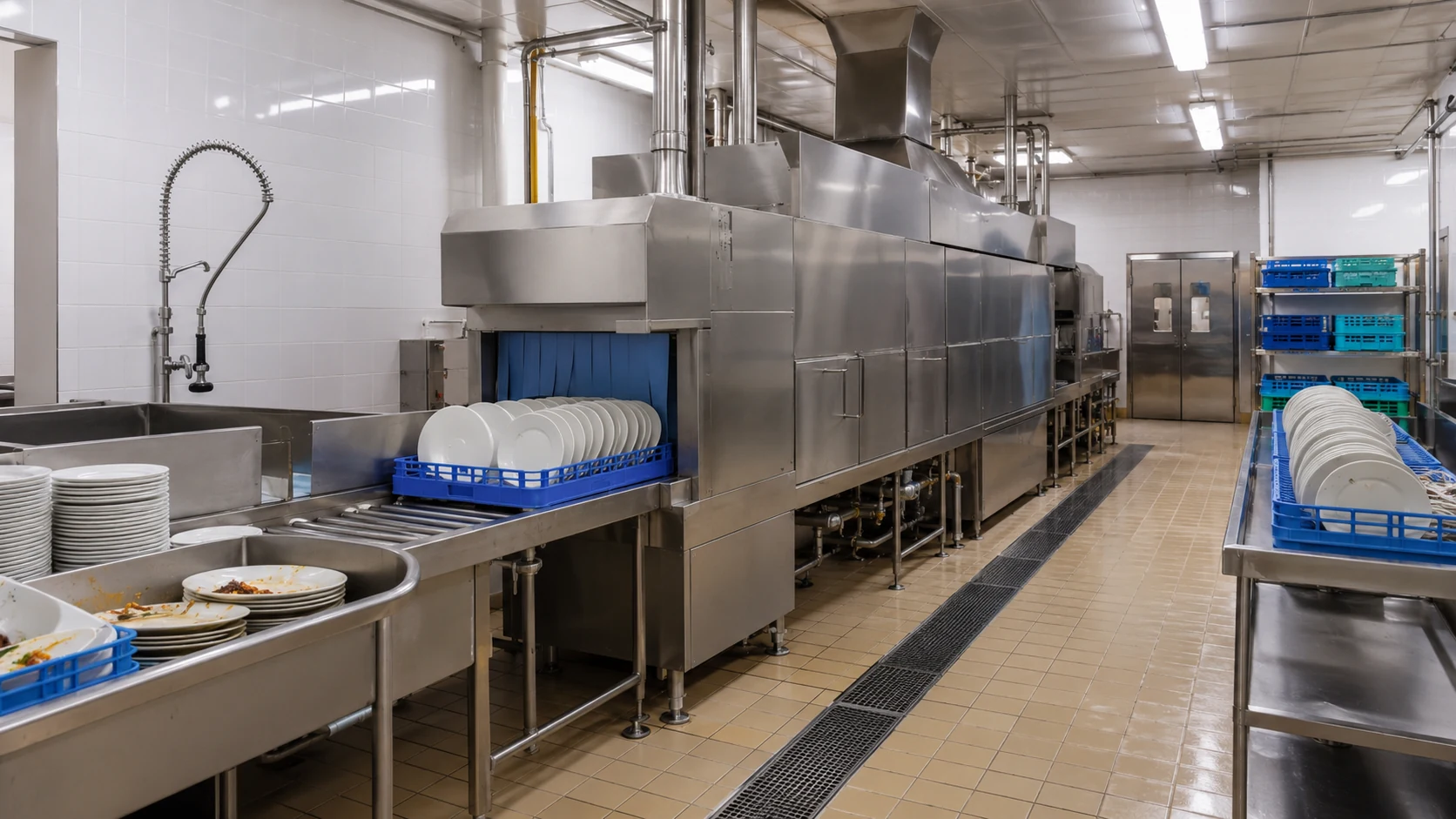
Commercial conveyor dishwashers, also called rack conveyor dishwashers in many project specifications, form the central section of a complete high-capacity dishroom rather than operating as isolated machines. At the soiled end, dishes require collection, waste sorting, pre-rinsing and correct rack loading before entering the conveyor.
Loaded racks then pass through one or more washing sections and a final rinse before reaching the clean unloading area. The surrounding project must provide space for rack staging, clean-dish draining, rack return, floor drainage, ventilation and service access. For a complete conveyor dishroom, coordinate the machine with dish tables & sorting equipment and commercial pre-rinse units before equipment and utility positions are finalized.
Nominal racks-per-hour figures should be evaluated together with loading time, dish soil level, conveyor speed, wash-zone configuration, operating schedule and staff workflow. Buyers can also review the ENERGY STAR commercial dishwasher guidance alongside local hygiene, plumbing and electrical requirements.
- Left-to-right or right-to-left rack movement
- Single-tank, multi-tank and high-temperature directions
- Electric, steam or project-specific heating methods
- Optional heat recovery and steam-management configurations
For medium-volume operations that do not require continuous rack processing, compare commercial hood type dishwashers before moving to a conveyor system.
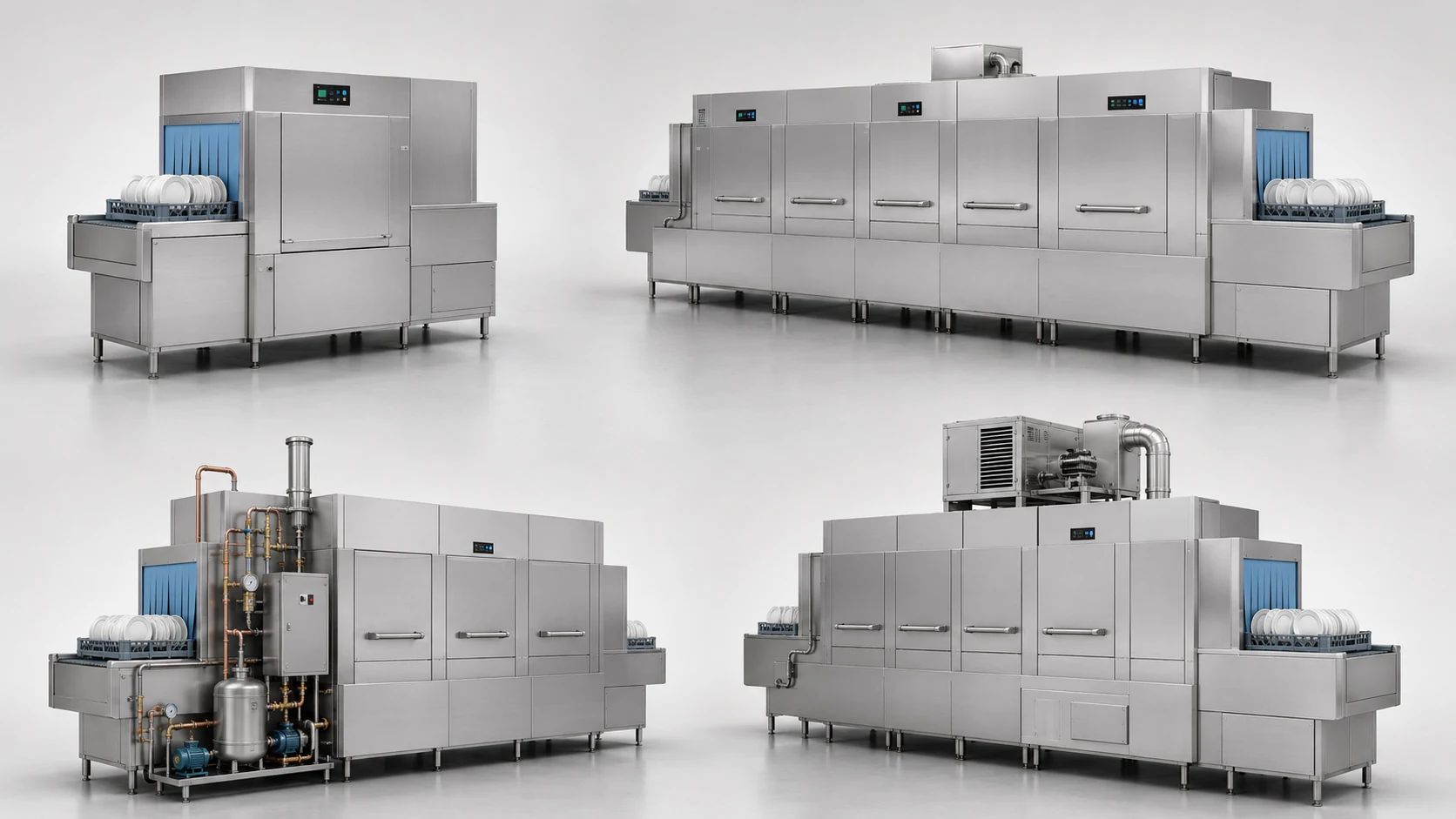
Commercial conveyor dishwashers for different capacity requirements
Compare machine length, wash sections, heating method and heat-recovery direction according to the peak rack load and available dishroom space.
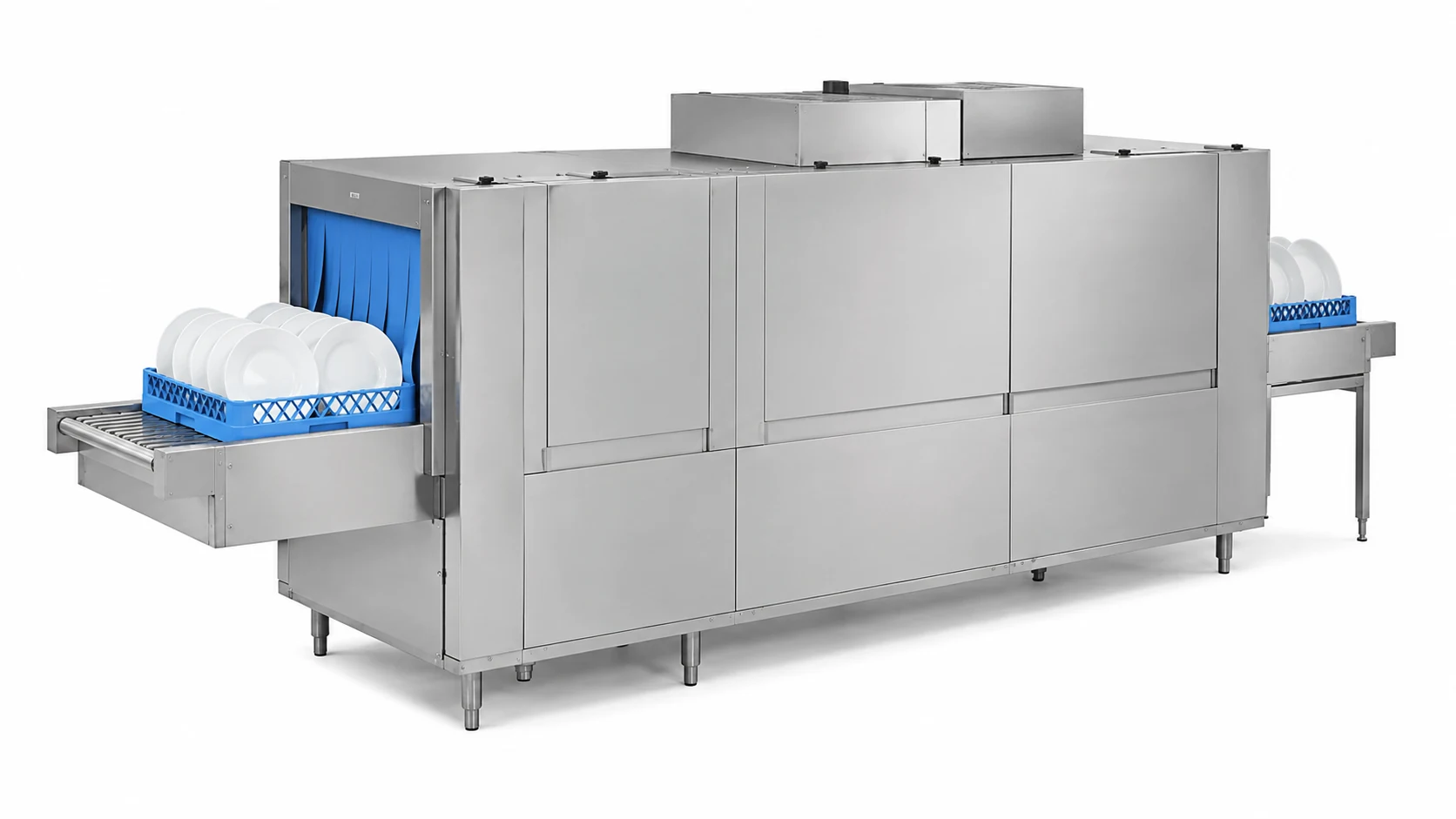
Standard Rack Conveyor Dishwashers
Standard rack conveyor systems suit large restaurants, hotels, canteens and institutional kitchens that require continuous washing but do not need the longest multi-tank configuration.
Confirm rack size, nominal capacity, conveyor speed, entry height, exit height, loading direction, tank structure and service access.
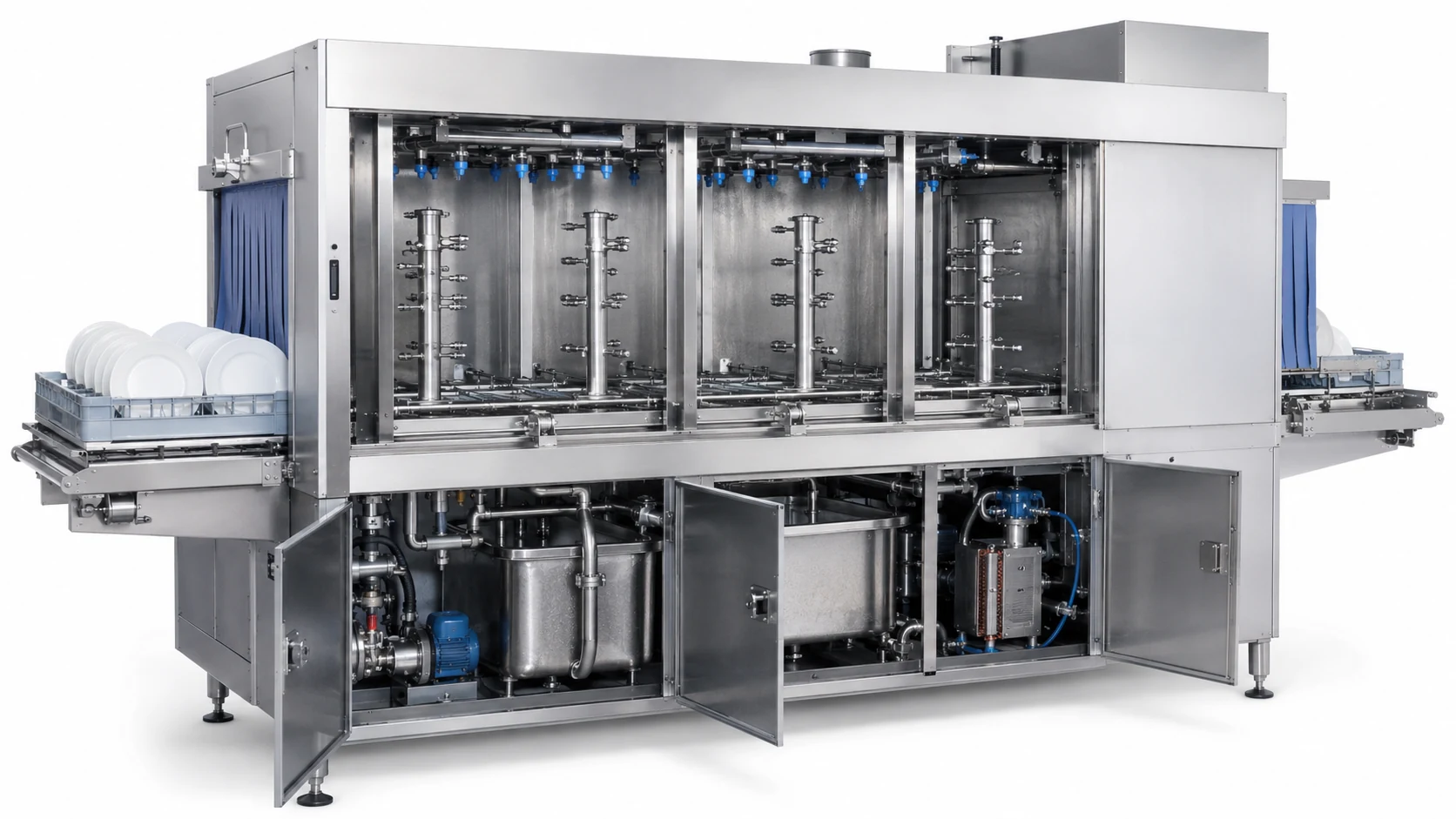
Wash-Zone and Spray-System Structure
Inspection panels should provide access to spray arms, filters, tanks, pumps, heating components and conveyor mechanisms. The number of sections affects machine length, utility load and washing sequence.
Review pre-wash, main wash, rinse, final-rinse and optional drying directions according to the actual dish soil and required output.
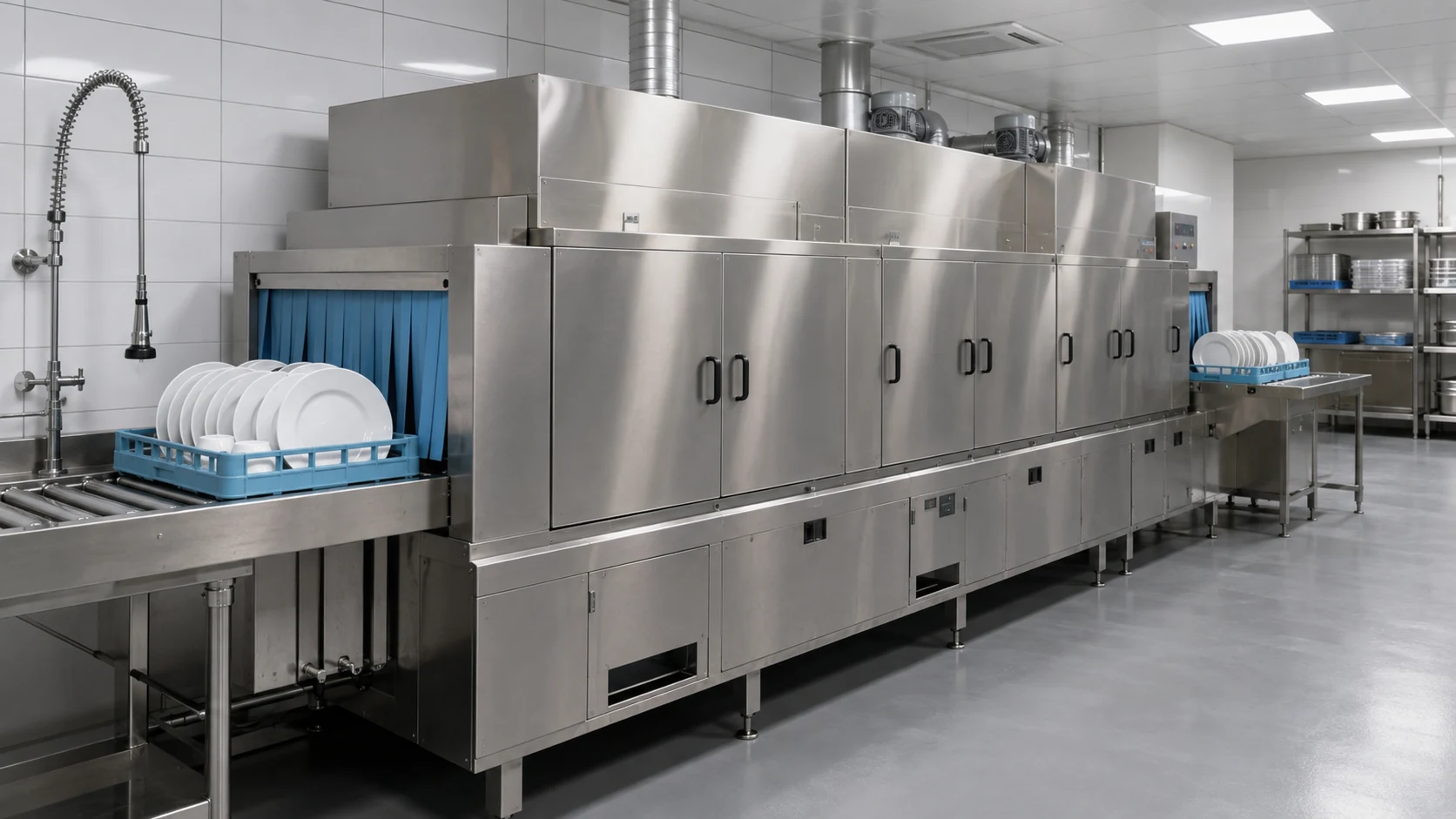
Multi-Tank Conveyor Dishwashers
Multi-tank systems divide washing into dedicated stages and can suit facilities with sustained rack demand, heavier soil loads or longer operating periods.
Confirm the number of zones, tank capacities, installed power, steam use, water consumption, conveyor direction, total machine length and required maintenance clearance.
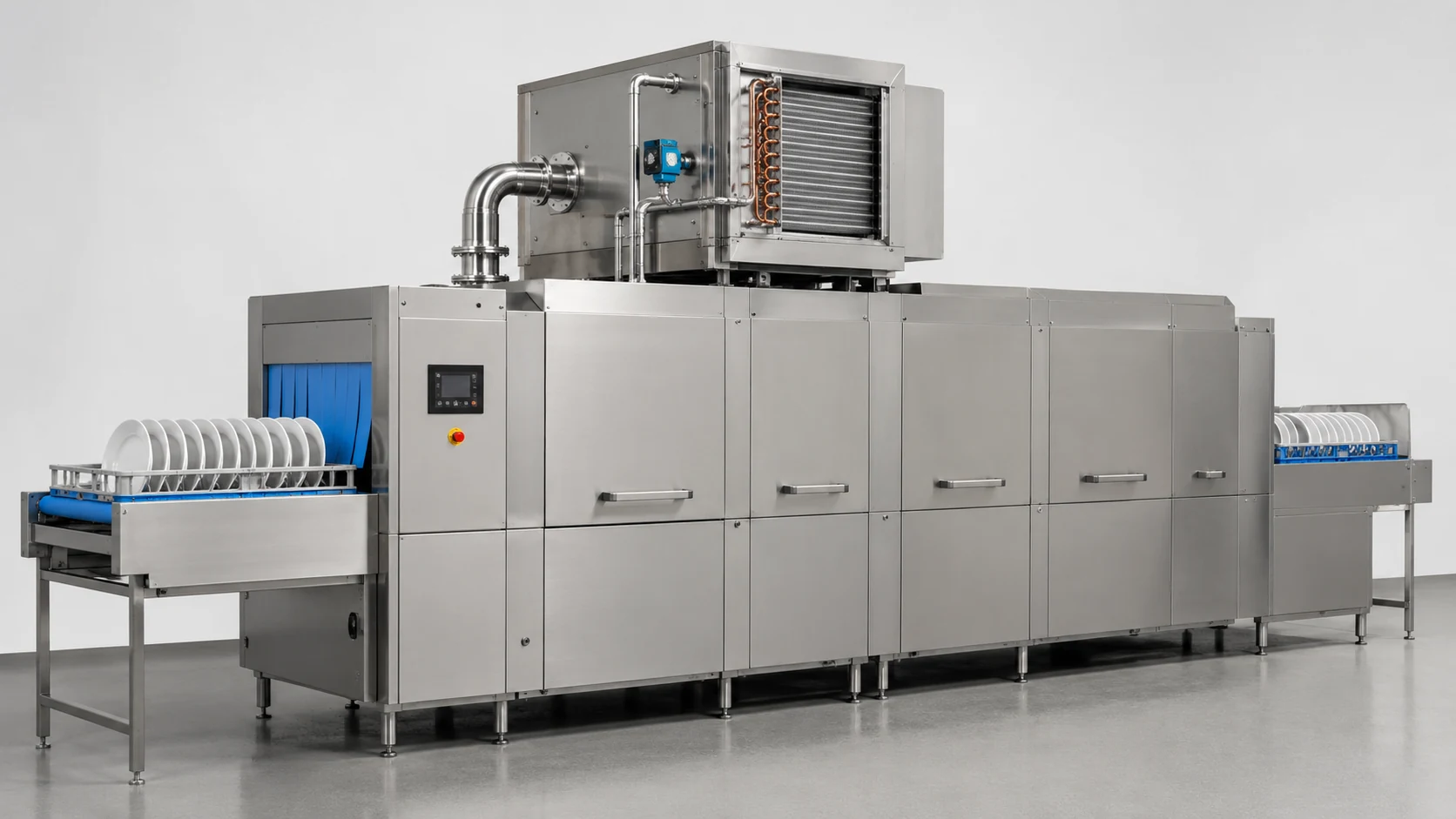
Heat-Recovery Conveyor Systems
Heat-recovery or steam-condensation modules can capture part of the exhaust heat and reduce the amount of warm humid air released directly into the dishroom.
The benefit depends on operating hours, incoming water conditions, local ventilation design, maintenance access and the selected recovery system.
How to select commercial conveyor dishwashers
A suitable system should match actual peak demand, dish dimensions, wash-zone requirements, conveyor direction, utilities and available room length.
Peak Racks per Hour
Calculate the complete racks produced during the busiest meal period and include sorting and loading time.
Dish & Tray Dimensions
Confirm the largest plates, bowls, trays and utensils plus the rack dimensions used by the facility.
Conveyor Direction
Define left-to-right or right-to-left movement according to the dirty collection and clean output zones.
Required Wash Zones
Confirm pre-wash, main wash, rinse, high-temperature final rinse and any optional drying section.
Heating Method
Review electric heating, steam heating or another available project heat source with the required recovery rate.
Room & Utilities
Provide available length, voltage, hot water, steam, drainage, ventilation, floor trench and service-access conditions.
Commercial conveyor dishwashers for high-volume foodservice operations
Capacity and system length should reflect the meal schedule, rack volume, operating hours, dish mix and the available dishroom infrastructure.
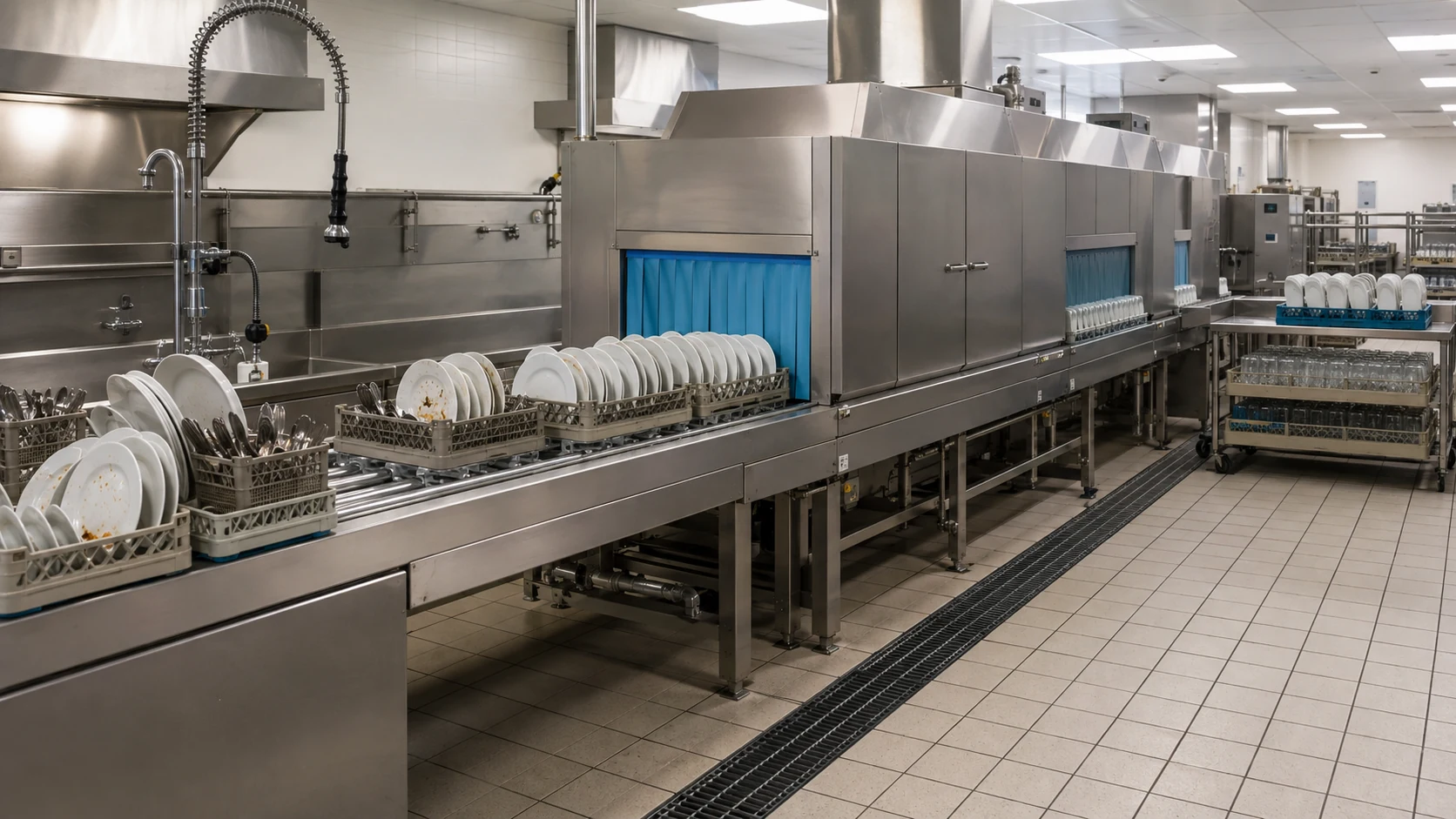
Large Hotels
Continuous rack processing for restaurants, banquets and room service.
Application 02Factory Canteens
High-volume tray, plate and utensil washing after fixed meal periods.
Application 03Schools & Universities
Rapid washing of repeated tray and plate loads during short service windows.
Hospitals
Structured dirty-to-clean processing for institutional foodservice operations.
Convention Facilities
Large post-event rack peaks from banquet and group dining service.
Application 06Central Kitchens
Extended operating schedules and coordinated high-capacity washing workflows.
Quotation details for commercial conveyor dishwashers
Accurate system matching requires capacity, direction, wash-zone, utility, room-layout and shipping information.
Capacity
Dish types, rack size, peak racks per hour and daily operating hours.
Configuration
Direction, required wash sections, sanitizing and optional heat recovery.
Utilities
Power, heating, water, steam, drainage, floor trench and ventilation.
Dishroom Layout
Sorting, pre-rinse, loading, unloading, rack return and service access.
Send the dishroom plan, utility schedule or peak-load data
PRIME can review drawings, photographs, equipment schedules, utility data and existing quotations and organize missing technical details before supplier comparison.
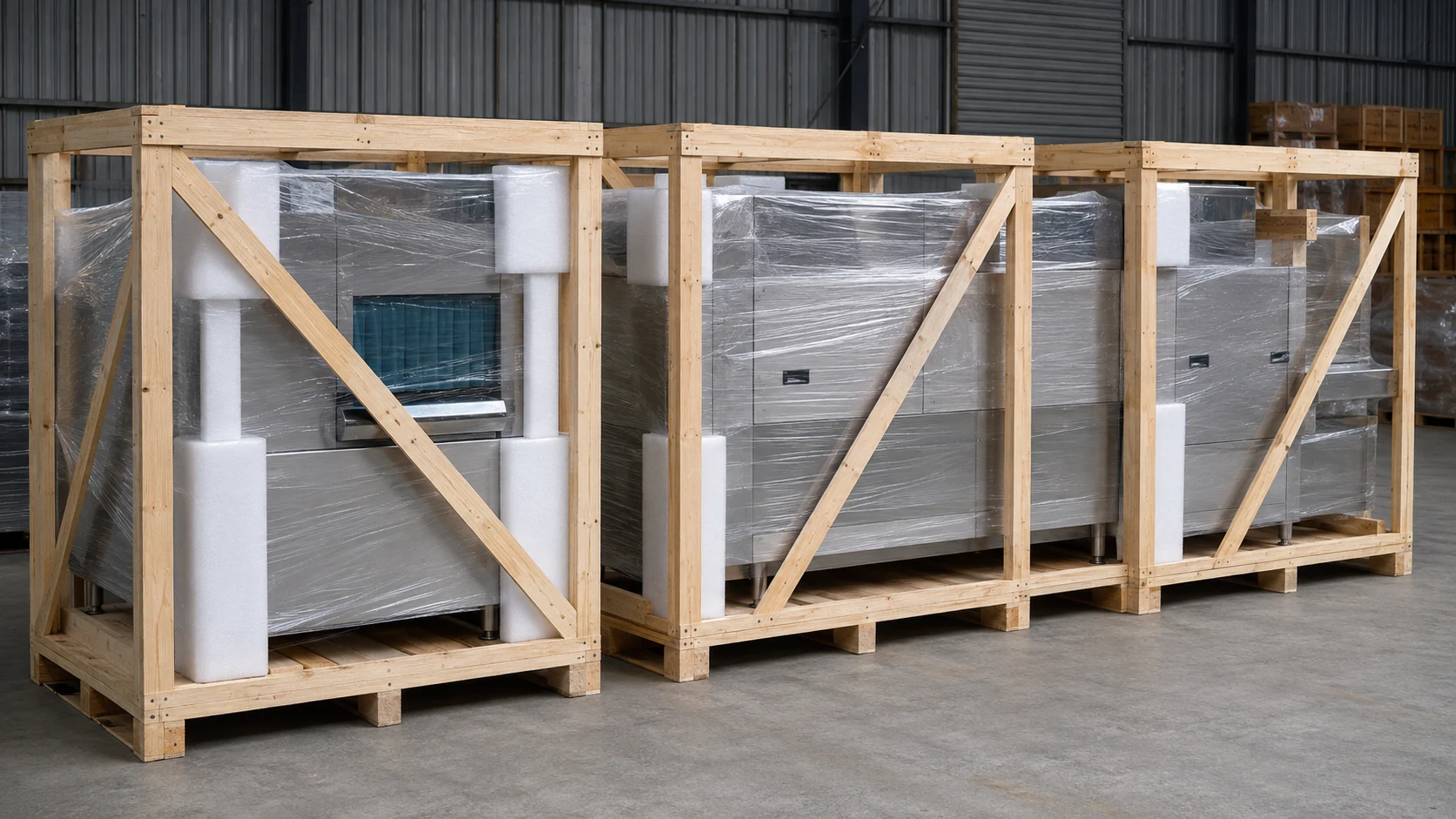
Commercial conveyor dishwasher sourcing and dishroom coordination
PRIME helps overseas buyers organize system requirements, compare suitable configurations and coordinate dishroom, utility, packing and delivery details before shipment.
Requirement Review
Organize rack volume, rack size, operating hours and direction.
System Configuration
Compare standard, multi-tank, high-temperature and heat-recovery directions.
Dishroom & Utility Coordination
Review sorting, pre-rinse, tables, power, steam, water, drainage and ventilation.
Export Packing Coordination
Confirm modular separation, film, foam protection, fitted pallets and reinforced wooden frames.
Commercial conveyor dishwashers purchasing FAQ
These questions cover the main capacity, configuration, utility and packing issues that should be clarified before quotation.
What is the difference between hood-type and conveyor dishwashers?
How many racks per hour should a conveyor dishwasher handle?
Should the conveyor move from left to right or right to left?
What is the difference between single-tank and multi-tank systems?
Is heat recovery necessary for a conveyor dishwasher?
What utility information is required before quotation?
Can inlet and outlet dish tables be customized?
How are large commercial conveyor dishwashers packed for export?
Start your commercial conveyor dishwasher project
Send the rack size, peak racks per hour, operating hours, conveyor direction, wash sections, heating method, utility data, room plan and destination port. PRIME will help organize the requirement and coordinate suitable supply options.