Commercial Cooking Ranges from China
PRIME Commercial Equipment coordinates commercial cooking ranges for restaurants, hotels, central kitchens, catering facilities, canteens and international foodservice projects.
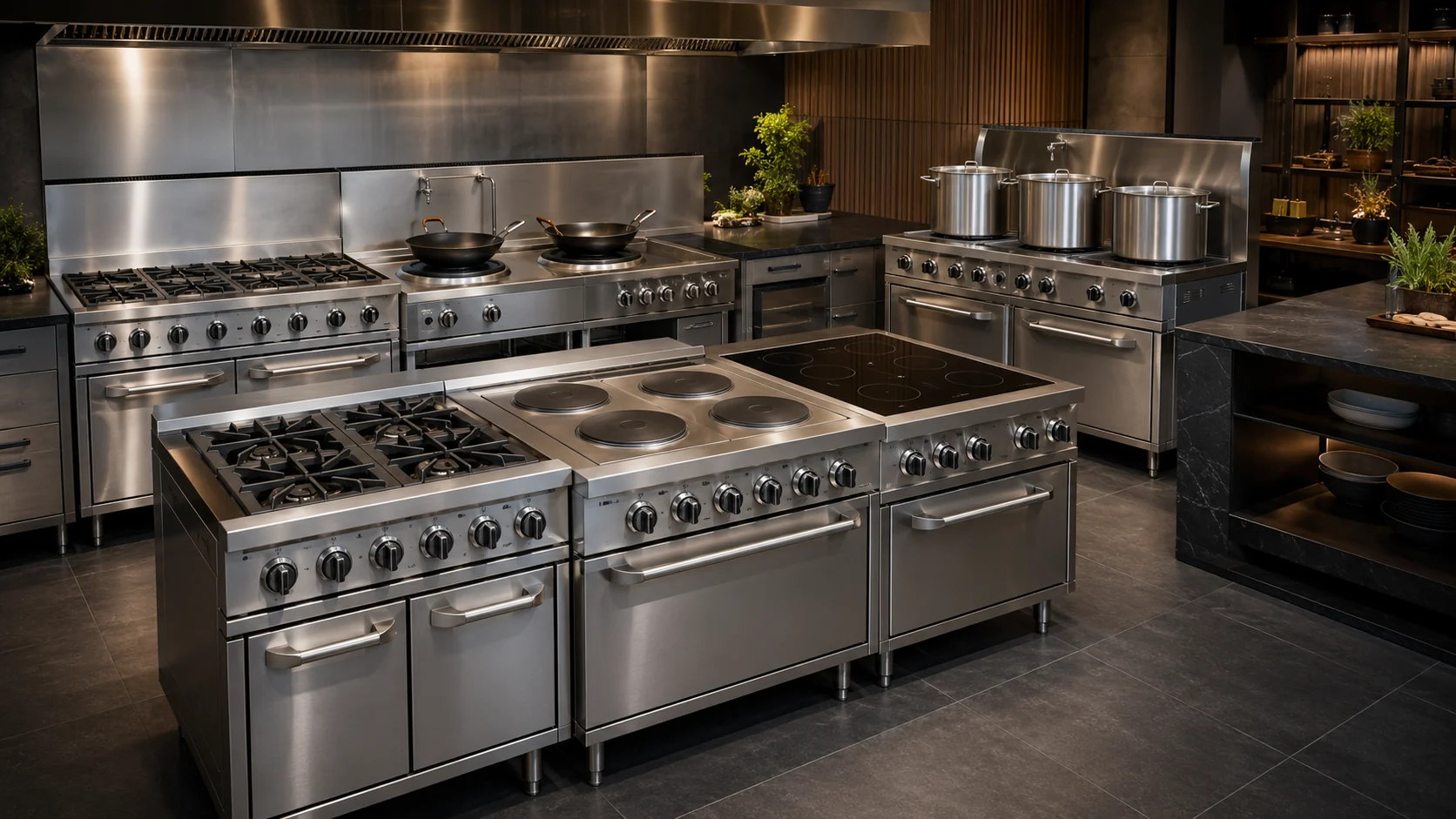
Compare commercial cooking ranges by energy source, burner output, cooking surface, oven configuration, connection standard and target-market compliance.
Select commercial cooking ranges around the actual menu
Commercial cooking ranges should be selected around the menu, production volume, cookware, service speed, available utilities and kitchen ventilation plan.
A six-burner gas range, four-zone induction range and double wok range may have similar overall dimensions, but their utility loads, cooking methods, ventilation requirements and operating costs are very different.
PRIME helps organize the requirement before supplier comparison so quotations are based on a consistent range configuration.
Information to confirm before quotation
These details help determine the correct cooking surface, base structure and export configuration.
Commercial cooking range types for professional kitchens
The range structure can be coordinated according to cooking method, fuel availability, output requirement, kitchen layout and target-market standards.
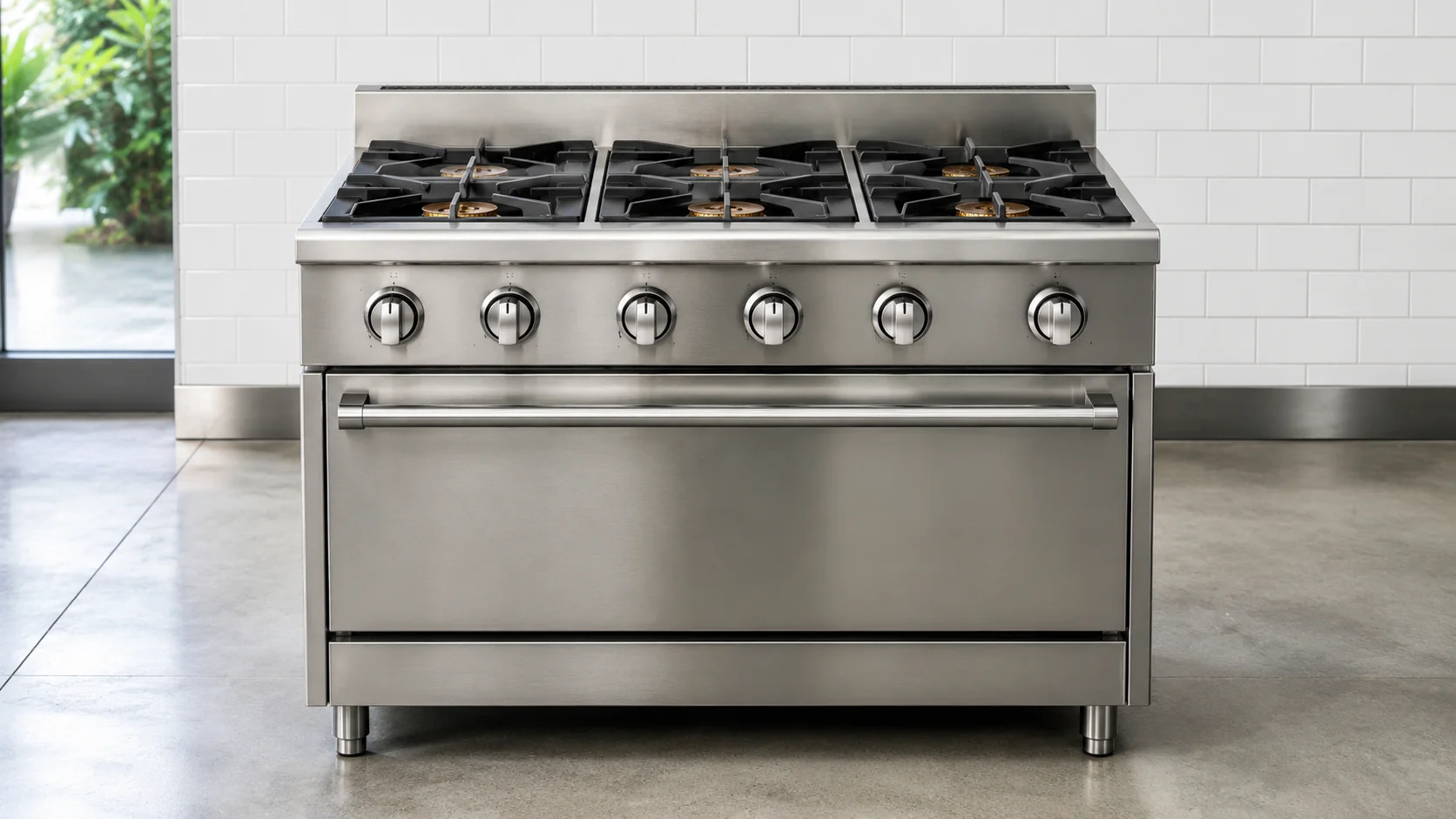
Gas Cooking Ranges
Four-burner, six-burner and larger open-burner ranges for restaurants and high-volume kitchens requiring direct flame and rapid heat adjustment.
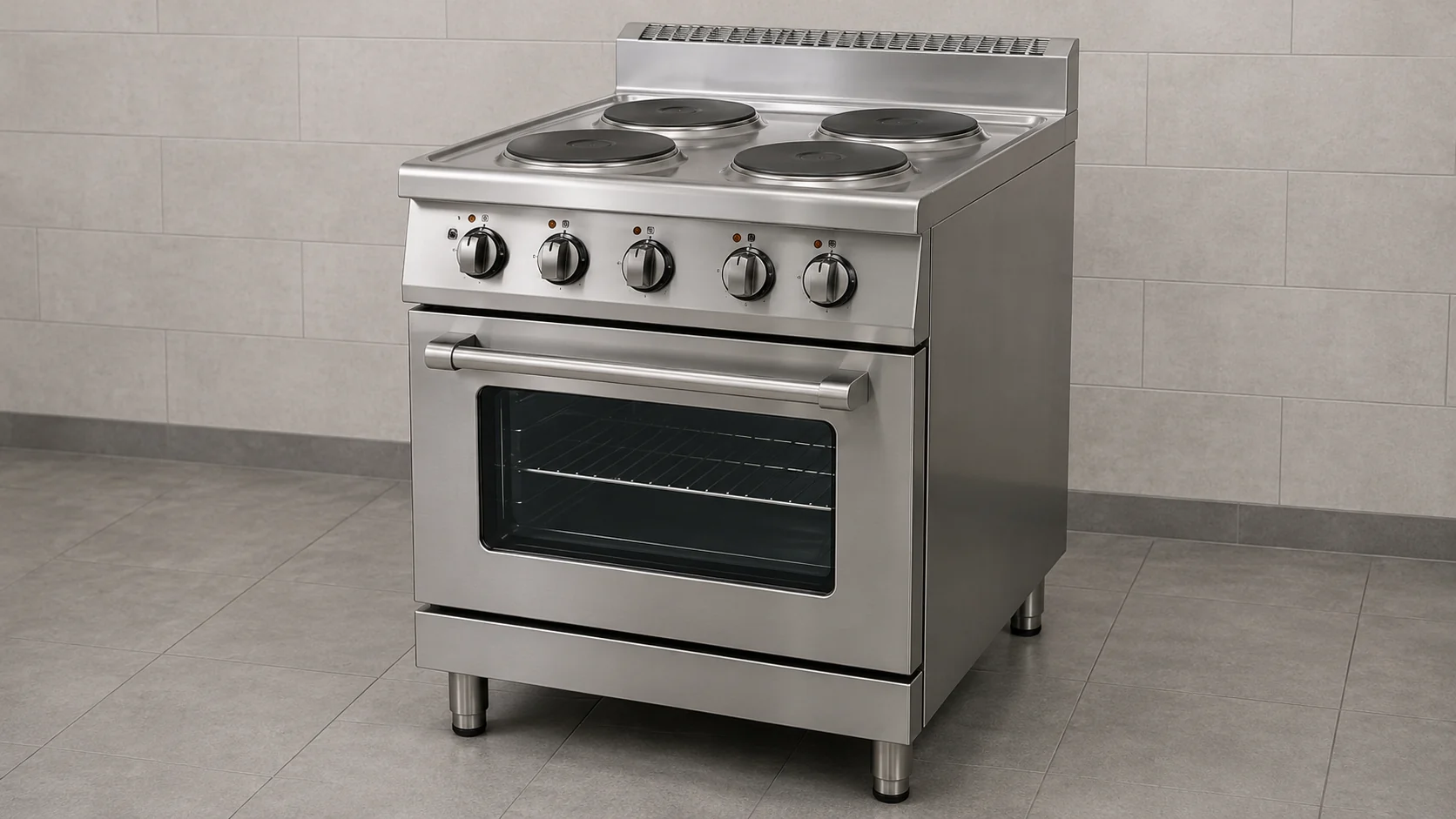
Electric Cooking Ranges
Electric ranges with solid hot plates or electric cooking elements for kitchens where gas is unavailable or restricted.
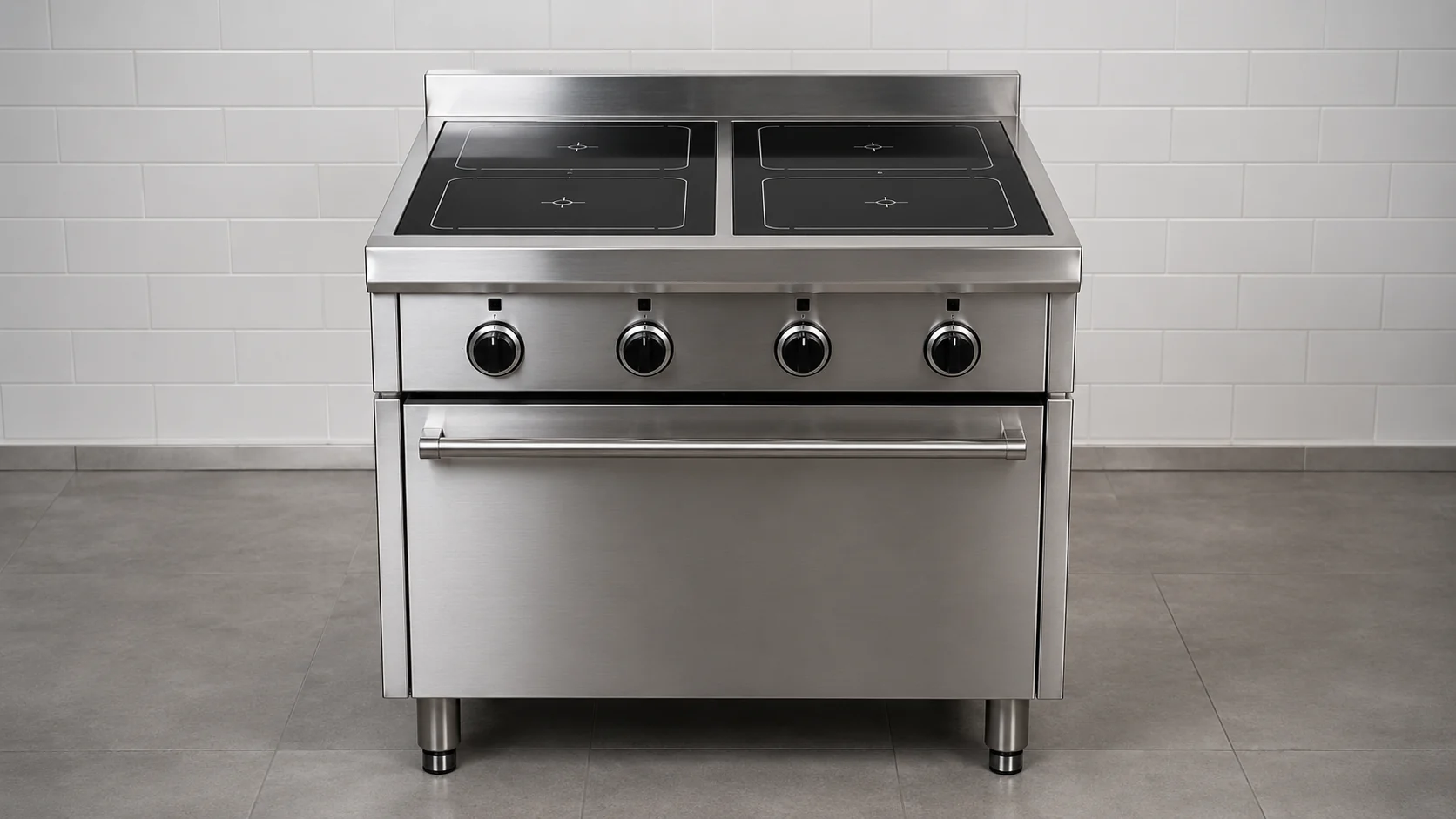
Commercial Induction Ranges
Multi-zone commercial induction ranges for controlled heating, reduced open flame and kitchens designed around induction-compatible cookware.
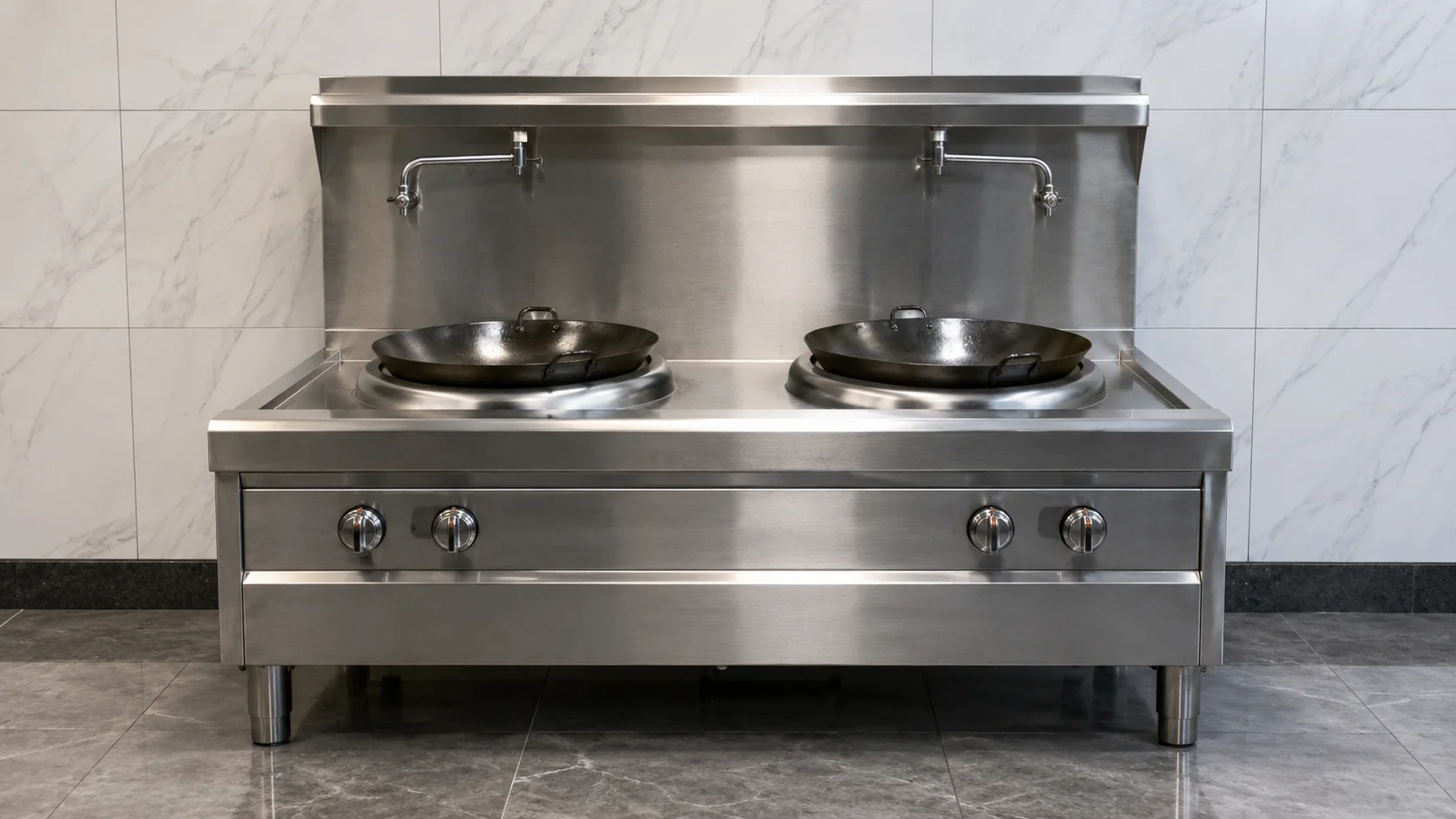
Commercial Wok Ranges
Single or double wok ranges with high-output burners, water backsplashes and wok-ring structures for Asian cooking applications.
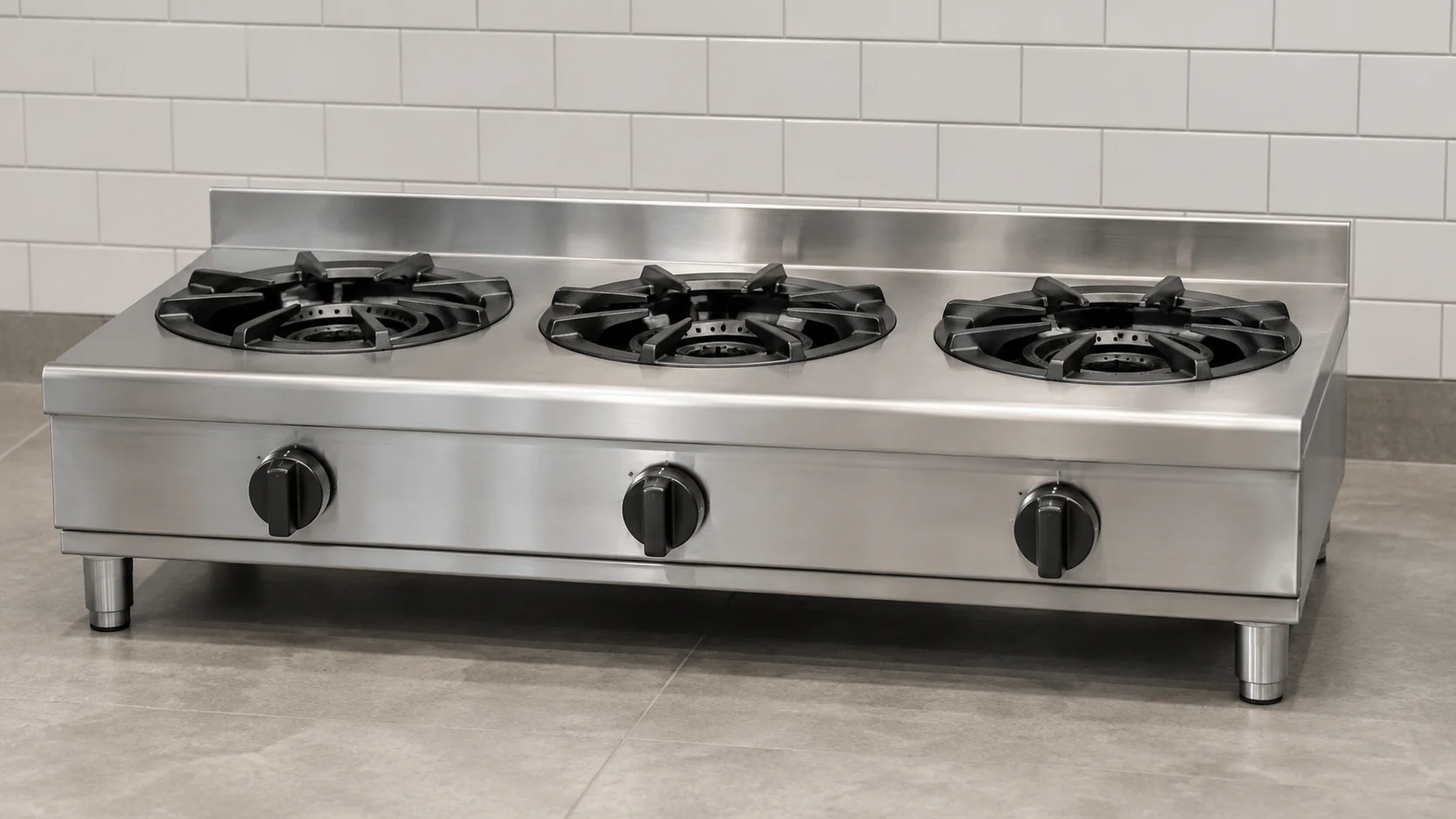
Stock Pot Ranges
Low-height heavy-duty ranges for stock pots, soup kettles and large cookware requiring stable support and concentrated burner output.
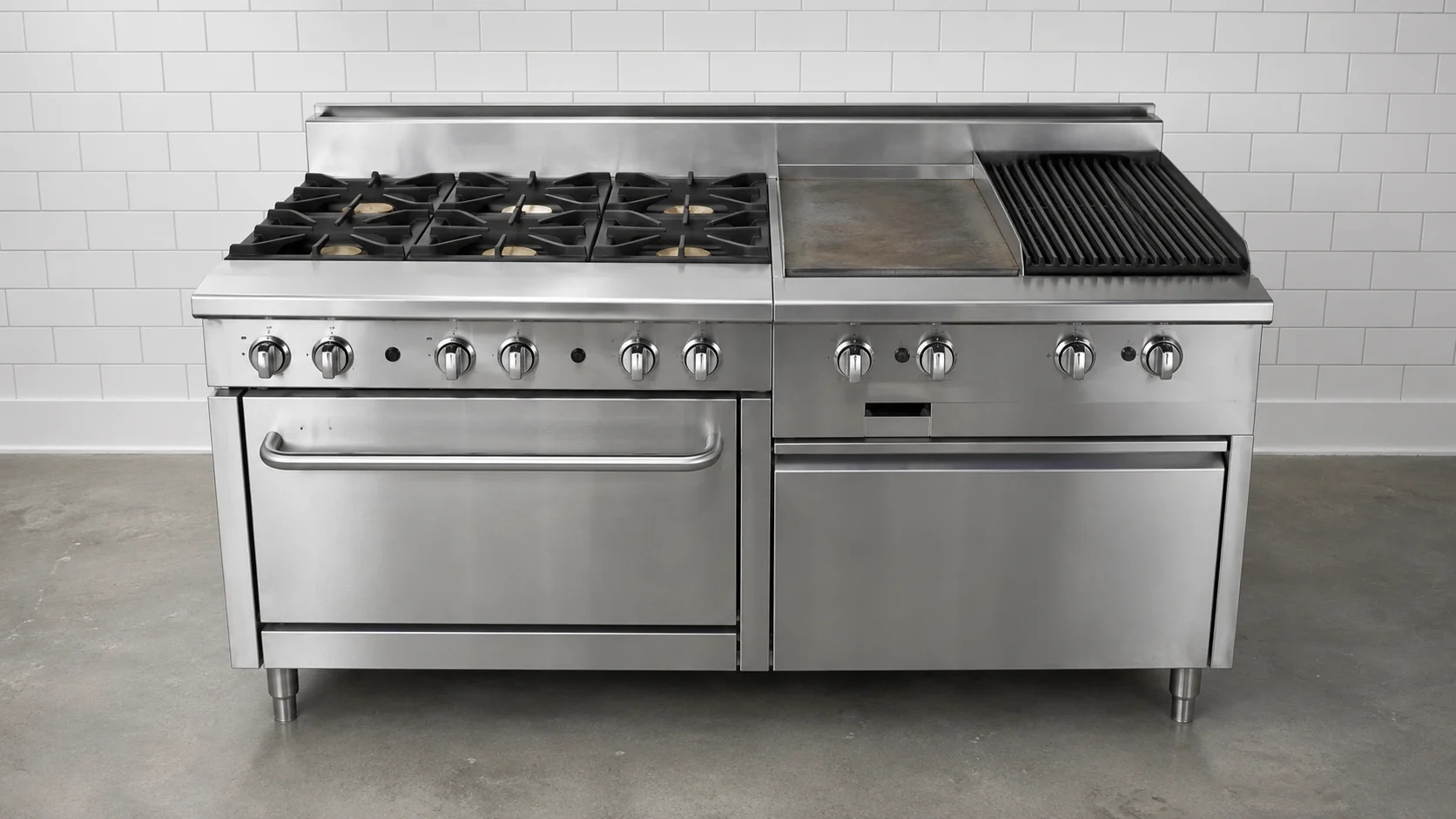
Combination Cooking Ranges
Integrated cooking suites combining open burners, griddles, charbroilers, ovens or storage sections in one coordinated line.
Four decisions that shape the range specification
The correct specification should reflect the actual cooking process rather than only the number of burners shown in a catalogue image.
Menu and Cookware
Confirm frying pans, stock pots, woks, griddles and other cookware used during peak service.
Peak Production
Estimate how many burners or zones operate simultaneously and how quickly heat recovery is required.
Available Utilities
Confirm gas type, inlet pressure, electrical load, voltage, phase and available connection points.
Kitchen Layout
Check hood coverage, aisle space, adjacent equipment, service clearances and cleaning access.
Gas, electric and induction cooking ranges
Each energy source has different utility, ventilation, cookware and operating implications. Final selection should follow the project design and local requirements.
| Comparison point | Gas ranges | Electric ranges | Induction ranges |
|---|---|---|---|
| Heat control | Direct flame with rapid visible adjustment. | Controlled heating through electric elements or solid plates. | Fast electronic control with direct heating of compatible cookware. |
| Utility requirement | Natural gas or LPG supply, pressure and connection specification. | Electrical load, voltage, frequency and phase confirmation. | Higher electrical planning requirement depending on total installed power. |
| Cookware | Suitable for most commercial cookware and open-flame cooking methods. | Suitable for flat-bottom cookware matching the plate dimensions. | Requires induction-compatible cookware with suitable base material. |
| Ventilation | Normally requires appropriate exhaust and combustion-air planning. | Ventilation depends on heat, grease and cooking process. | No combustion gas, but cooking heat and grease extraction may still be required. |
| Buyer confirmation | Gas type, pressure, burner rating, ignition and safety devices. | Voltage, phase, power rating, element type and cable connection. | Zone power, total load, controls, cookware and cooling clearance. |
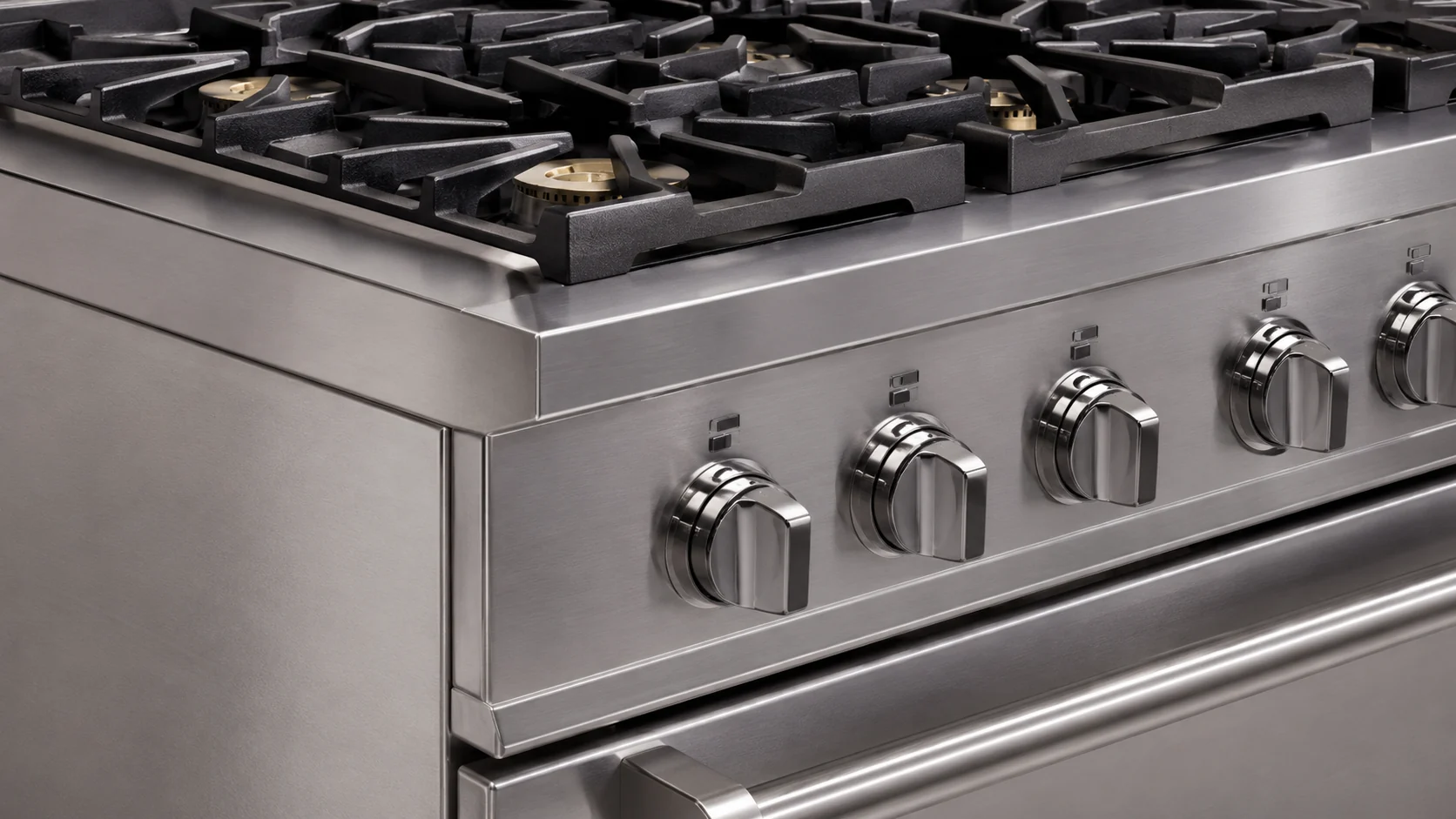
Review burners, controls and stainless steel construction
Equipment with similar exterior dimensions may use different burners, grates, valves, controls, insulation and internal frame structures.
Integrate the range into the complete cooking line
A commercial range should be reviewed as part of the entire hot-kitchen layout, including ventilation, neutral work surfaces, adjacent cooking equipment, utility connections and maintenance access.
Cooking-Line Dimensions
Align equipment width, depth, working height and backsplash positions across the line.
Exhaust Hood Coverage
Confirm equipment location, heat and grease load with the kitchen ventilation designer.
Gas and Electrical Services
Coordinate inlet positions, isolation devices, cable routes, phases and total connected load.
Adjacent Work Surfaces
Add landing areas, preparation tables and neutral cabinets where required by the workflow.
Cleaning and Maintenance
Preserve access for removable trays, grease cleaning, servicing and connection inspection.
Target-Market Requirements
Confirm required certifications, safety devices, labeling and documentation for the selected model.
How PRIME coordinates commercial cooking range orders
PRIME Commercial Equipment helps organize the requirement, compare suitable suppliers and coordinate available technical and export information.
Review Requirement
Check range type, menu, fuel, voltage, output, base and quantity.
Match Supplier
Coordinate suppliers with suitable cooking-equipment configurations and export capability.
Confirm Specification
Align burner output, controls, utilities, dimensions, materials and documentation.
Follow Production
Coordinate approved details, available inspection points and packing information.
Prepare Delivery
Support labeling, export packing, mixed-order delivery and forwarder coordination.
Documents to confirm before shipment
Documentation availability depends on the supplier, model and confirmed order. Required files should be agreed before production.
Technical Specification
Dimensions, energy source, burner or zone quantity, output, oven and material details.
Utility Information
Gas type, inlet pressure, electrical rating, voltage, frequency, phase and connection.
Product Drawing
Overall dimensions, service connections, clearances and major component positions.
Compliance Documents
Model-specific certificates, declarations, test information or labels when available.
Pre-Shipment Photos
Finished equipment, controls, rating labels, accessories and packing when agreed.
Packing List
Package dimensions, weight, quantity, accessories and shipment preparation details.
Continue planning the commercial kitchen project
Commercial cooking ranges FAQ
What commercial cooking ranges can PRIME help source?
PRIME can coordinate gas ranges, electric ranges, induction ranges, wok ranges, stock pot ranges and combination cooking suites.
Can gas ranges be configured for natural gas or LPG?
Yes. The required gas type, inlet pressure, burner specification, connection and destination-market requirements must be confirmed before production.
Can the voltage and frequency be customized?
Many electric and induction models can be configured for different voltage, frequency and phase requirements. The confirmed specification must match the project electrical plan.
Can a commercial range include an oven or cabinet base?
Yes. Depending on the model, the base may contain an oven, storage cabinet, open stand or other coordinated structure.
What information is needed for an accurate quotation?
Send the range type, burner or zone quantity, menu application, fuel or voltage, output requirement, oven or cabinet preference, quantity, destination and required certification.
Can several cooking appliances be combined into one line?
Yes. Gas burners, griddles, charbroilers, ovens, neutral surfaces and other modules can be coordinated into a consistent cooking line, subject to supplier capability and approved specifications.
Send your commercial cooking range requirements.
Include the cooking method, burner or zone quantity, natural gas or LPG requirement, voltage and frequency, output, oven or cabinet base, quantity, destination and required documentation.