
Commercial Stainless Steel Kitchen Trolleys from China
PRIME Commercial Equipment helps international buyers source commercial stainless steel kitchen trolleys for food preparation, service, clearing, tray handling, ingredient transport and project-specific kitchen workflows.
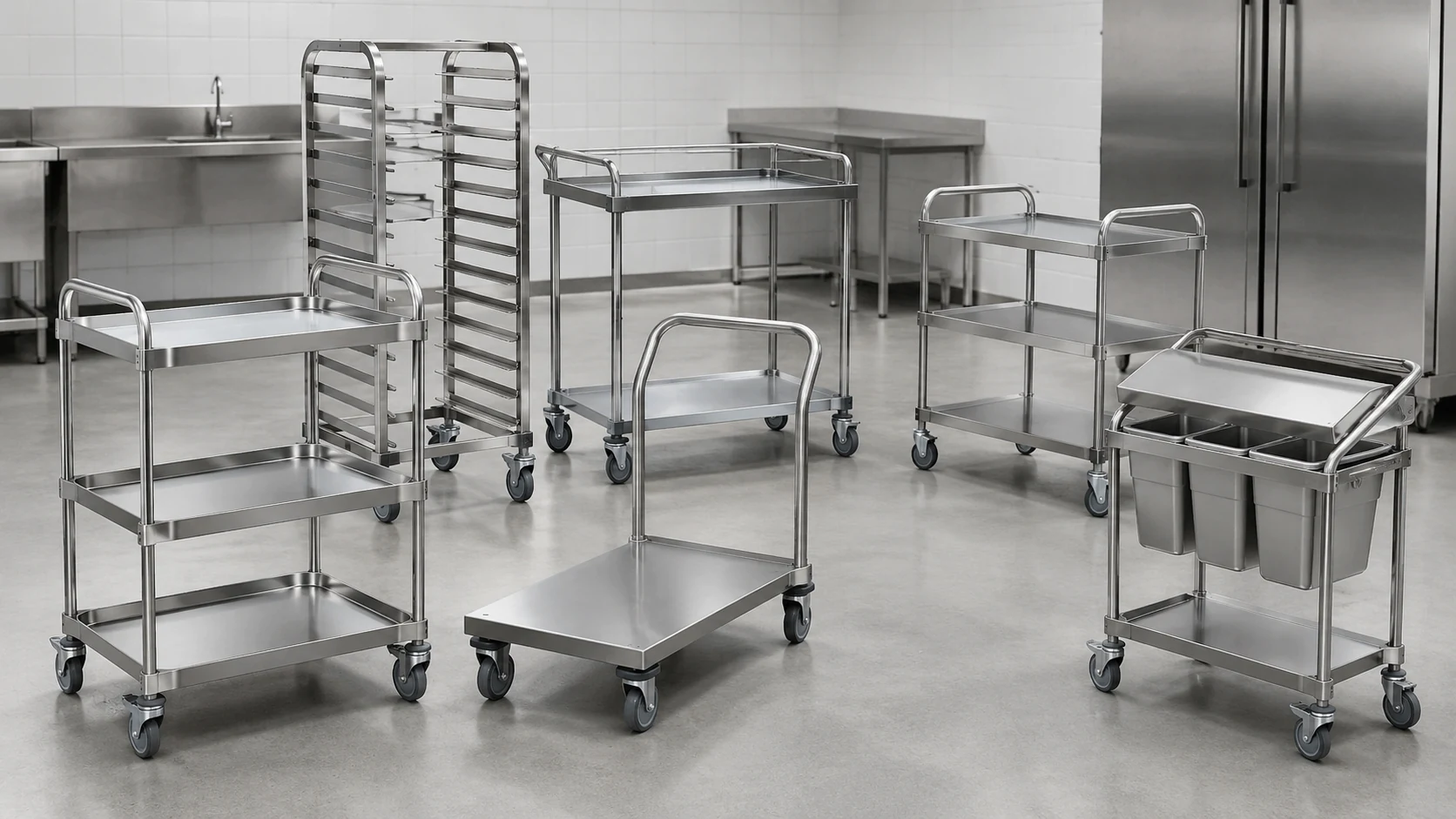
Match the trolley to the movement task
Commercial stainless steel kitchen trolleys may look similar in a catalogue, but their daily performance depends on shelf spacing, frame reinforcement, wheel quality, brake arrangement, handle position, tray compatibility and expected loading.
PRIME coordinates these details before quotation so suppliers compare the same trolley structure rather than quoting only a general product name.
Information that should be confirmed first
A clear use case helps define the correct trolley type, construction and caster configuration.
Commercial stainless steel kitchen trolley configurations
Start with the movement task and transported items. The frame, shelf, tray, bin, platform and caster structure can then be coordinated around the operating environment.
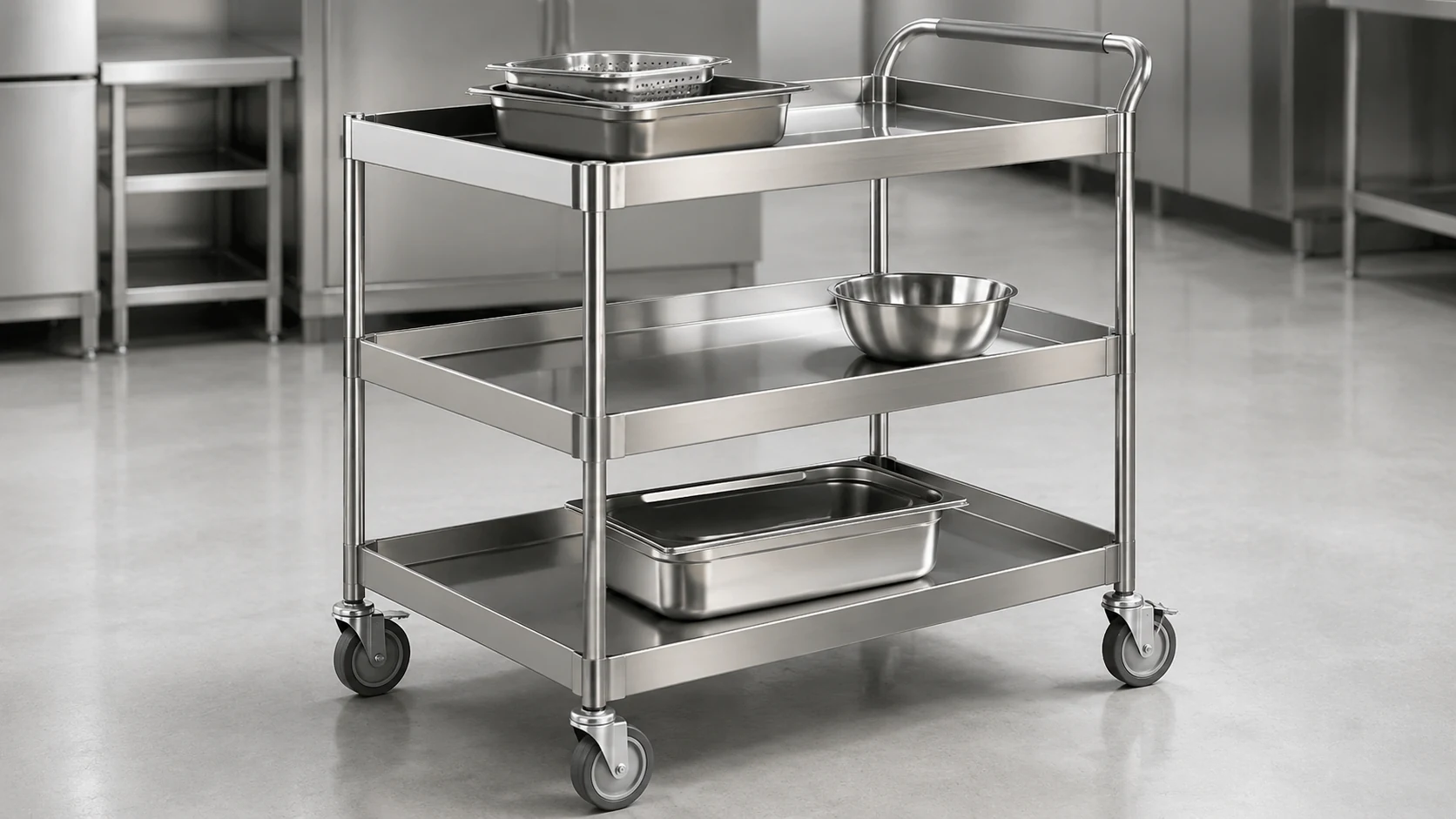
Utility Trolleys
General-purpose two-tier or three-tier trolleys for cookware, containers, ingredients, utensils and routine back-of-house transport.
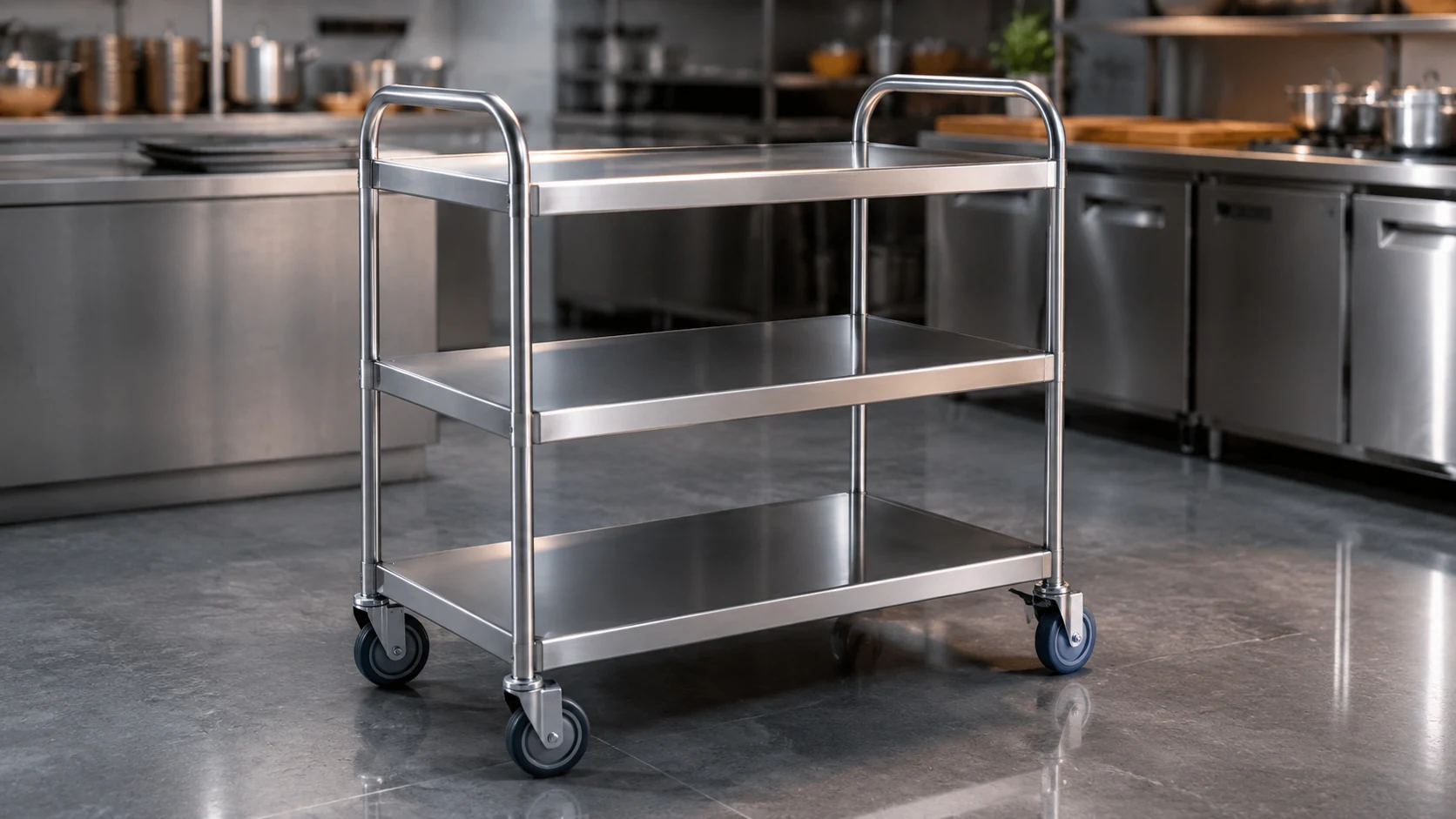
Service Trolleys
Clean-profile mobile units for food delivery, table service, hotel catering, banquet support and front-to-back-of-house movement.
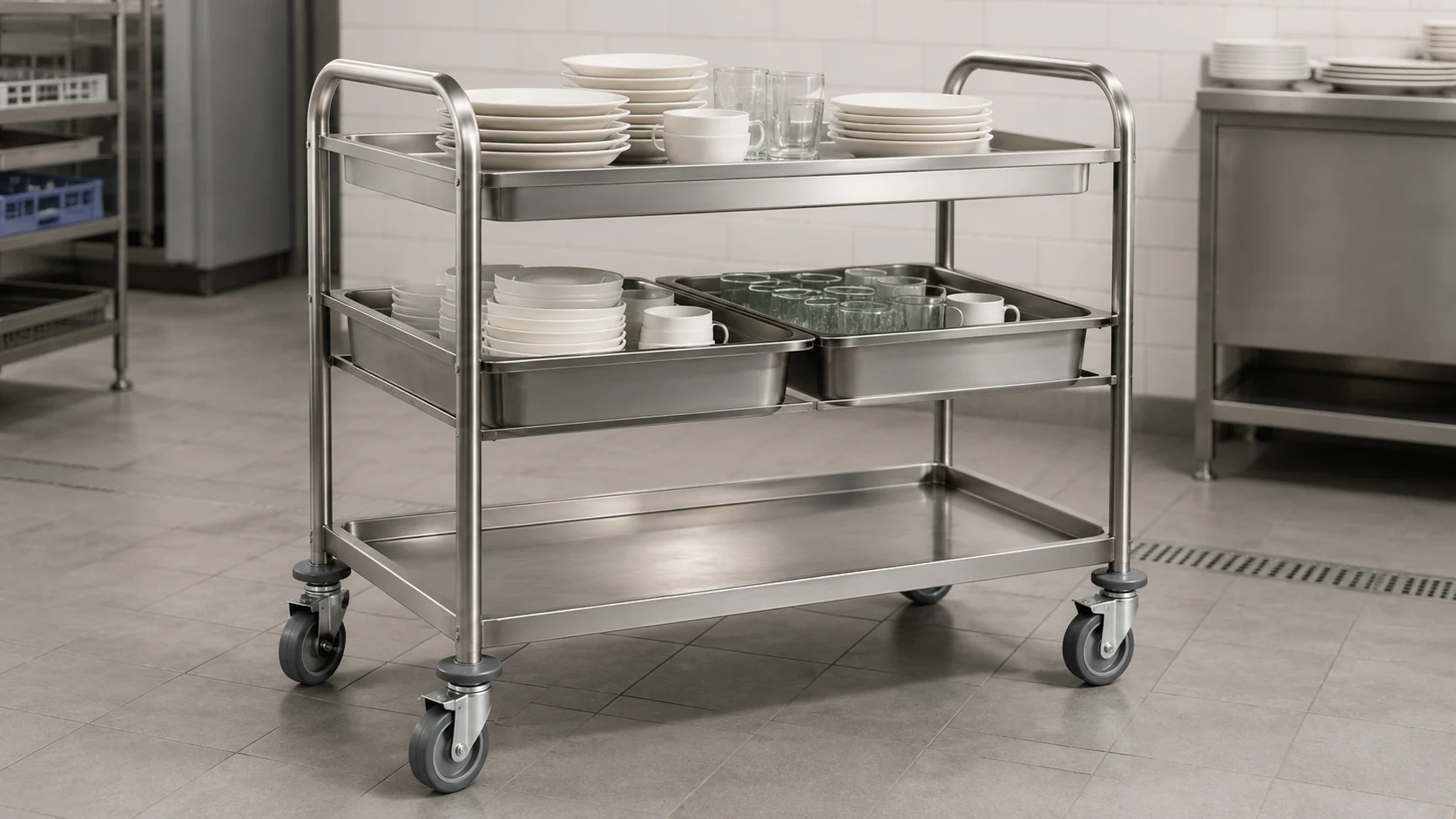
Clearing Trolleys
Trolleys for collecting dishes, cups, trays and waste containers around restaurants, canteens, hotels and dishwashing areas.
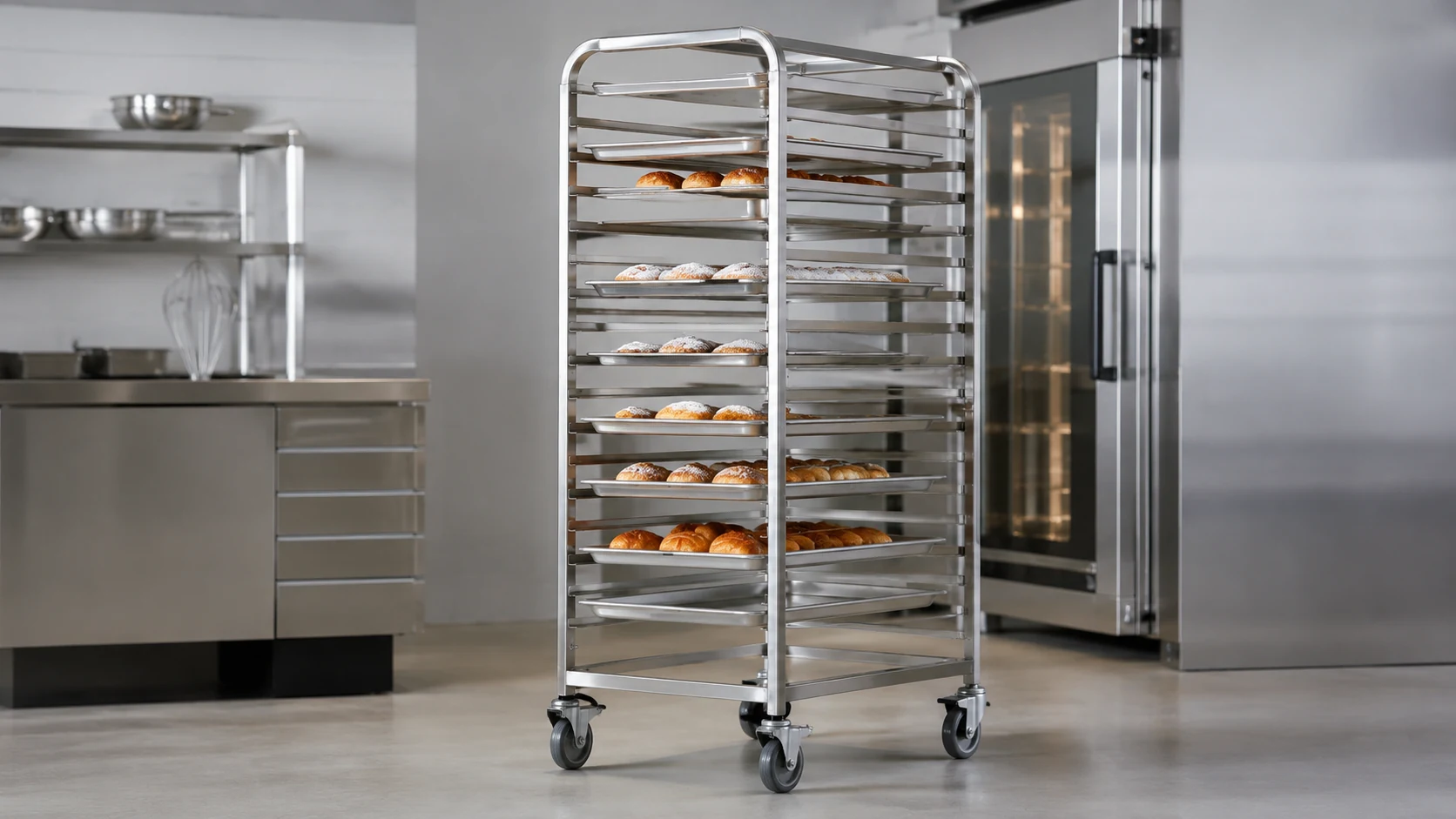
Tray Trolleys
Multi-level rack trolleys for bakery trays, sheet pans, food trays and batch movement between preparation, baking, cooling and storage areas.
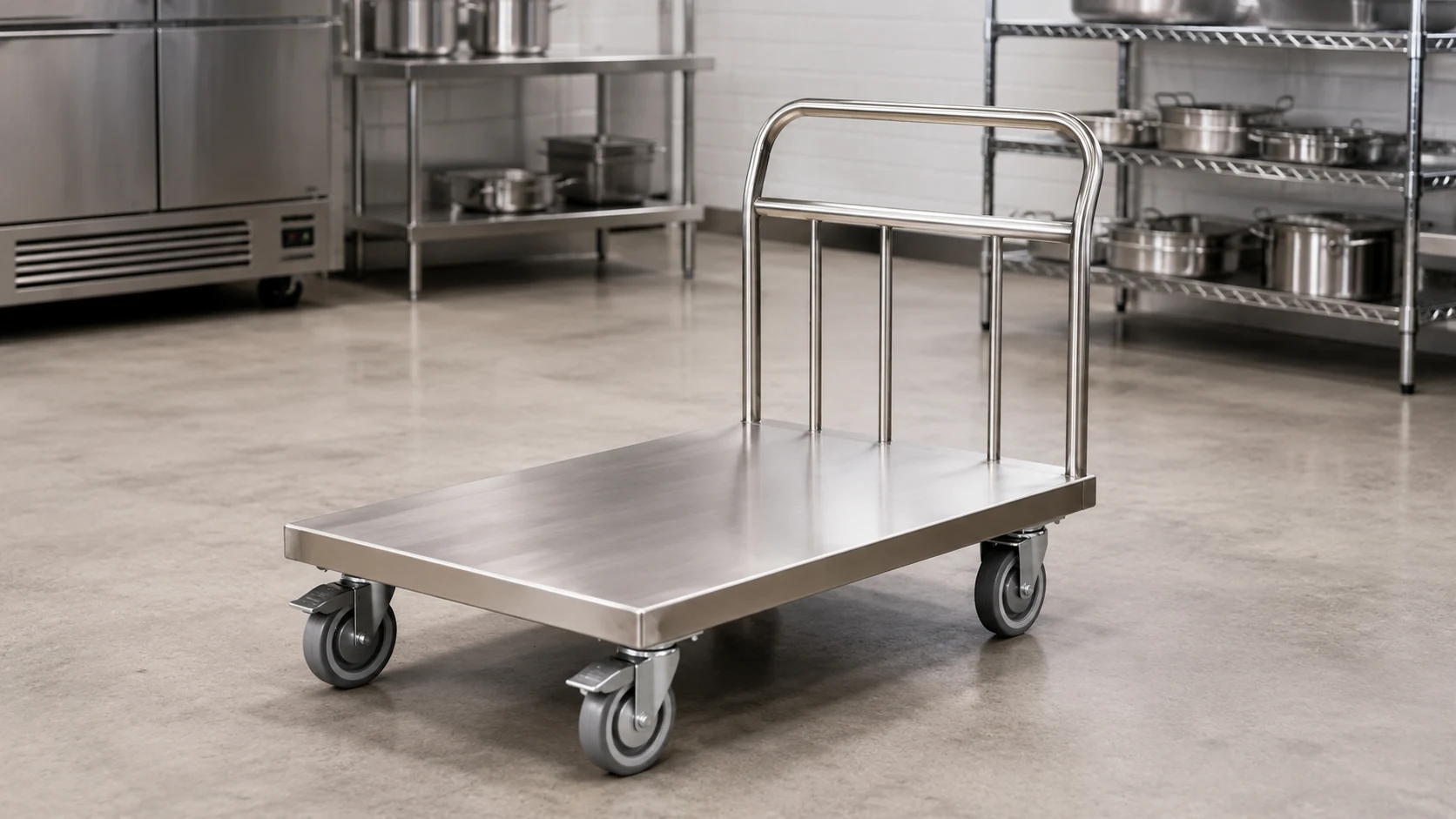
Platform Trolleys
Low mobile platforms for cartons, ingredient containers, equipment parts and heavier items requiring an open loading surface.
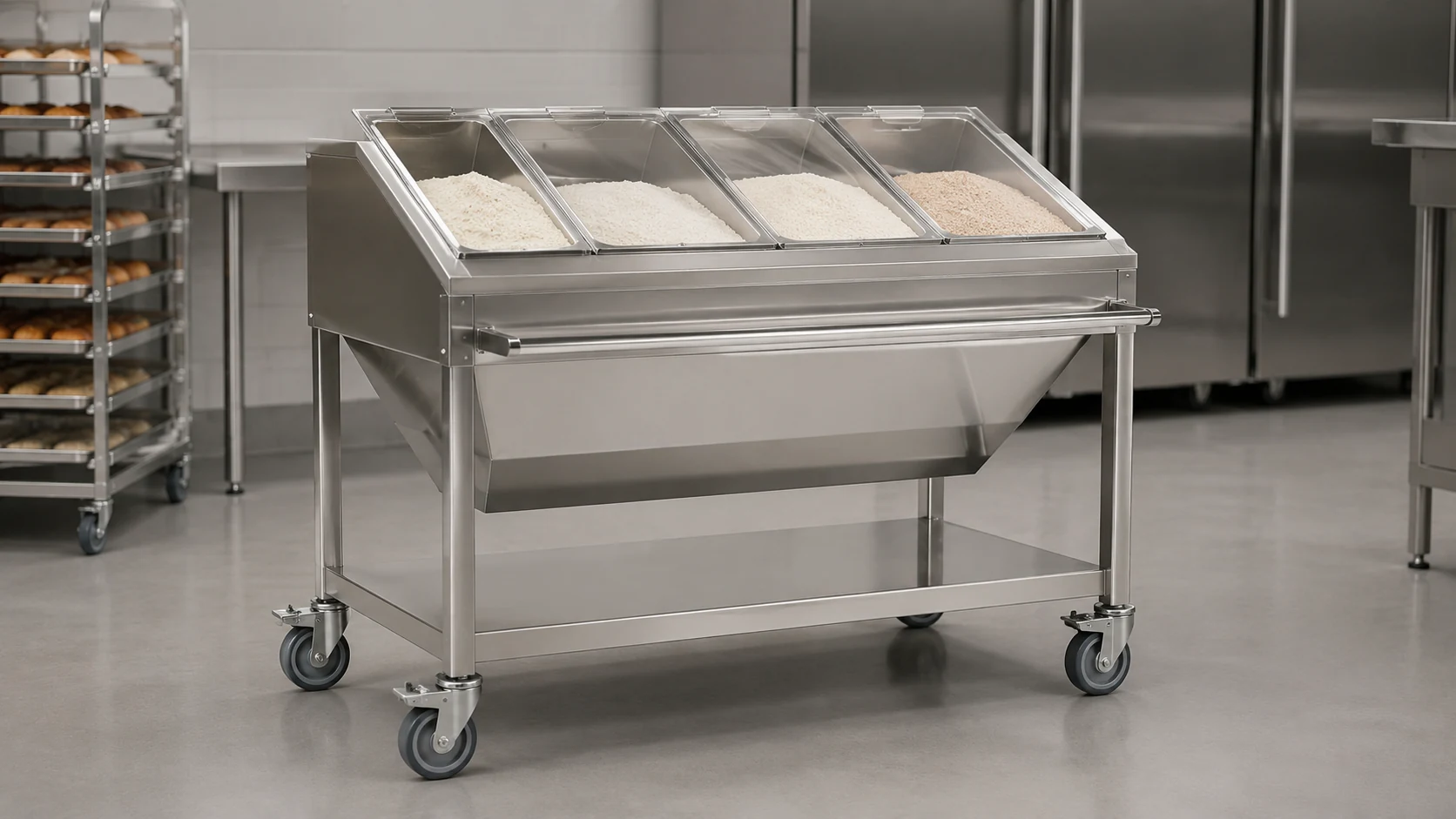
Ingredient Bin Trolleys
Mobile ingredient-storage structures with covered bins or compartments for flour, rice, grains and other bulk dry materials.
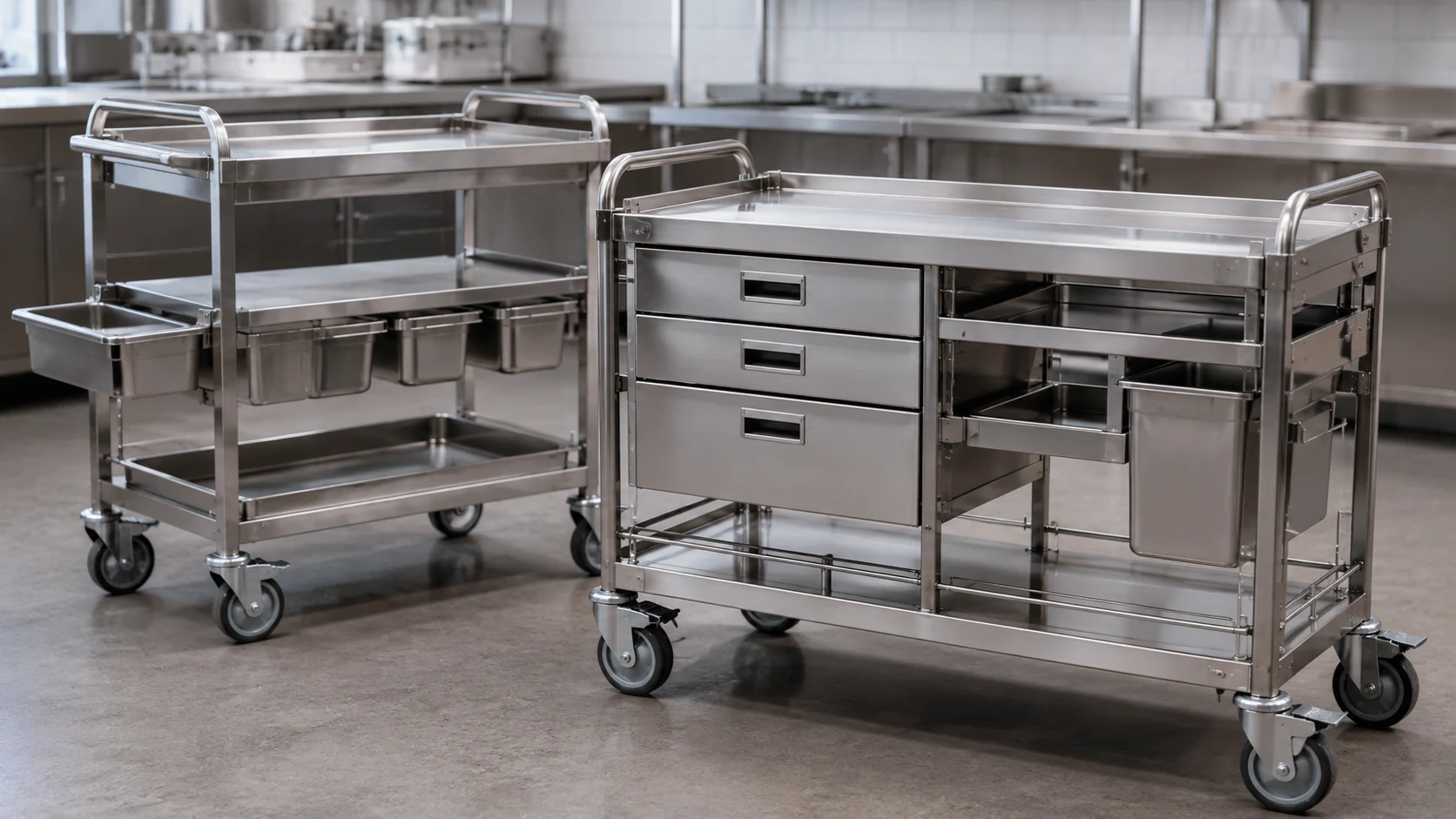
Custom Stainless Steel Trolleys
Project-built mobile stations with drawers, removable bins, tray slides, shelves, rails, handles and task-specific storage. Custom trolleys can be coordinated from a drawing, reference image or equipment schedule.
Confirm stainless steel and caster specifications by component
A quotation should identify the material and structure of the frame, shelves, trays, bins, handles and wheel assemblies instead of describing the complete product only as a stainless steel trolley.
| Comparison point | SUS 304 stainless steel | SUS 201 stainless steel | Buyer action |
|---|---|---|---|
| Typical positioning | Commonly requested for demanding commercial kitchens, wet areas and project specifications. | Cost-oriented option for suitable indoor foodservice environments. | Confirm the operating area, cleaning chemicals and target-market expectation. |
| Component scope | May apply to shelves, frame, handles, trays and bins, depending on the order. | May be used for the complete unit or selected non-contact components. | Request a component-by-component material statement. |
| Surface finish | Confirm brushed finish, protective film, weld treatment and edge finishing. | Confirm finish consistency and transport protection across visible parts. | Use approved photos or a physical sample when appearance is critical. |
| Best practice | Specify stainless steel grade, sheet or tube thickness, component scope and surface finish in the approved quotation or drawing. | ||
Details that affect stability, mobility and daily use
Clear trolley specifications reduce the risk of unstable frames, unsuitable wheel sizes, insufficient loading capacity or tray and bin incompatibility.
Overall Dimensions
Confirm width, depth, height, handle projection and aisle clearance.
Shelf & Tier Layout
Define tier quantity, usable spacing, shelf edge and removable-shelf requirements.
Frame Construction
Review tube size, wall thickness, welded joints, reinforcement and corner protection.
Load Requirement
State expected total load and whether weight is evenly or locally concentrated.
Caster Diameter
Match wheel diameter and material to floor joints, thresholds, noise and loading.
Brake Arrangement
Confirm brake quantity, wheel position, directional control and parking conditions.
Handles & Rails
Specify push-handle position, guard rails, tray stops and hanging accessories.
Export Packing
Choose assembled, knock-down, carton, pallet or wooden-frame packing.
What to send for a kitchen trolley quotation
A structured requirement helps suppliers quote the same configuration and reduces changes during drawing confirmation and production.
Product and dimensions
- Utility, service, clearing, tray, platform or ingredient-bin type
- Overall width, depth and height
- Tier quantity and usable spacing
- Tray, shelf, drawer, bin or rail arrangement
- Handle type and pushing direction
Material and fabrication
- SUS 304, SUS 201 or component-specific material
- Sheet, tube and frame thickness
- Welded or knock-down construction
- Surface finish and protective film
- Edge, corner and welding expectations
Mobility and loading
- Expected total and per-shelf load
- Caster diameter and wheel material
- Brake quantity and wheel arrangement
- Indoor floor, threshold and ramp conditions
- Noise, anti-static or special wheel requirements
Order and export information
- Quantity and project application
- Destination country and port
- Logo, label or OEM request
- Carton, pallet or wooden-frame packing
- Mixed container or forwarder delivery plan
Where commercial stainless steel kitchen trolleys are used
The correct trolley depends on the transported items, route, floor condition, cleaning frequency, loading and storage requirements.
Restaurant Kitchens
Cookware, ingredients, plates, utensils and daily back-of-house movement.
Hotels & Catering
Banquet service, food transport, clearing and event preparation support.
Central Kitchens
Batch movement between preparation, cooking, cooling, packing and dispatch zones.
Bakeries & Cafés
Tray handling, baking-rack movement, ingredient transport and cooling workflows.
Dishwashing Areas
Collection, sorting, clean-dish staging and rack movement around washing lines.
Food Processing
Mobile bins, tools, containers and task-specific material-transfer stations.
Schools & Hospitals
Meal service, tray distribution and organized institutional-kitchen transport.
Supermarkets
Fresh-food preparation, bakery, deli and service-area movement requirements.
How PRIME coordinates commercial trolley orders
PRIME Commercial Equipment organizes the requirement before quotation and coordinates available supplier information through production and export delivery.
Review Requirement
Check trolley type, dimensions, material, loading, casters and quantity.
Match Supplier
Coordinate suitable stainless steel fabrication resources for the requested structure.
Confirm Specification
Align shelves, frame, bins, trays, handles, wheels, brakes and packing.
Follow Production
Coordinate drawings, approved details, inspection points and packing information.
Prepare Delivery
Support export packing, mixed-order delivery and forwarder coordination.
Documents buyers can request before shipment
Documentation availability depends on the confirmed order and supplier capability. The required file list should be agreed before production.
Specification Sheet
Trolley type, dimensions, structure, accessories, casters and confirmed scope.
Material Confirmation
Stainless steel grade and thickness by frame, shelf, tray, bin and handle.
Dimension Drawing
Overall size, tier spacing, wheel positions, handle layout and accessory locations.
Caster Confirmation
Wheel diameter, material, brake quantity, load rating and installation position.
Pre-Shipment Photos
Finished product, details, labels, accessories and packing photos when agreed.
Packing & Loading List
Package quantity, weight, dimensions, accessories and shipment preparation details.
Continue planning the stainless steel kitchen equipment package
Commercial stainless steel kitchen trolley FAQ
What types of commercial stainless steel kitchen trolleys can PRIME help source?
PRIME can coordinate utility trolleys, service trolleys, clearing trolleys, tray racks, platform trolleys, ingredient-bin trolleys and custom mobile stainless steel workstations.
Can kitchen trolleys be made in SUS 304 stainless steel?
Yes. SUS 304 is commonly requested for commercial foodservice and wet-area applications. The approved order should identify which components use 304 and confirm thickness and surface finish.
Can trolley dimensions and shelf layouts be customized?
Yes. Overall dimensions, tier quantity, spacing, shelves, trays, bins, drawers, rails, handles and caster arrangements can be reviewed according to the project requirement.
How should the caster specification be confirmed?
Confirm wheel diameter, wheel material, swivel and fixed-wheel arrangement, brake quantity, load rating, floor conditions, thresholds and any noise or anti-static requirements.
Can stainless steel trolleys be supplied in knock-down structure?
Some designs can use partial knock-down packing to reduce export volume. Frame rigidity, assembly method, caster installation and transport risk should be reviewed before approval.
What information is needed for a faster quotation?
Send the trolley type, reference image or drawing, dimensions, material grade, thickness, tier or accessory layout, loading requirement, caster specification, quantity, destination and packing requirement.
Send your kitchen trolley dimensions and operating requirements.
Include the trolley type, overall size, material grade, shelf or tray layout, expected load, caster and brake requirement, quantity, destination country and preferred packing method.