Procurement Guide · PRIME Commercial Equipment

Commercial Equipment Procurement Process: A Practical Buyer’s Guide

Browse PRIME Resources & Buyer Guides →

A structured commercial equipment procurement process for overseas buyers sourcing commercial refrigeration, kitchen, foodservice, display and dishwashing equipment from China. Use this guide to prepare a clearer requirement, compare suppliers and reduce avoidable order risk.
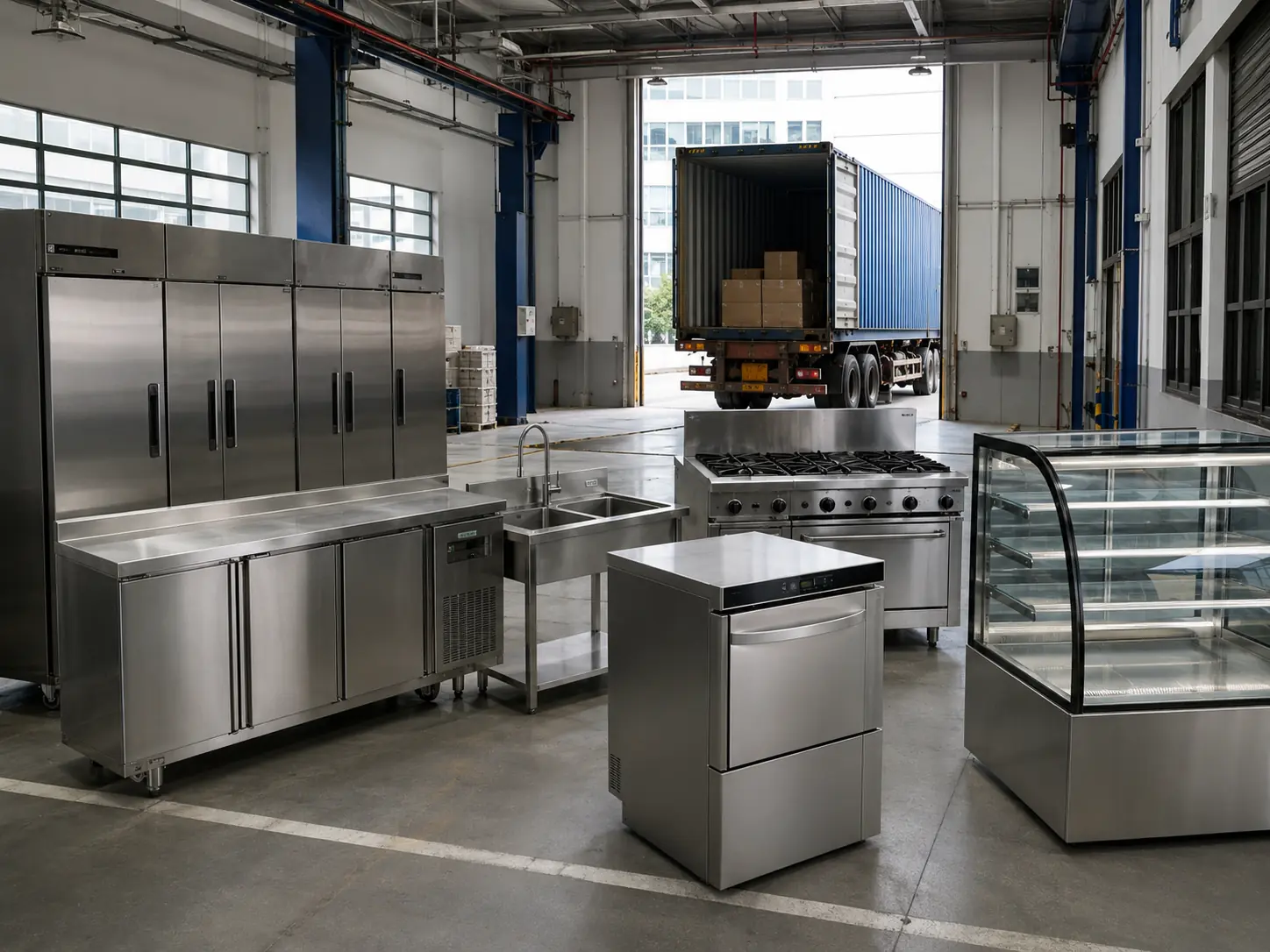
Commercial equipment procurement process and import planning from China
Requirement review · Supplier coordination · Export planning
Multi-Category Sourcing Coordinate refrigeration, kitchen, display and washing equipment in one project brief.
Specification Review Check dimensions, utilities, configuration, documentation and application fit.
Quotation Coordination Make supplier quotations easier to compare before a purchasing decision.
Export Delivery Support Coordinate inspection, packing, consolidation, documents and shipment planning.

Why the Process Matters

Commercial equipment procurement is a coordination task, not only a product search.

A project may combine several equipment categories, different suppliers, local electrical requirements, installation restrictions and destination-country documentation. The lowest unit price is not useful if the configuration is wrong, the quotation is incomplete or the shipment cannot be coordinated.

PRIME’s role

PRIME Commercial Equipment acts as a sourcing and procurement coordination partner. We help structure the requirement, identify suitable supplier options, review specifications, coordinate quotations and organize the next order steps from China.

For Project Buyers

Useful when a restaurant, hotel, supermarket, convenience store or central kitchen requires more than one equipment type.

For Importers & Distributors

Useful when the buyer needs category coverage, supplier comparison and export coordination without managing every factory separately.

For Mixed Orders

Useful when refrigeration, stainless steel, cooking, display or dishwashing equipment must be reviewed as one shipment.

The Procurement Workflow

Commercial Equipment Procurement Process: Eight stages from requirement to delivery

The exact sequence varies by project, but these stages provide a practical framework for preparing and coordinating a commercial equipment order.

STAGE 01

Define the Project

Confirm the application, destination, operating environment, project schedule and the equipment categories involved.

STAGE 02

Build the RFQ Brief

List quantities, dimensions, capacity, temperature, utilities, materials, configuration and documentation requirements.

STAGE 03

Match Suppliers

Identify suppliers that fit the product type, technical requirement, project scale and expected delivery conditions.

STAGE 04

Compare Quotations

Review what is included, excluded, configurable, certified, packed and delivered—not only the headline price.

STAGE 05

Confirm Specification

Check drawings, materials, electrical data, temperature range, components, accessories and destination requirements.

STAGE 06

Inspect & Release

Coordinate production status, inspection points, photographs, testing records and release approval before shipment.

STAGE 07

Pack & Consolidate

Review export packing, dimensions, labels, loading sequence and whether several suppliers can be combined efficiently.

STAGE 08

Ship & Deliver

Coordinate commercial documents, shipping information, delivery planning and the technical files needed after arrival.

Prepare a Better Inquiry

The information that makes supplier quotations comparable

A short but complete project brief usually produces better quotations than a product name alone. The following information helps suppliers evaluate the correct configuration and helps PRIME coordinate the next step.

Project & application Restaurant, hotel, supermarket, convenience store, bakery, central kitchen or other operating environment.
Equipment list Product category, model preference, quantity, cabinet type, capacity and intended function.
Dimensions & layout Available length, width, height, access route, installation space and layout restrictions.
Utilities Voltage, frequency, phase, power, gas, water, drainage, ambient temperature and site conditions.
Materials & finish Stainless steel grade, insulation, surface finish, corrosion conditions and hygiene requirements.
Destination & delivery Country, port or address, Incoterm, required date, packing expectations and import documents.

Quotation Review

Compare the full supply scope, not only the unit price

Different suppliers may quote different assumptions. Before selecting an offer, check whether the technical and delivery scope is actually comparable.

Review area Questions to ask Why it affects the decision
Technical configuration Are dimensions, capacity, temperature, materials, components and accessories clearly defined? A low price may reflect a different configuration or incomplete scope.
Electrical and site fit Does the quotation match the destination voltage, frequency, phase and installation conditions? Electrical mismatch can create redesign, delay or commissioning problems.
Documentation Are drawings, manuals, test records, certificates and spare-parts information included? Documents support import, installation, service and future replacement.
Inspection and quality What is inspected, when is it inspected and what evidence is provided before release? Clear checkpoints reduce uncertainty before the equipment leaves China.
Packing and shipment Are packing dimensions, loading method, consolidation and delivery terms stated? Packaging and container planning affect total landed cost and damage risk.

Where PRIME Supports the Buyer

One coordination layer across several supplier-side tasks

PRIME does not replace the buyer’s project decisions or the supplier’s technical responsibility. Our value is in organizing the information and coordination between them.

Task Buyer provides PRIME coordinates Supplier confirms
Requirement definition Application, quantity, destination and priorities Structure the project brief and identify missing information Technical feasibility and available configurations
Quotation Commercial target and delivery requirements Collect and organize comparable supplier offers Price, lead time, scope and exclusions
Specification Approved operating requirements Coordinate drawings, revisions and clarification questions Final model data, materials and utilities
Pre-shipment Release decision and inspection priorities Coordinate status, inspection evidence and packing information Production completion, testing and packing
Export delivery Destination and preferred delivery term Coordinate documents, consolidation and shipment planning Commercial packing list and technical documents

Frequently Asked Questions

Questions buyers should settle before requesting quotations

Can PRIME source several equipment categories in one project?

Yes. PRIME is structured to coordinate commercial refrigeration, stainless steel kitchen equipment, cooking, foodservice display, dishwashing and mixed equipment requirements as one project brief.

What should I send before asking for a quotation?

Send the equipment list, quantity, dimensions or capacity, application, destination, voltage, frequency, required documents and delivery timing. Drawings or layout files are helpful when available.

Will PRIME provide one quotation for the complete order?

The quotation structure depends on the project. PRIME can coordinate supplier quotations and organize the comparison, while the final technical and commercial scope is confirmed with the relevant supplier or suppliers.

Can PRIME coordinate inspection and export packing?

PRIME can coordinate inspection information, packing details, consolidation planning and export documentation according to the agreed project scope.

Does PRIME manufacture every product shown on the website?

No. PRIME is presented as a commercial equipment sourcing and procurement partner. Product availability, configuration and technical responsibility are confirmed with the appropriate supplier for each requirement.

Start with the requirement, not only the product name.

Send the application, equipment list, quantity, dimensions, utilities, destination and timing. PRIME can help organize the sourcing brief and coordinate the next quotation steps.