Commercial Warewashing Solutions
Commercial Dishwashing Equipment & Cleaning Systems
PRIME helps overseas buyers source commercial dishwashing equipment for efficient washing, rinsing, sorting and hygiene operations in restaurants, hotels, canteens, central kitchens and high-volume foodservice facilities.
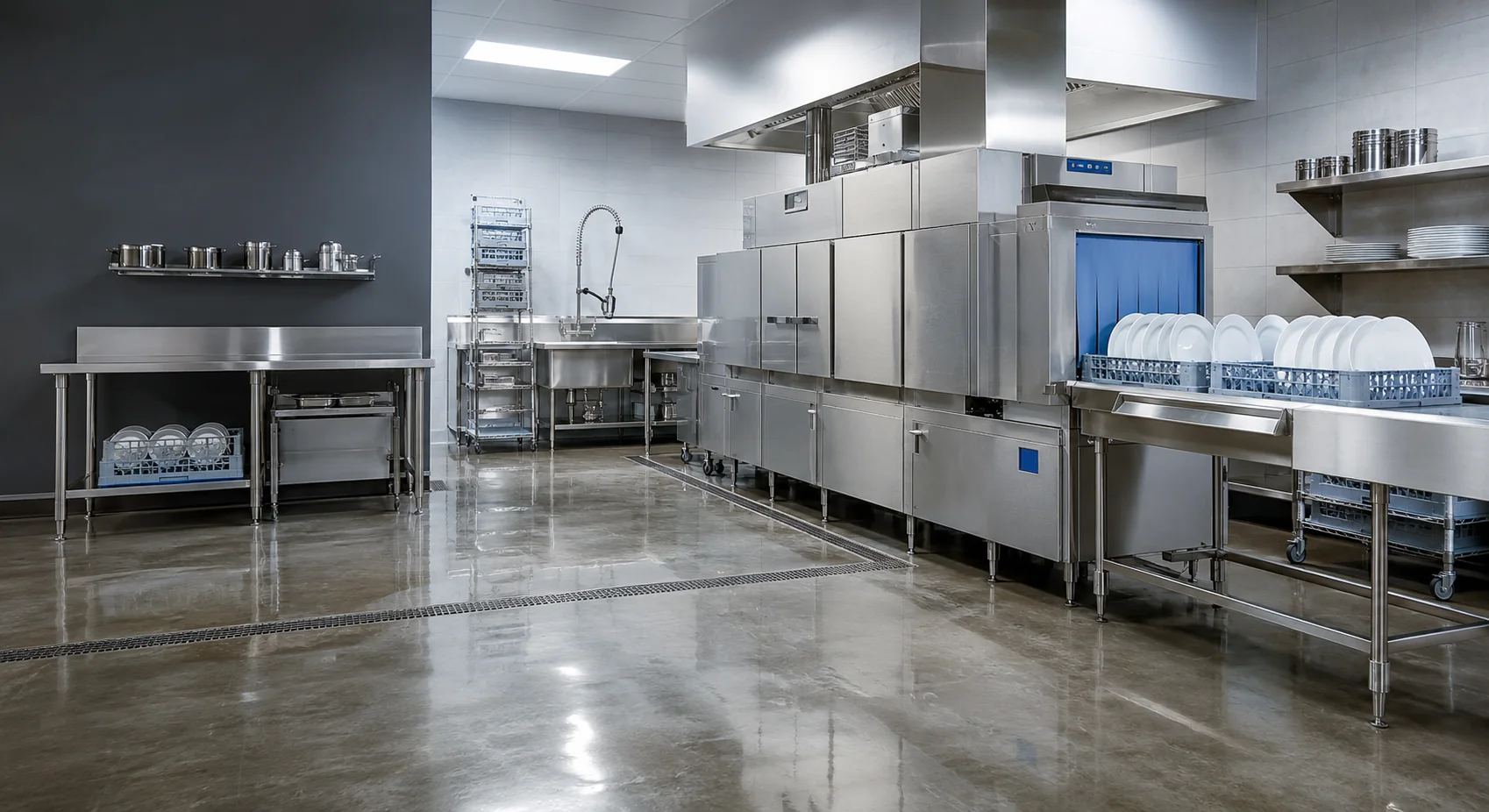
Commercial dishwashing equipment should be selected as part of a complete dishroom equipment system rather than as an isolated machine. A complete dishroom equipment package may include soiled ware handling and dish tables, pre-rinse units, the selected dishwasher, clean-rack output and kitchen hygiene support. PRIME Commercial Equipment helps buyers review the package according to washing capacity, available space, utilities, dish type and operating scale. For new construction projects, the dishroom should also be coordinated with the approved layout, drainage, electrical supply and dirty-to-clean movement.
Dishroom System Quick Guide
Five parts of a complete commercial dishroom equipment system
Buyers comparing dishroom equipment systems should confirm the entire dirty-to-clean route. Machine capacity alone does not define a workable package; soiled ware handling, pre-rinse, rack movement, clean output and utilities must connect with the same operating flow.
Soiled Ware Handling
Define dish return, waste separation, cutlery sorting, scrap openings and rack-loading space before the washing machine.
Pre-Rinse & Rack Loading
Coordinate the pre-rinse spray, sink, rack size, operator position and machine-entry direction.
Dishwasher Type & Capacity
Match undercounter, hood type or conveyor equipment to peak rack volume, dish type and service schedule.
Clean Output & Storage
Provide drainage, inspection, clean-rack staging, trolley movement and protected storage without crossing dirty traffic.
Utilities & New Construction
Confirm power, water, drainage, ventilation, floor space and final equipment positions before fabrication or site installation.
Equipment Categories
Explore Commercial Dishwashing Equipment Categories
The following eight directions cover compact restaurant washing, pass-through operations, continuous high-capacity systems, glass and utensil washing, pre-rinse preparation, dishroom tables and kitchen hygiene support. Use them to define washing capacity, item type, workflow, utilities and installation requirements before supplier comparison.
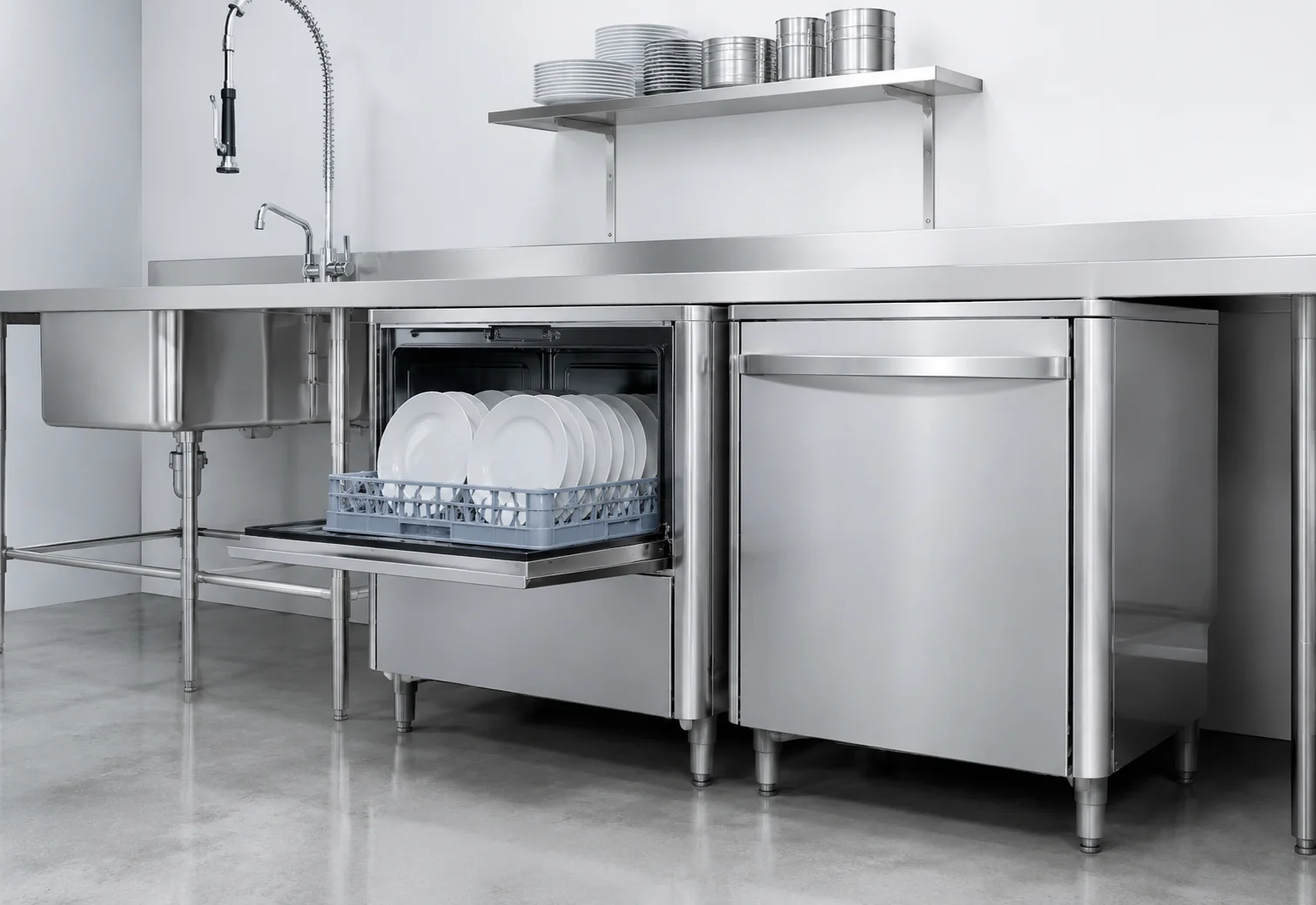
Undercounter Dishwashers
Front-loading commercial machines for cafés, bars, smaller restaurants and kitchens with limited installation space.
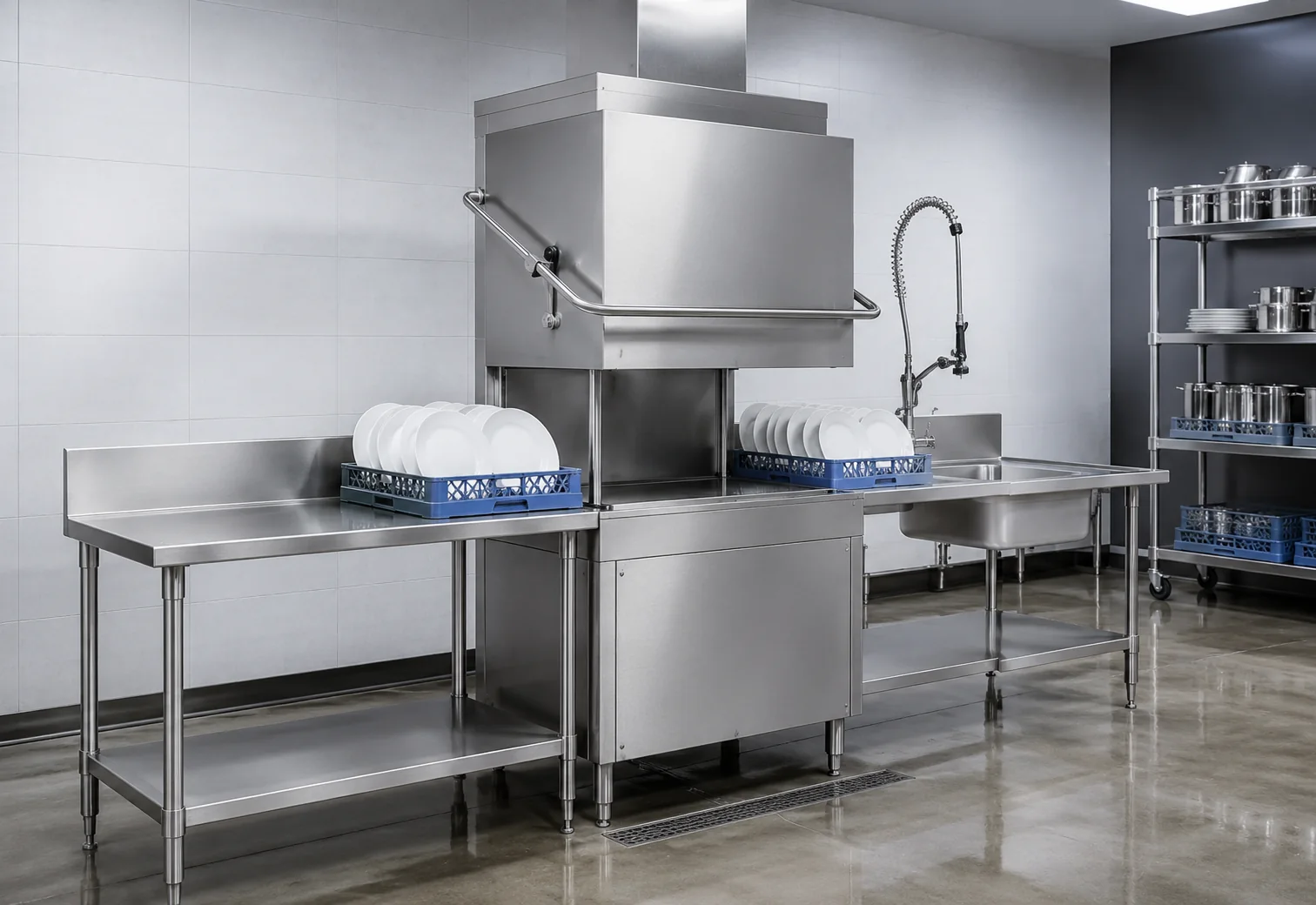
Hood Type Dishwashers
Pass-through dishwashing systems for restaurants, hotels, canteens and medium-volume foodservice operations.
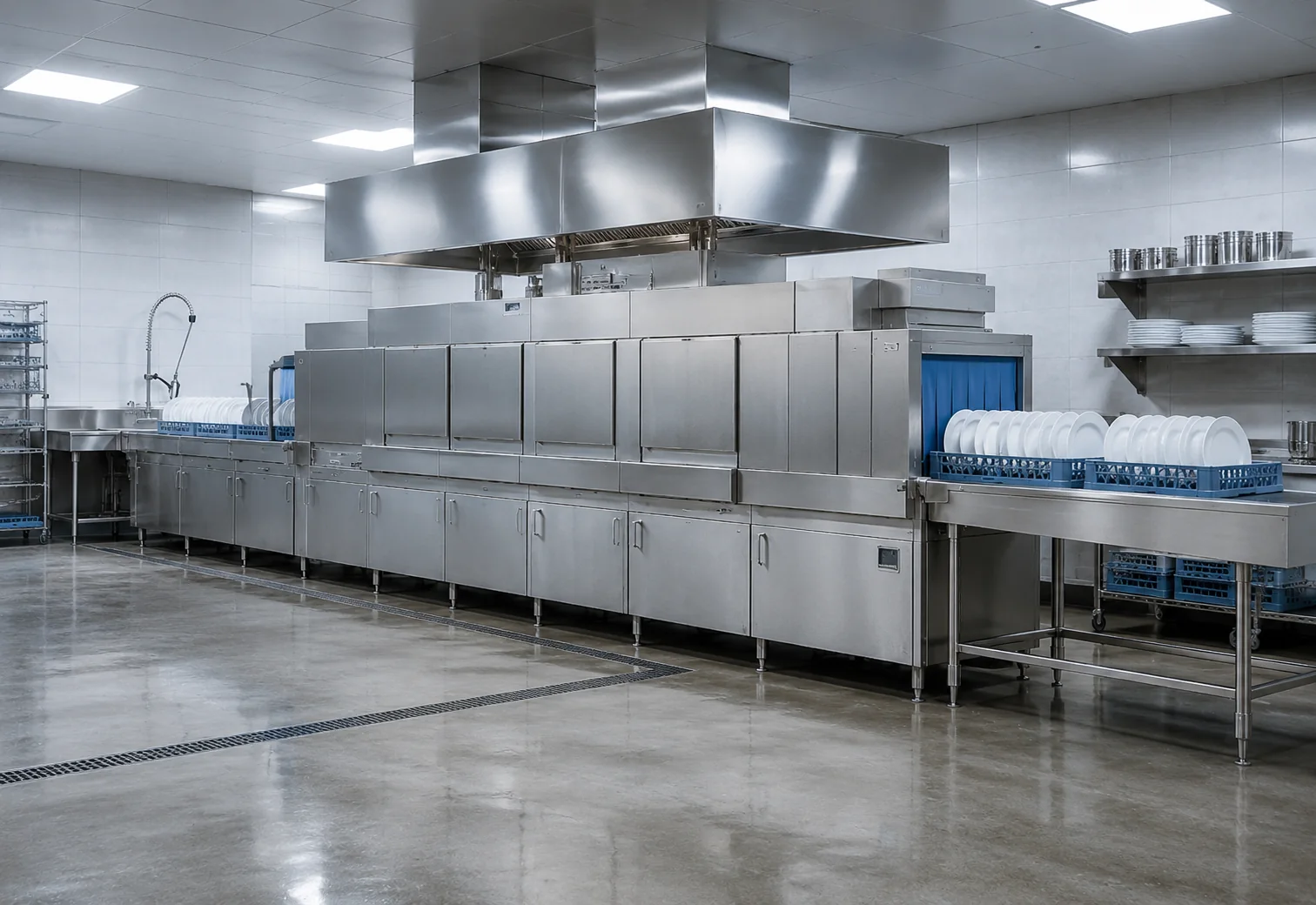
Conveyor Dishwashers
Continuous rack or flight type systems for central kitchens, hospitals, large canteens and hotel banquet operations.
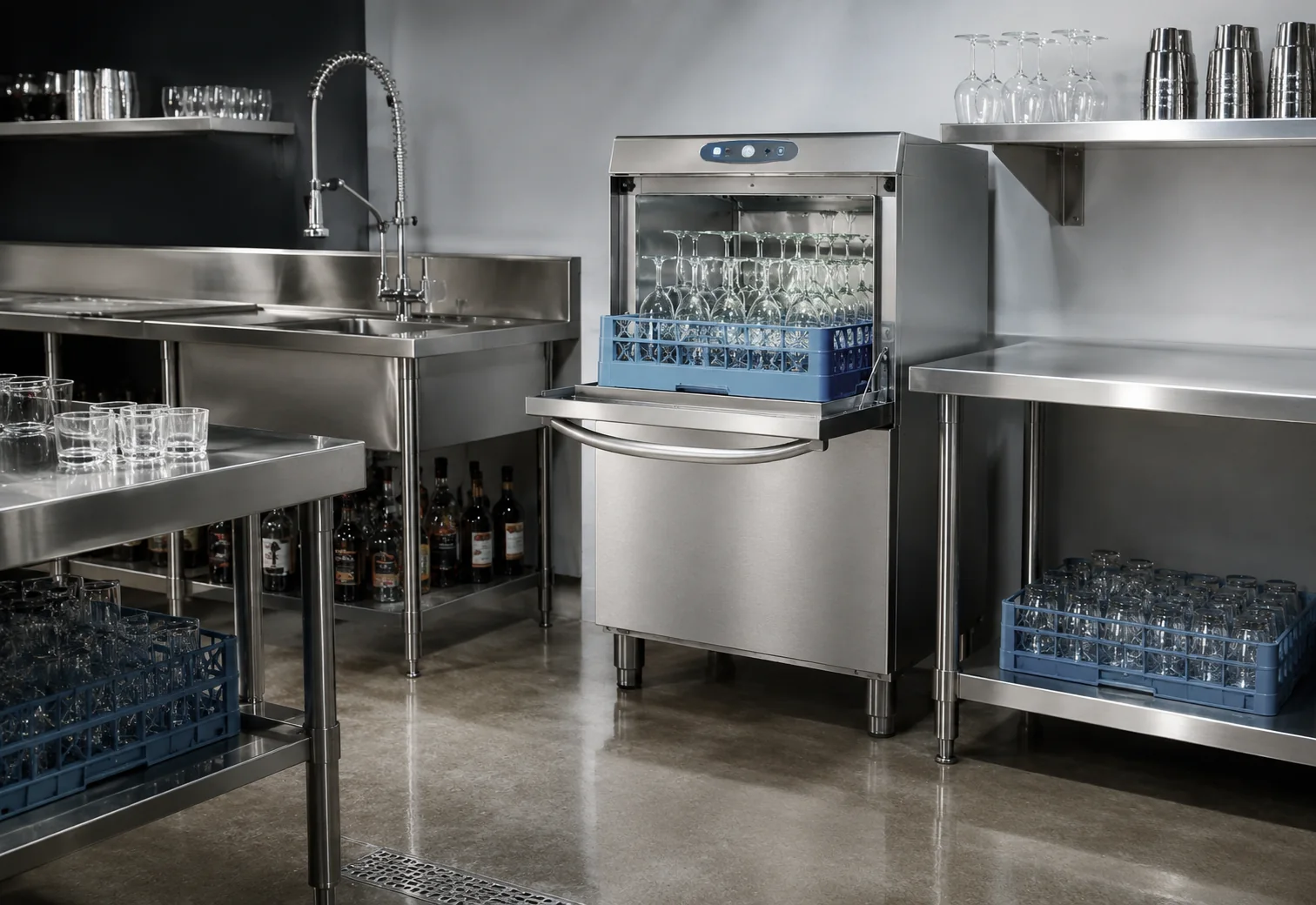
Glass Washers
Compact glasswashing machines for bars, cafés, hotel beverage areas and banquet service operations.
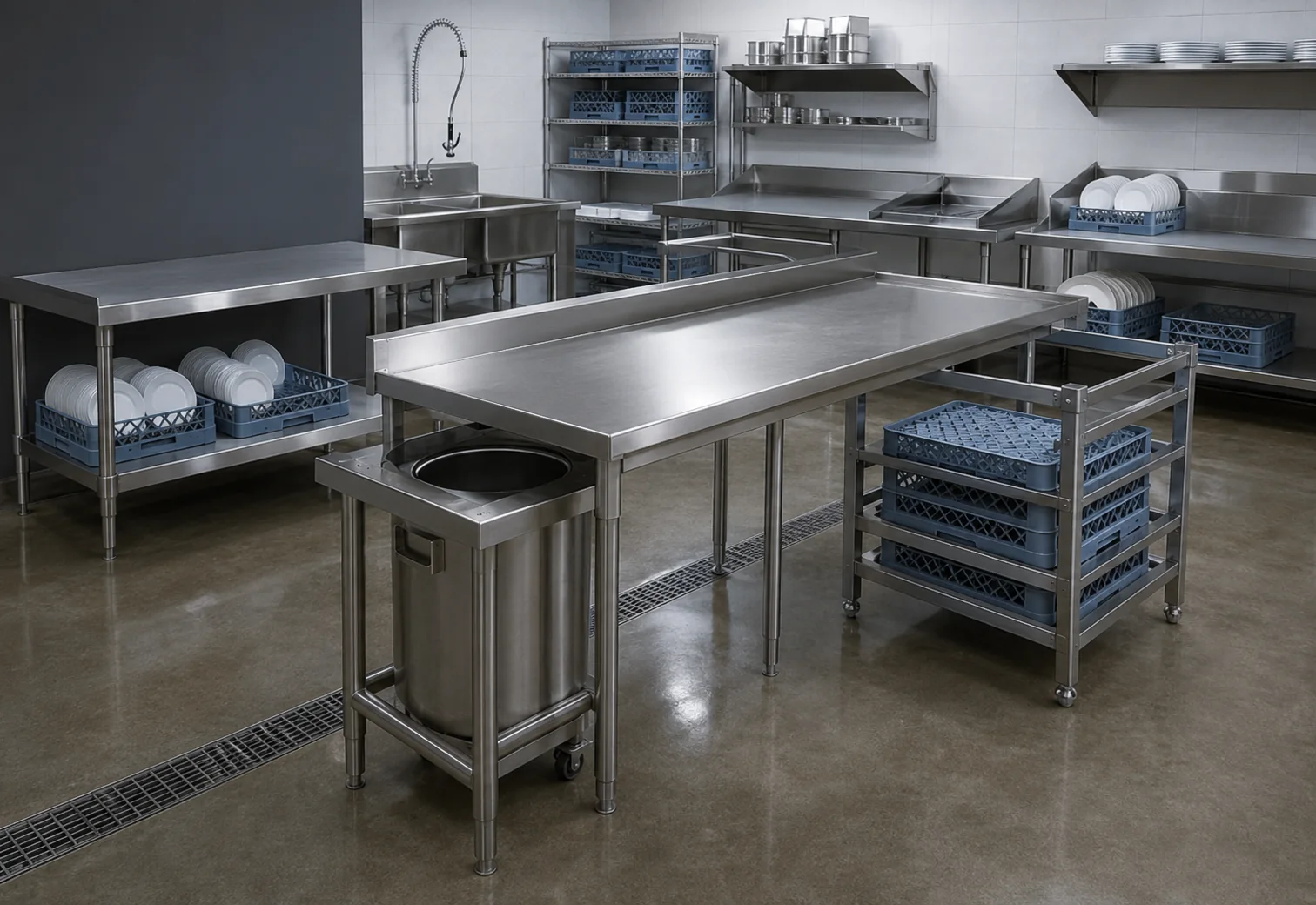
Pot & Utensil Washers
Heavy-duty washing equipment for pots, trays, utensils, containers and large kitchen items.
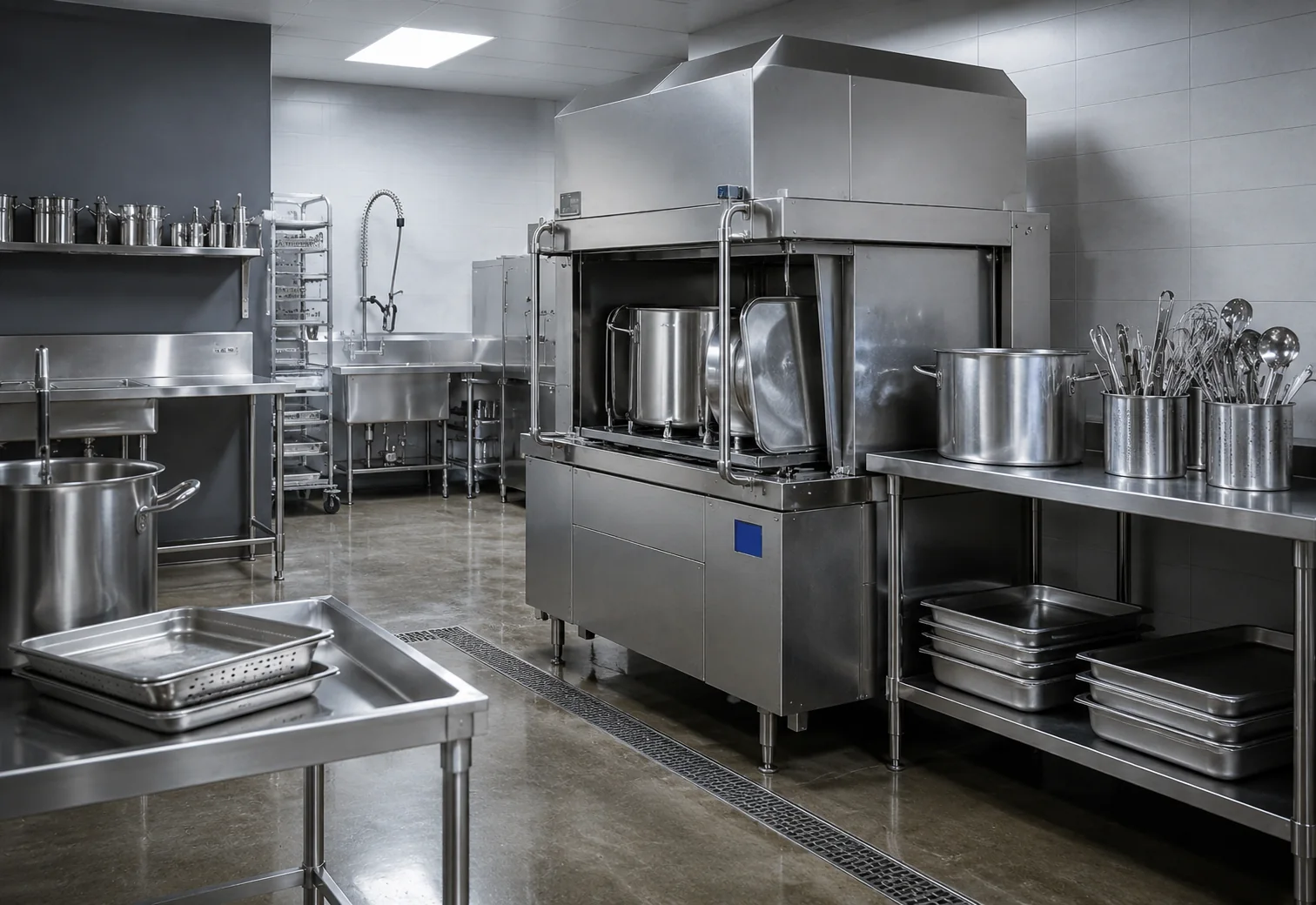
Pre-Rinse Units
Commercial spray and faucet assemblies for removing food waste before dishes enter the washing machine.
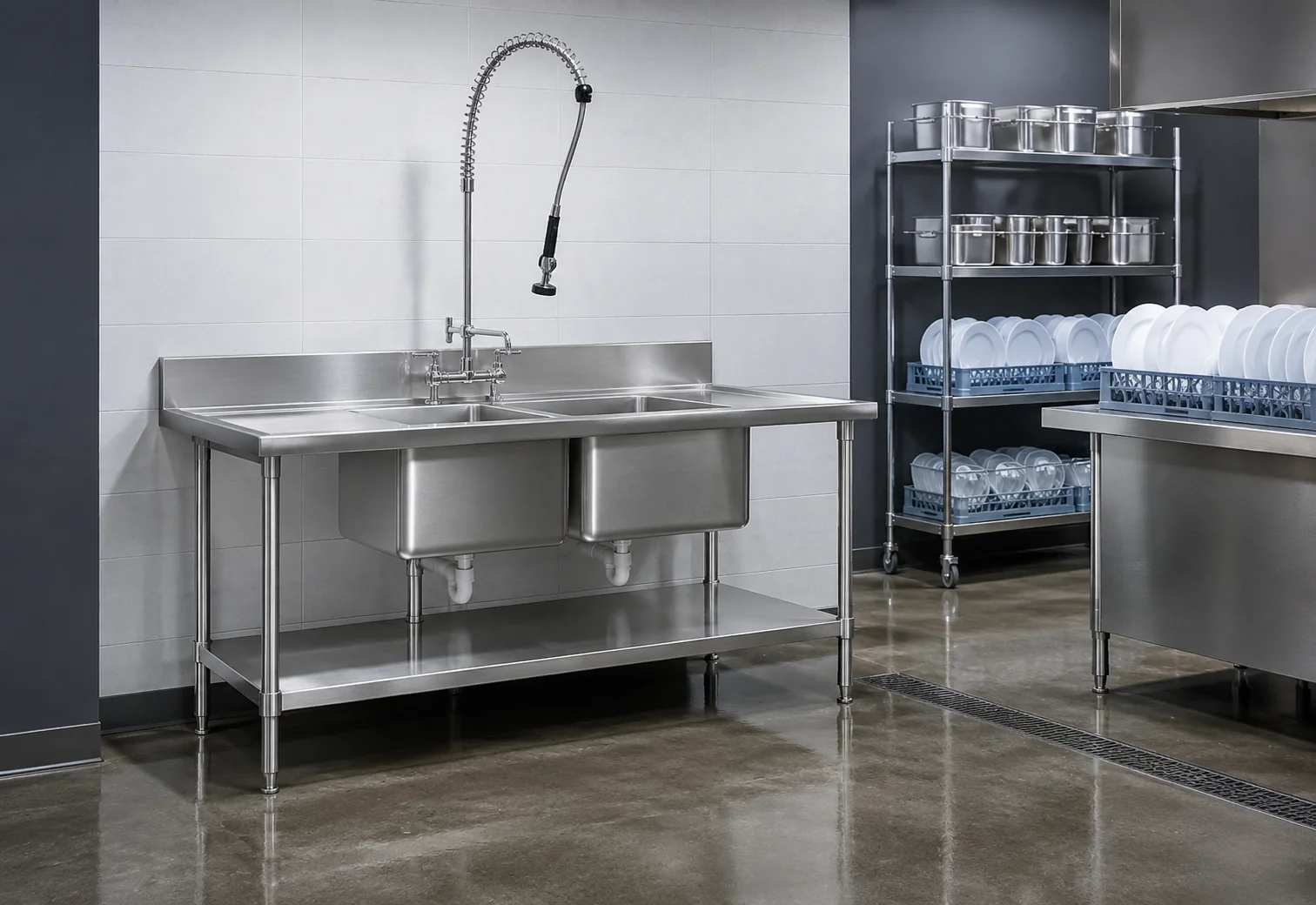
Dish Tables & Sorting Equipment
Stainless steel tables and handling systems for dirty-dish entry, waste sorting, machine connection and clean-dish output.
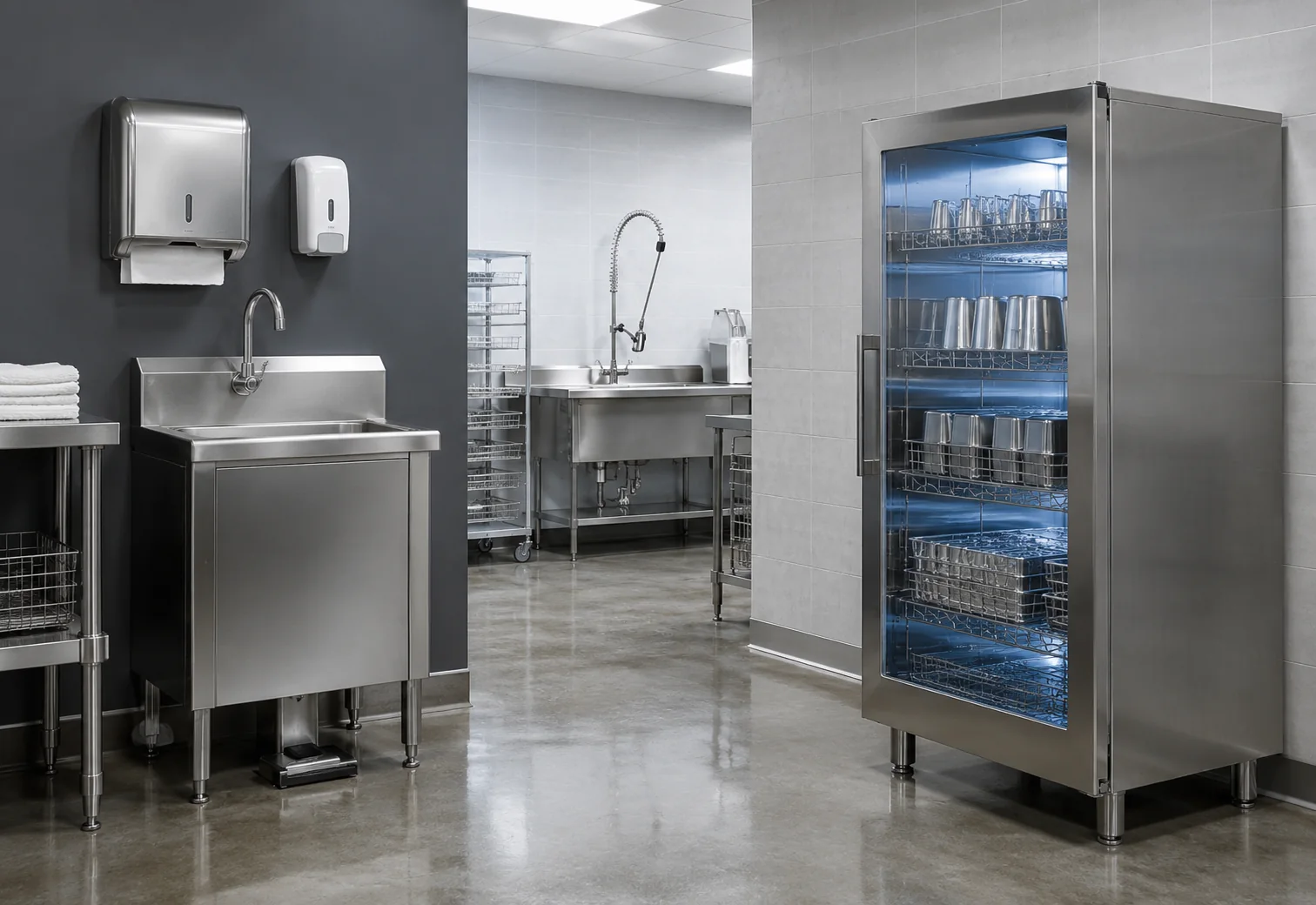
Kitchen Hygiene Equipment
Hand washing, sanitizing, waste handling and hygiene support products for commercial kitchen operations.
Related Published Categories
Connect the Dishroom With the Complete Kitchen Project
Dishwashing equipment must coordinate with stainless steel work areas, cooking output, refrigeration, foodservice operations and the wider project equipment list. Use the published category pages below to plan the connected systems.
Complete Dishroom Workflow
Plan the movement from dirty dishes to clean storage
An efficient commercial dishwashing equipment layout should reduce cross-traffic, control food waste, support continuous rack movement and separate dirty-dish handling from clean-dish output.
The exact workflow depends on dishwasher type, local hygiene requirements, rack movement, available floor space and whether drying or additional sanitizing equipment is required. For dishroom equipment in new construction, confirm the route before finalizing floor drains, electrical points, water connections and table fabrication. Review dish tables & sorting equipment, hood type dishwashers and conveyor dishwashers as connected parts of the system.
Operation Scale
Choose equipment according to washing volume and workflow
Industry type alone does not determine the correct machine. Peak dish volume, dish size, available labor, floor space, inlet and outlet direction and utility conditions must be reviewed together.
Small Restaurant or Café
Common directions include undercounter dishwashers, glass washers and compact pre-rinse stations, subject to peak dish volume.
Hotel Restaurant Kitchen
Hood type machines with inlet and outlet tables are often suitable when several service periods create concentrated washing peaks.
School or Staff Canteen
Selection should consider large numbers of similar trays and plates, short service windows and rapid rack turnover.
Central Kitchen
Conveyor systems, utensil washers and automated handling equipment may be required for continuous high-capacity operations.
Hospital or Institutional Catering
Workflow should prioritize hygiene control, clear dirty and clean separation, reliable sanitizing and repeatable processes.
Banquet & High-Volume Foodservice
Equipment must handle short but intense washing peaks after events, including plates, glassware, trays, pots and service utensils.
Selection Information
Commercial Dishwashing Equipment Selection Information
Accurate quotation and equipment matching require washing, installation, electrical, water, drainage and destination information. Reference drawings and current dishroom layouts are especially useful.
PRIME Sourcing Support
Dishroom Equipment Sourcing and Coordination
PRIME Commercial Equipment helps buyers compare commercial dishwashing equipment, stainless steel dish tables, pre-rinse units, utility requirements and export configurations as one coordinated procurement package.
Washing Capacity Review
Review peak dish volume, rack turnover, dish type and required operating hours before comparing machine sizes.
Dishwasher Type Matching
Compare undercounter, hood type, conveyor, glass and utensil washing directions according to the actual operation.
Workflow Direction Confirmation
Confirm rack movement, dirty and clean separation, inlet direction, outlet direction and operator access.
Dish Table Coordination
Match soiled dish tables, pre-rinse sinks, machine connections, clean dish tables and sorting stations.
Utilities & Installation Review
Review voltage, phase, heating method, water pressure, drainage, steam and ventilation conditions.
Configuration Comparison
Compare controls, pumps, chemical dosing, rinse systems, drying, stainless steel construction and accessories.
Mixed Equipment Coordination
Coordinate dishwashing, stainless steel, refrigeration, cooking and foodservice equipment within one project list.
Export Packing & Delivery
Organize cartons, pallets, wooden protection, forwarder delivery, LCL, FCL and mixed loading arrangements.
Frequently Asked Questions
Commercial Dishwashing Equipment Questions
Final machine selection depends on dish volume, item size, utilities, workflow direction, available space and local hygiene requirements.
What type of commercial dishwasher is suitable for a small restaurant?
What is the difference between undercounter and hood type dishwashers?
How is commercial dishwashing equipment capacity calculated?
Can dish tables and pre-rinse units be matched with the dishwasher?
What electrical and water information is required before quotation?
Can PRIME coordinate a complete commercial dishwashing line?
What equipment is included in a complete dishroom equipment package?
What should be planned for dishroom equipment in a new construction project?
How should soiled ware handling be separated from clean dish output?
Start Your Dishroom Project
Planning a Commercial Dishwashing Equipment Project?
Send PRIME Commercial Equipment your dish types, peak washing capacity, installation dimensions, inlet and outlet direction, electrical supply, water conditions, drainage details, quantity and destination country. We will help review the requirement and suggest a practical sourcing direction.