Commercial Glass Washers for Bars, Cafés & Hotels
Source commercial glass washers for beverage service areas that require compact installation, dependable glassware cleaning, fast rack turnover and coordinated water-treatment, rack and export configurations.
Select the machine around glass type, peak volume and bar workflow
A commercial glass washer should be selected around the real glassware range and bar workflow, not only cabinet size. Confirm the tallest glass, rack format, peak return volume, sanitizing method, utilities, water quality and the route between used-glass collection and clean-glass return before comparing suppliers.
Commercial glass washer configurations for different service areas
Begin with the available counter space and operating volume, then compare sanitizing method, rack dimensions, cycle arrangement, pump and dosing configuration.
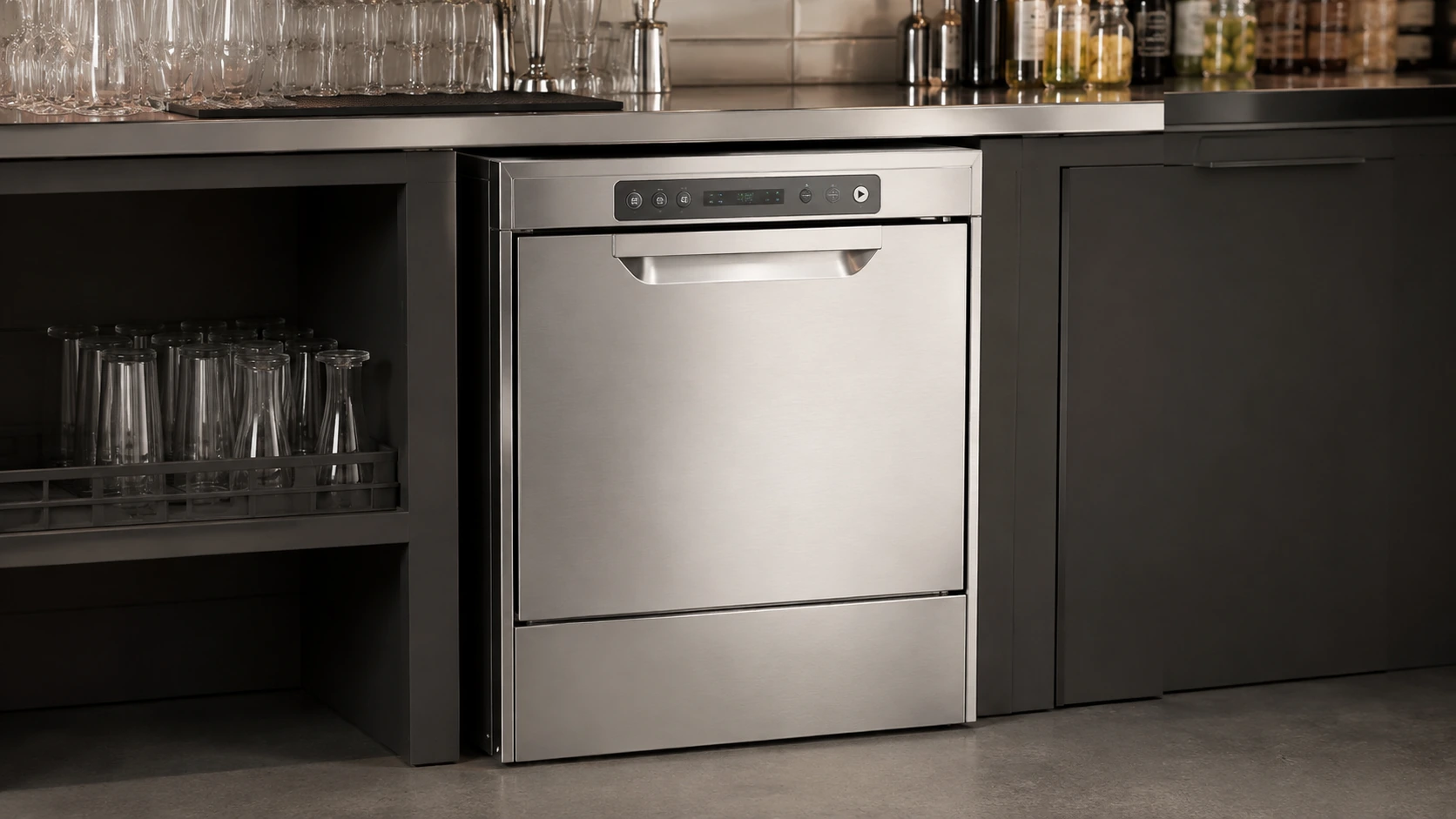
Undercounter Commercial Glass Washers
Front-loading machines for bars, cafés, restaurants and hotel beverage areas where the washer must fit beneath a working counter while supporting frequent rack turnover.
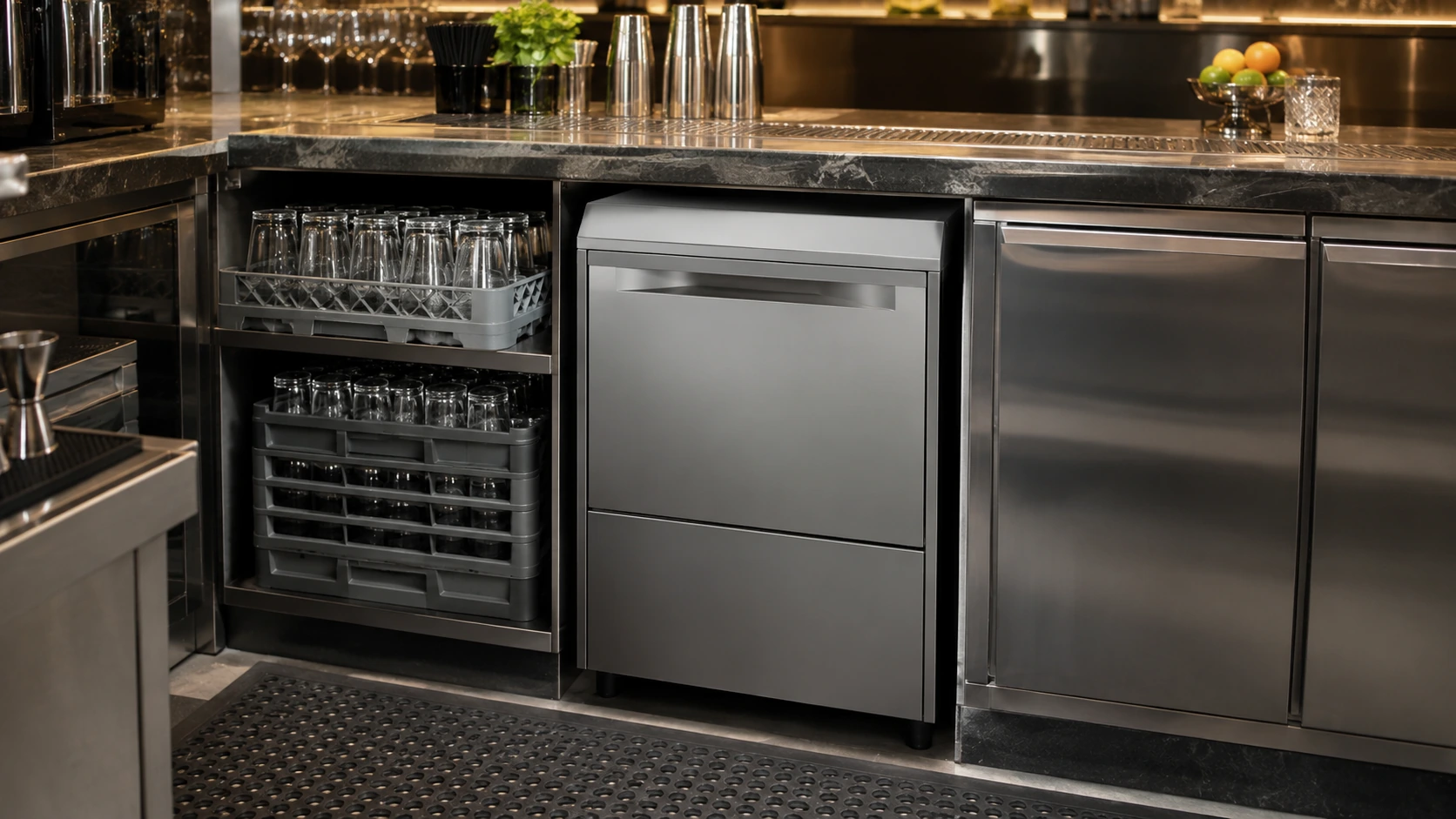
Low-Profile Bar Glass Washers
Lower cabinet directions for restricted bar-counter layouts. Confirm overall machine height, door clearance, rack loading position and access for cleaning and maintenance.
High-Temperature Direction
Review installed power, incoming water conditions, rinse temperature and heat-management requirements.
Chemical-Sanitizing Direction
Coordinate detergent, rinse aid and sanitizer dosing with the selected machine and local operating practice.
Drain-Pump Configuration
Confirm drain height and routing when gravity drainage is not practical at the installation point.
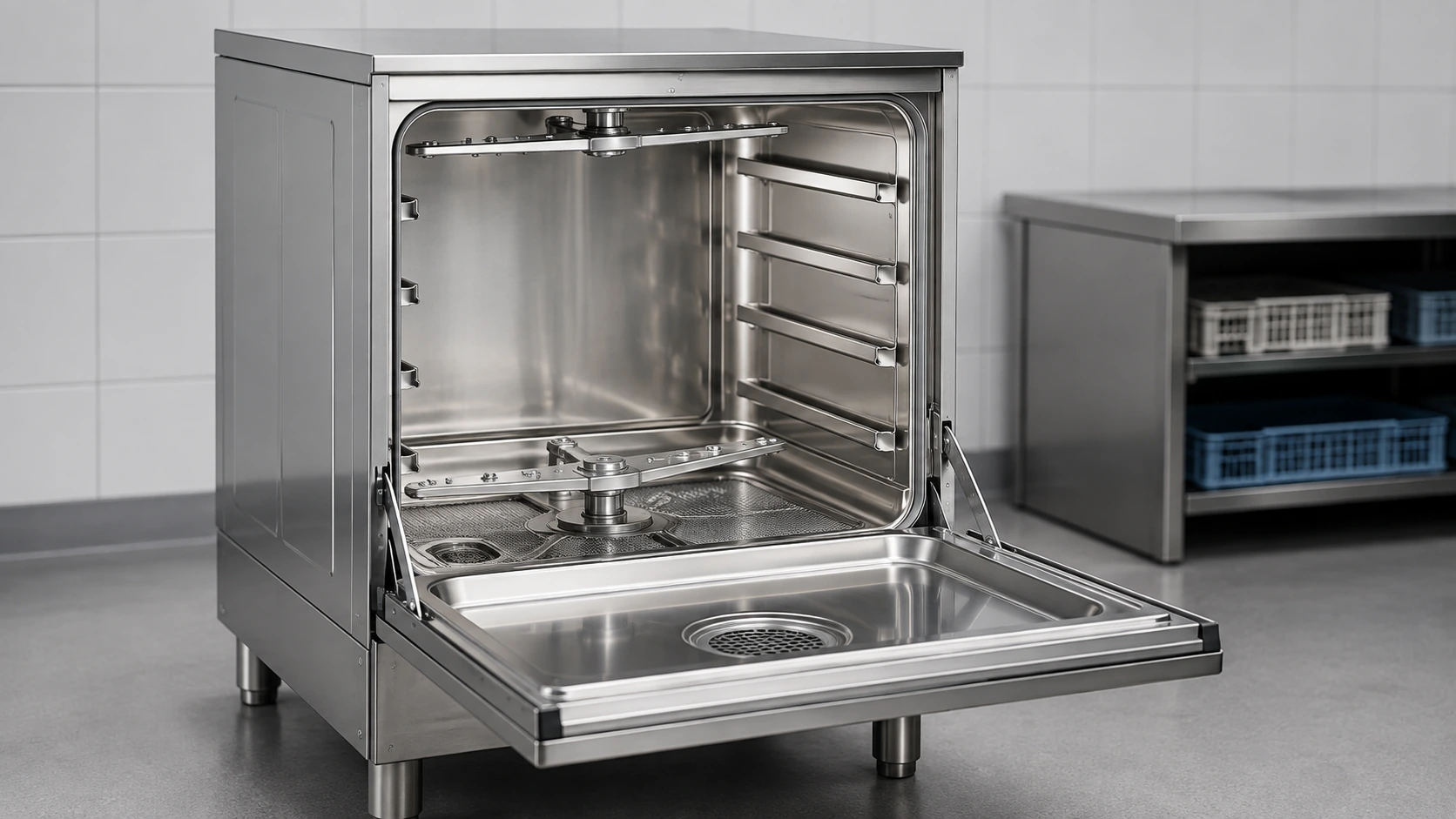
Review the internal structure, not only the exterior cabinet
The wash chamber should be evaluated for rack support, upper and lower spray coverage, removable components, filter access, drainage, cleanability and the clearance required by the tallest glassware.
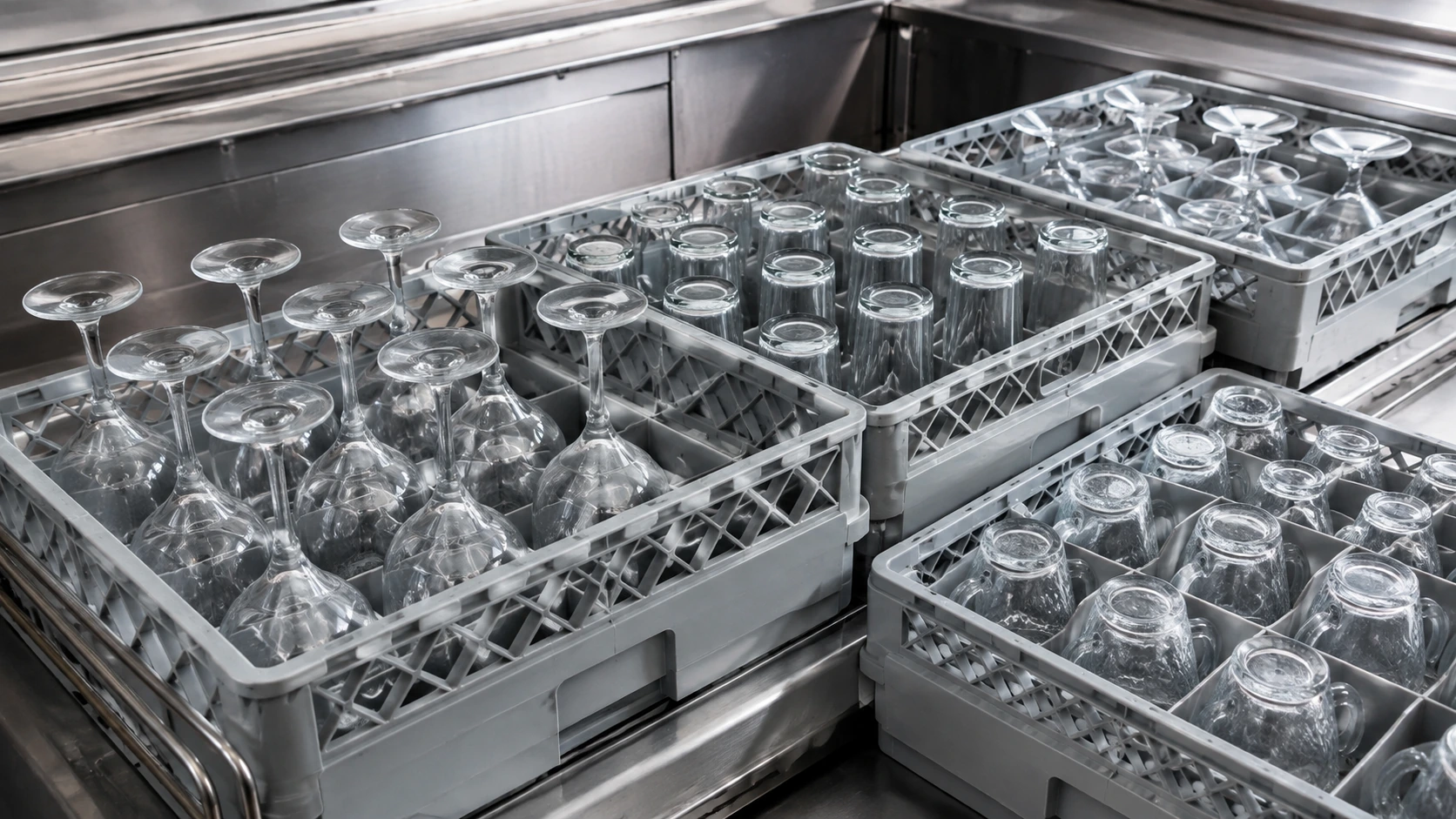
Match rack compartments to the real glassware range
Rack selection affects loading density, glass stability, spray access and breakage risk. Provide the maximum glass height and diameter together with representative photos or a glassware list before confirming the rack package.
Plan the complete route from used glass collection to service return
A well-organized glasswashing area reduces cross-traffic, supports faster rack movement and keeps dirty-glass handling separate from clean-glass storage.
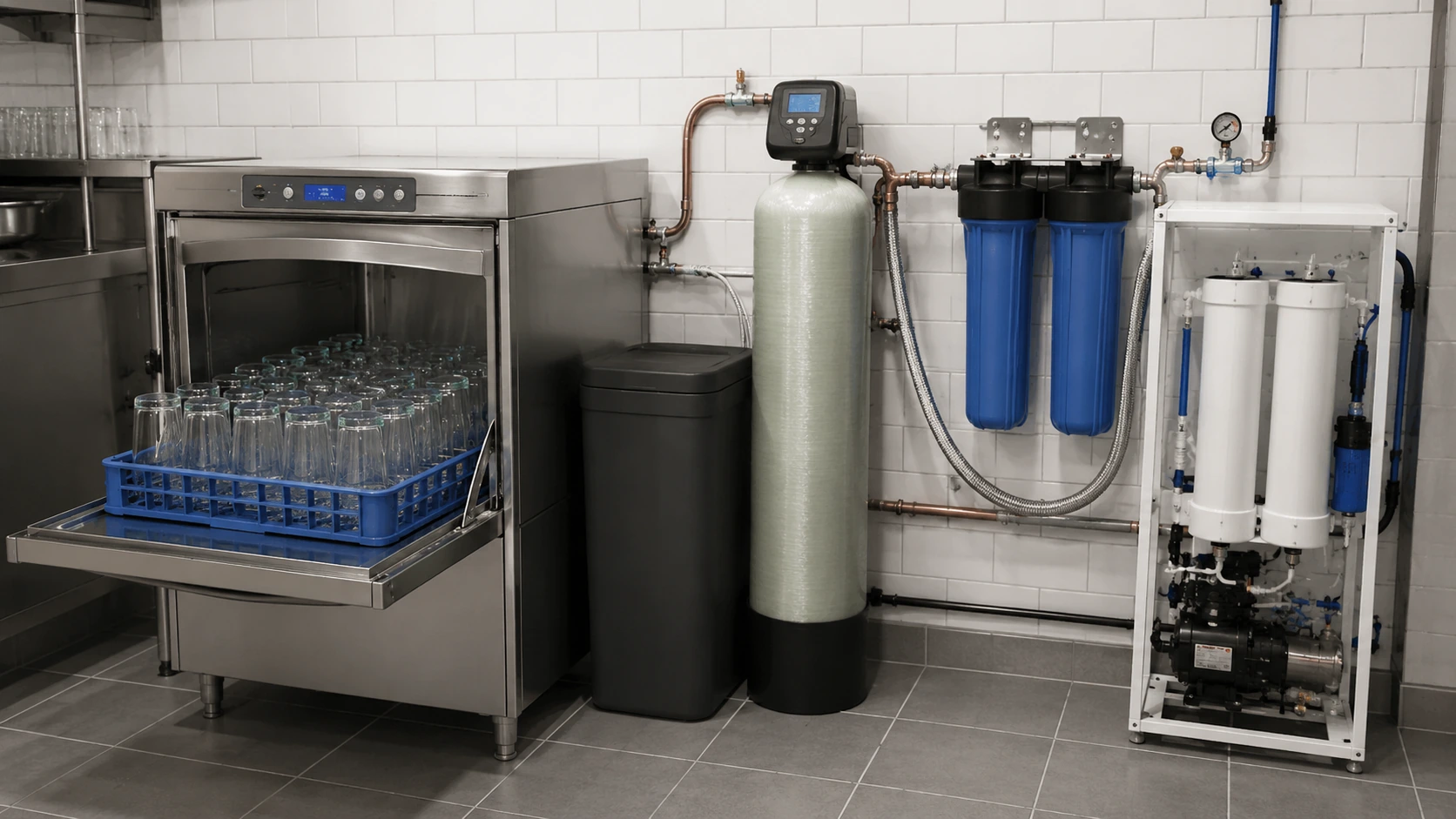
Water hardness can change both appearance and maintenance requirements
Before quotation, provide available water-pressure, inlet-temperature and hardness information. Depending on local water conditions and the desired glass finish, the project may require filtration, softening, reverse osmosis, suitable rinse aid or a combined treatment arrangement.
Commercial glass washers for beverage-led operations
Machine size alone does not define suitability. Each venue has a different glass mix, service peak, counter layout, noise expectation and clean-glass return route.
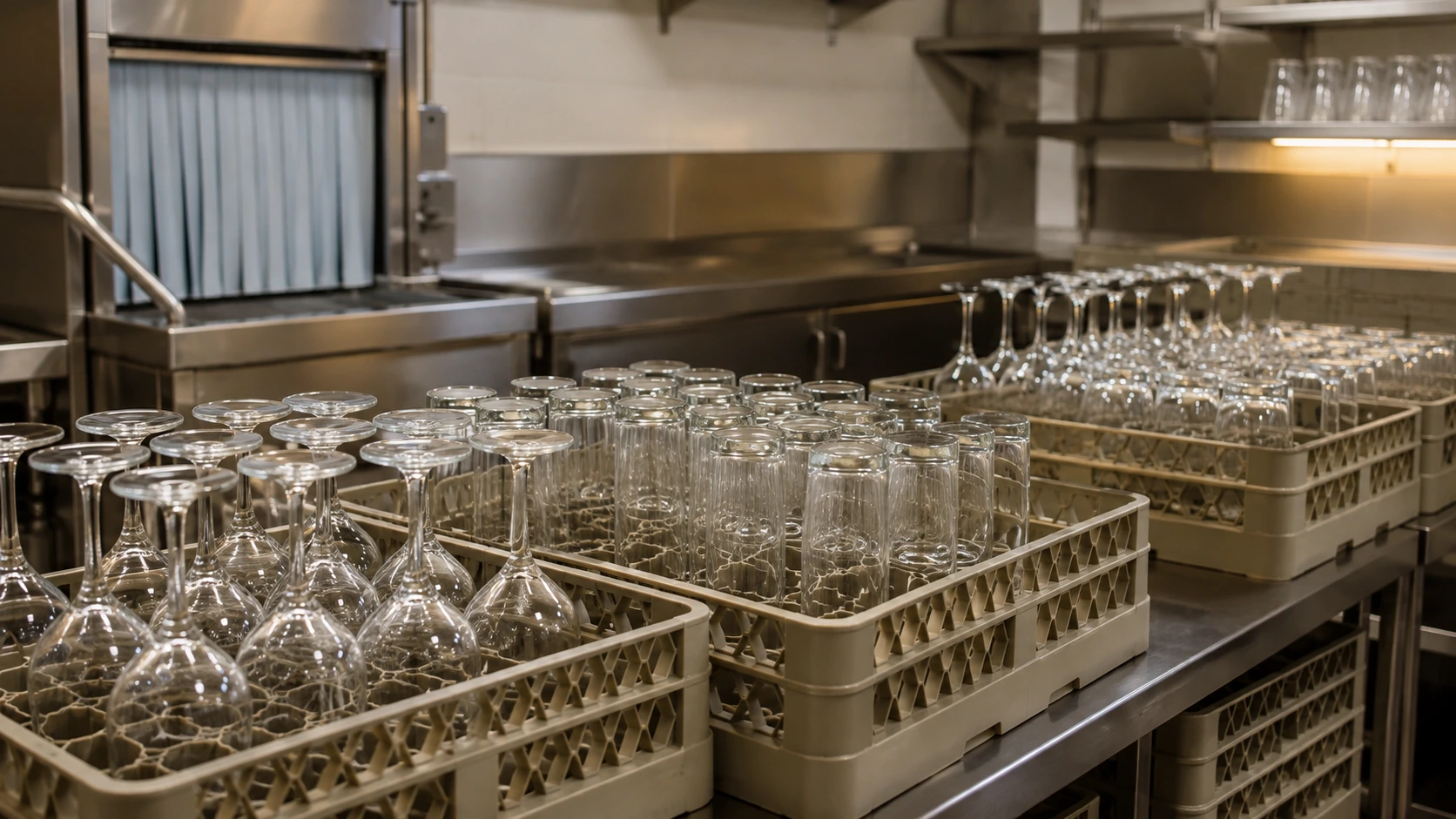
Plan for the service peak
Provide the expected number of glasses returned during the busiest period, not only the average daily quantity. Rack loading time, cycle time, unloading and clean-rack storage all affect practical output.
Commercial glass washer selection information
Send the following information together with reference photos, a bar layout or an existing equipment schedule when available.
| Selection Item | Information to Confirm |
|---|---|
| Glassware Types | Wine glasses, beer glasses, cocktail glasses, tumblers, café cups or mixed beverage items. |
| Maximum Glass Height | Provide the tallest glass dimension and a reference photo when possible. |
| Maximum Diameter | Confirm the largest bowl, body or rim diameter that affects rack compartment selection. |
| Peak Washing Volume | Estimate glasses per hour, racks per hour or the highest service-period return volume. |
| Rack Requirement | Required rack size, compartment layout, extensions and compatibility with existing racks. |
| Sanitizing Direction | High-temperature or chemical-sanitizing requirement according to the project and local practice. |
| Installation Space | Available width, depth, height, door clearance, counter height and delivery access. |
| Electrical Supply | Voltage, phase, frequency, plug requirement and available installed power. |
| Water Conditions | Inlet temperature, pressure, connection size, hardness and treatment requirement. |
| Drainage | Drain position, height, pipe size and whether gravity or pumped drainage is required. |
| Chemical Dosing | Detergent, rinse-aid and sanitizer dosing arrangement and local chemical availability. |
| Destination & Packing | Quantity, destination country, shipping method, packaging and loading requirement. |
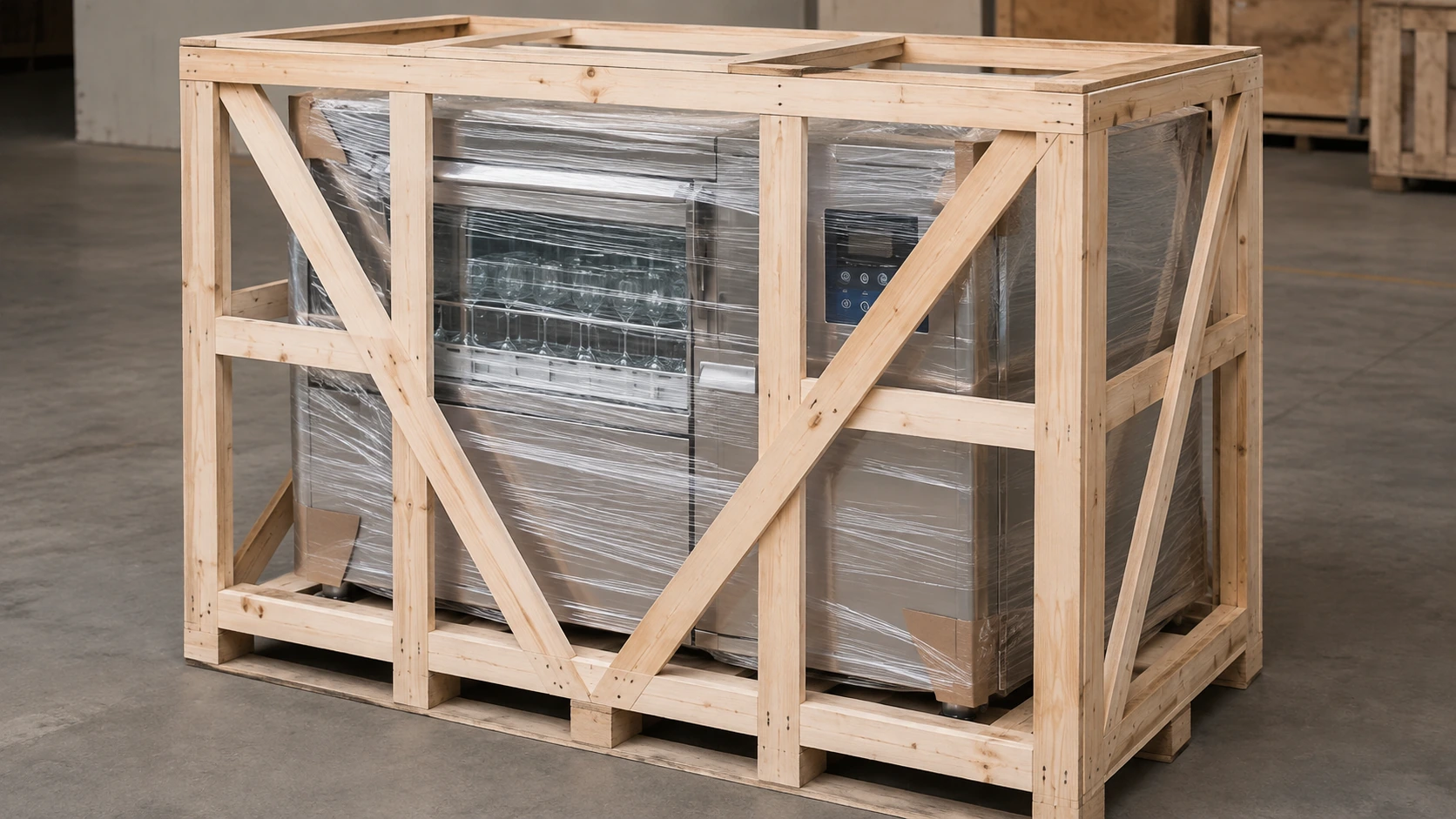
Coordinate the glass washer, accessories and export delivery as one requirement
PRIME helps overseas buyers organize specifications before supplier comparison and coordinate machine configuration, racks, water-treatment direction, utilities, packaging and shipment details.
Continue planning the complete commercial dishwashing area
Compare glasswashing with the published compact, pass-through and high-capacity dishwasher directions, or return to the parent category for the complete dishroom structure.
Commercial glass washer questions
Final selection depends on glass dimensions, peak volume, utilities, sanitizing method, water conditions and local installation requirements.
What is the difference between a commercial glass washer and an undercounter dishwasher?
Should I choose high-temperature or chemical sanitizing?
How do I determine the required glass washer capacity?
Can tall wine glasses be washed in a commercial glass washer?
Is a water softener or reverse-osmosis system required?
Can PRIME supply racks and water-treatment equipment with the glass washer?
Send your glassware list, peak capacity and installation conditions
Include glass types, maximum height, peak volume, rack requirement, voltage, water conditions, drainage, quantity and destination country. PRIME will review the requirement and organize the next sourcing step.