Commercial Ovens for Professional Kitchens
PRIME Commercial Equipment coordinates commercial ovens for restaurants, bakeries, hotels, catering facilities and institutional kitchens. We help buyers compare oven types, confirm operating requirements and align suitable configurations before quotation and production.
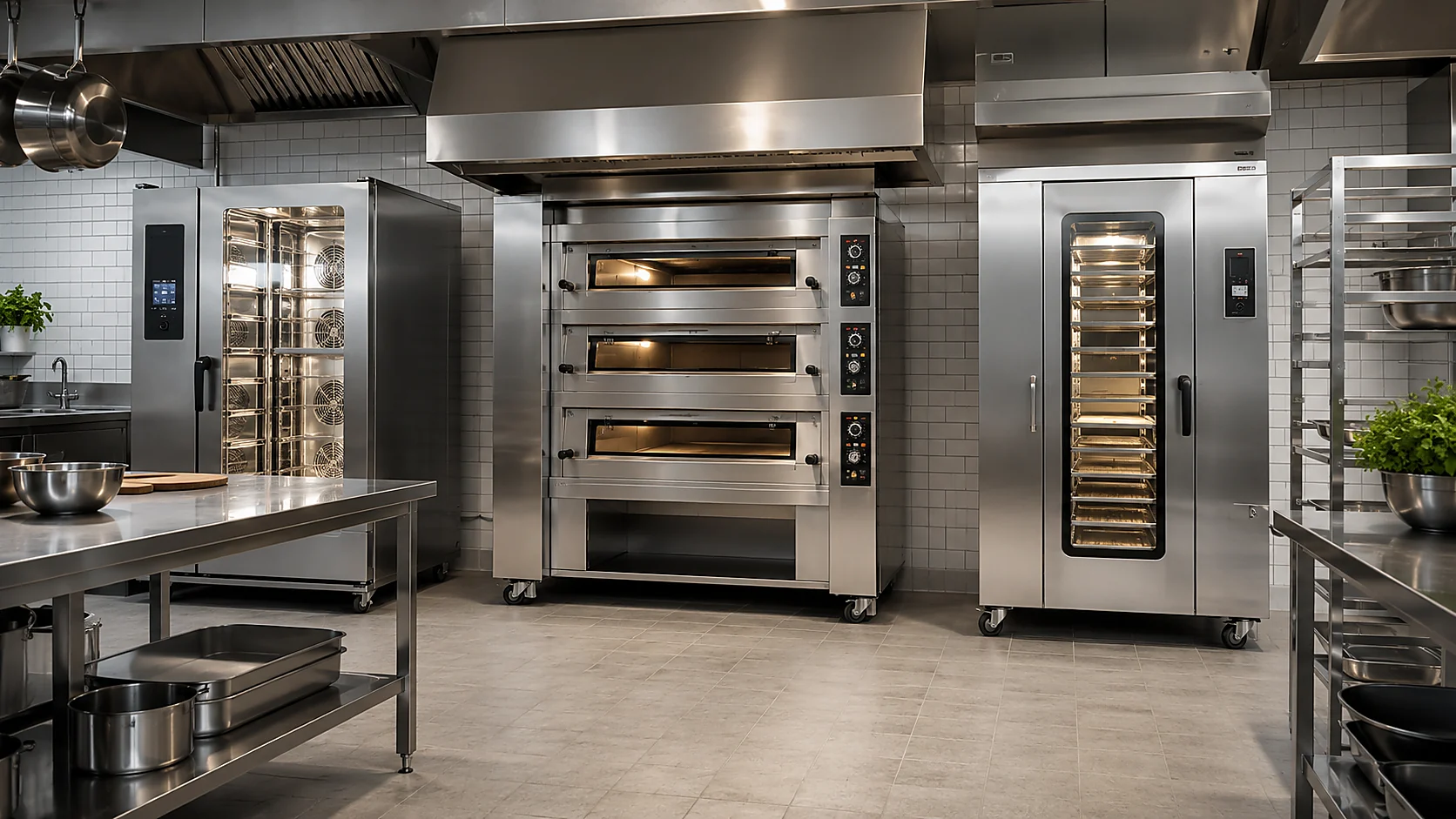
Match the oven category to the food product, batch volume and service pattern.
Confirm power supply, fuel type, tray standard, capacity and control requirements.
Coordinate model comparison, documentation, packing and consolidated shipment planning.
Different heat processes require different oven configurations
Commercial ovens are selected according to the cooking method rather than appearance alone. Air circulation, deck heat, steam control, chamber size, recovery speed and batch consistency can all affect the final result.
PRIME Commercial Equipment supports buyers who need to compare several oven categories or combine cooking equipment for a complete commercial kitchen project.
- Electric and gas configuration review
- Countertop and floor-standing formats
- Single-chamber and multi-deck arrangements
- Manual, programmable and touchscreen controls
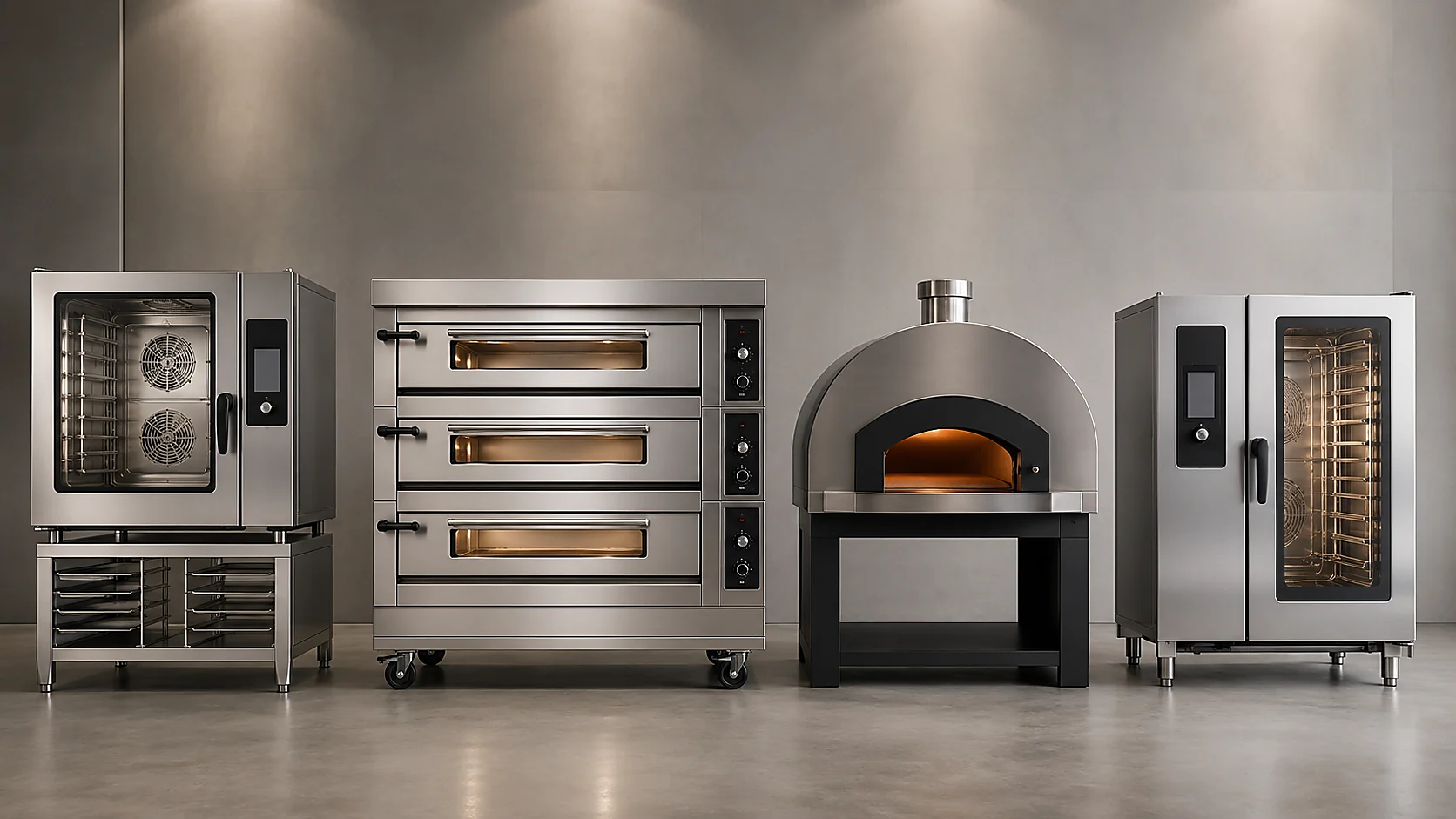
Core commercial oven categories
The appropriate oven depends on product type, desired texture, operating volume, available utilities and the workflow of the kitchen or bakery.
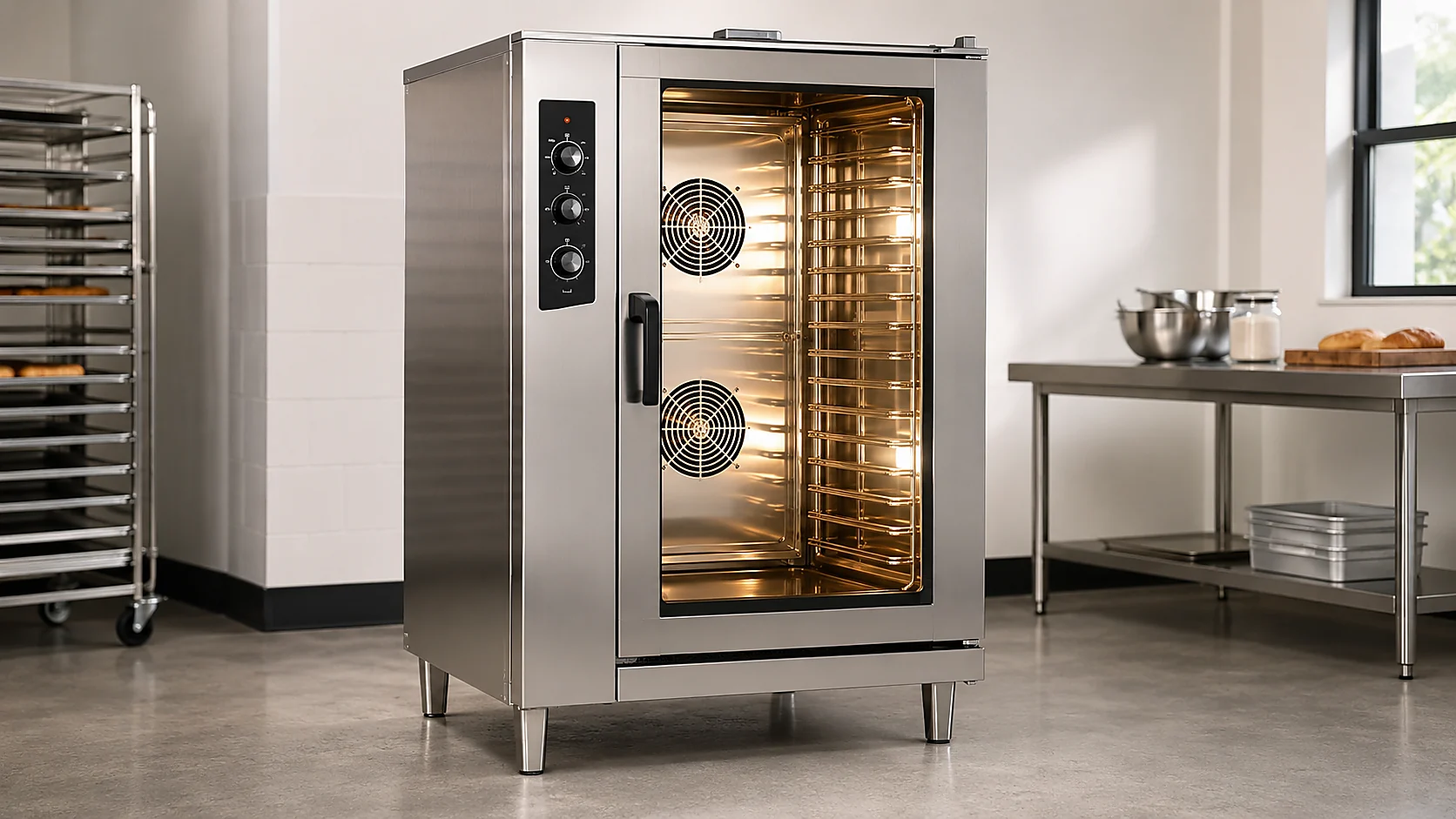
Commercial Convection Oven
Designed to circulate heated air through the cooking chamber, helping improve heat distribution across multiple trays. Commonly considered for baking, roasting and general foodservice preparation.
- Multi-tray chamber configuration
- Fan-assisted heat circulation
- Countertop or floor-standing options
- Suitable for restaurants, bakeries and catering kitchens
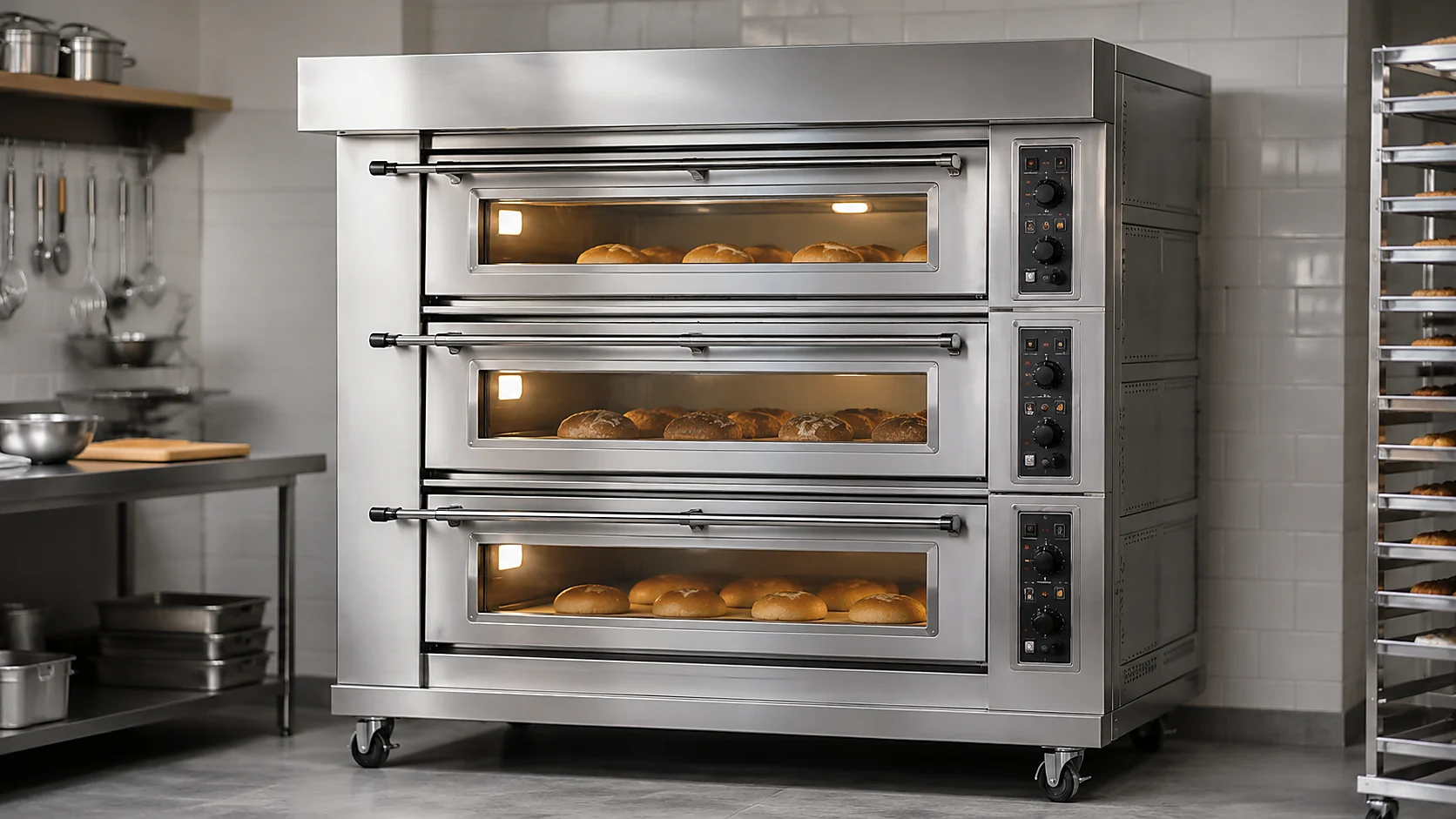
Commercial Deck Oven
Deck ovens provide dedicated baking chambers and direct heat from the deck surface. They are widely considered for bread, pastries and other products where bottom heat and chamber control are important.
- Single or multiple deck arrangement
- Independent chamber operation
- Electric or gas heating configurations
- Suitable for bakeries and central kitchens
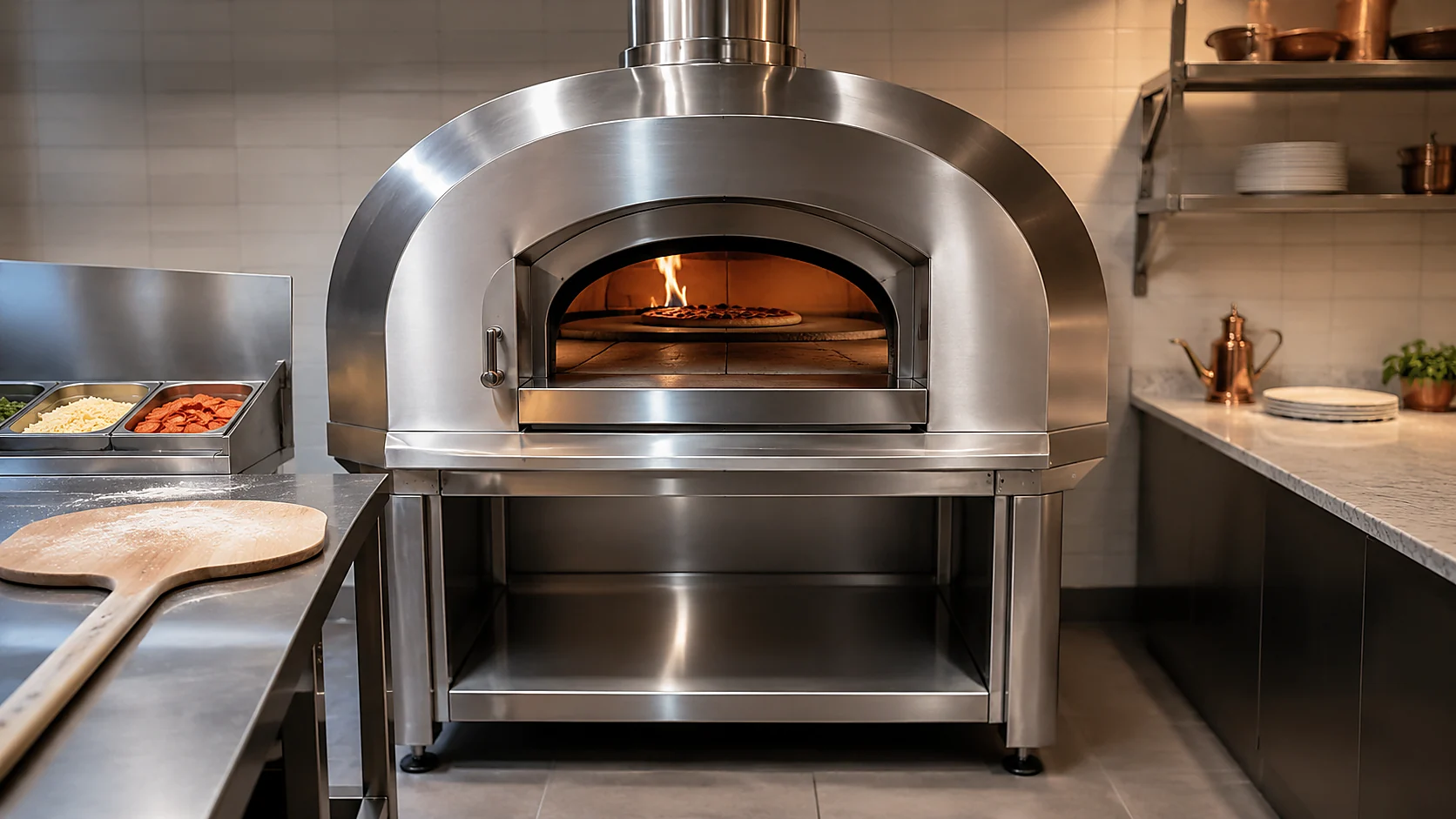
Commercial Pizza Oven
Commercial pizza ovens are configured around baking temperature, chamber dimensions, production rhythm and the required crust result. Options may include deck, conveyor or dome-style designs.
- Pizza stone or deck baking surface
- Compact restaurant and high-output formats
- Gas or electric model selection
- Suitable for pizzerias, cafés and restaurant chains
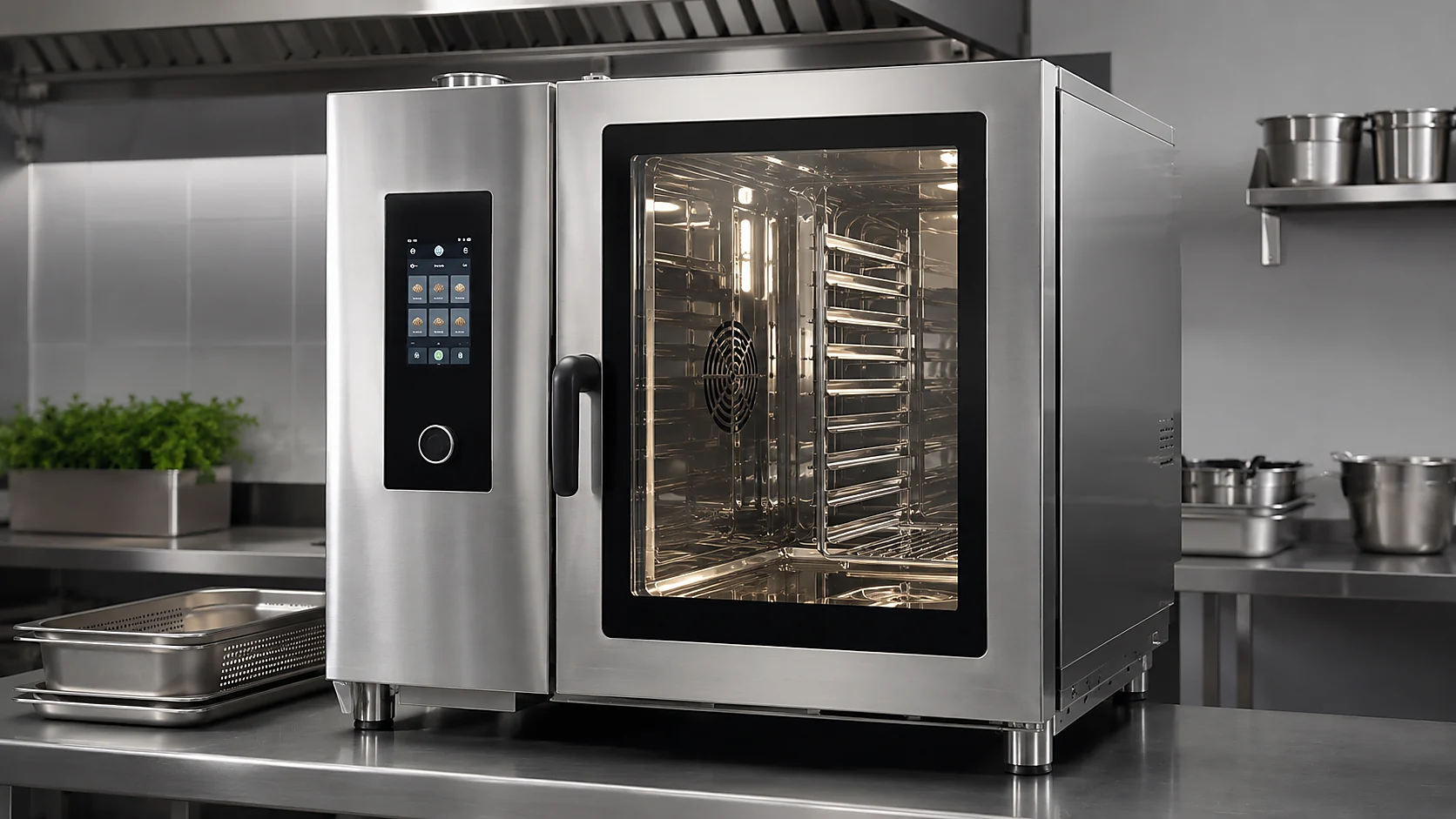
Commercial Combi Oven
Combi ovens integrate convection heat and steam functions within one cabinet, supporting flexible preparation methods and programmable cooking workflows for professional foodservice operations.
- Hot-air, steam and combined cooking modes
- Programmable or touchscreen controls
- Multiple GN pan capacity options
- Suitable for hotels, institutions and central kitchens
Information to confirm before selecting a commercial oven
Accurate project information reduces unsuitable model comparisons and helps suppliers prepare a more relevant technical and commercial proposal.
Food and process
Specify the main products, cooking method, target texture and typical batch size.
Required output
Provide daily or hourly production expectations and the normal service rhythm.
Tray or pan format
Confirm baking tray dimensions, GN pan size, rack spacing and loading preference.
Available utilities
Confirm voltage, phase, frequency, gas type, water connection and drainage conditions.
Installation space
Provide the available width, depth, height, access route and ventilation arrangement.
Control preference
Choose between mechanical controls, digital programs or touchscreen operation.
Cleaning method
Consider removable racks, chamber access and available automatic cleaning functions.
Export requirements
Confirm destination market, documentation, plug, packaging and shipping requirements.
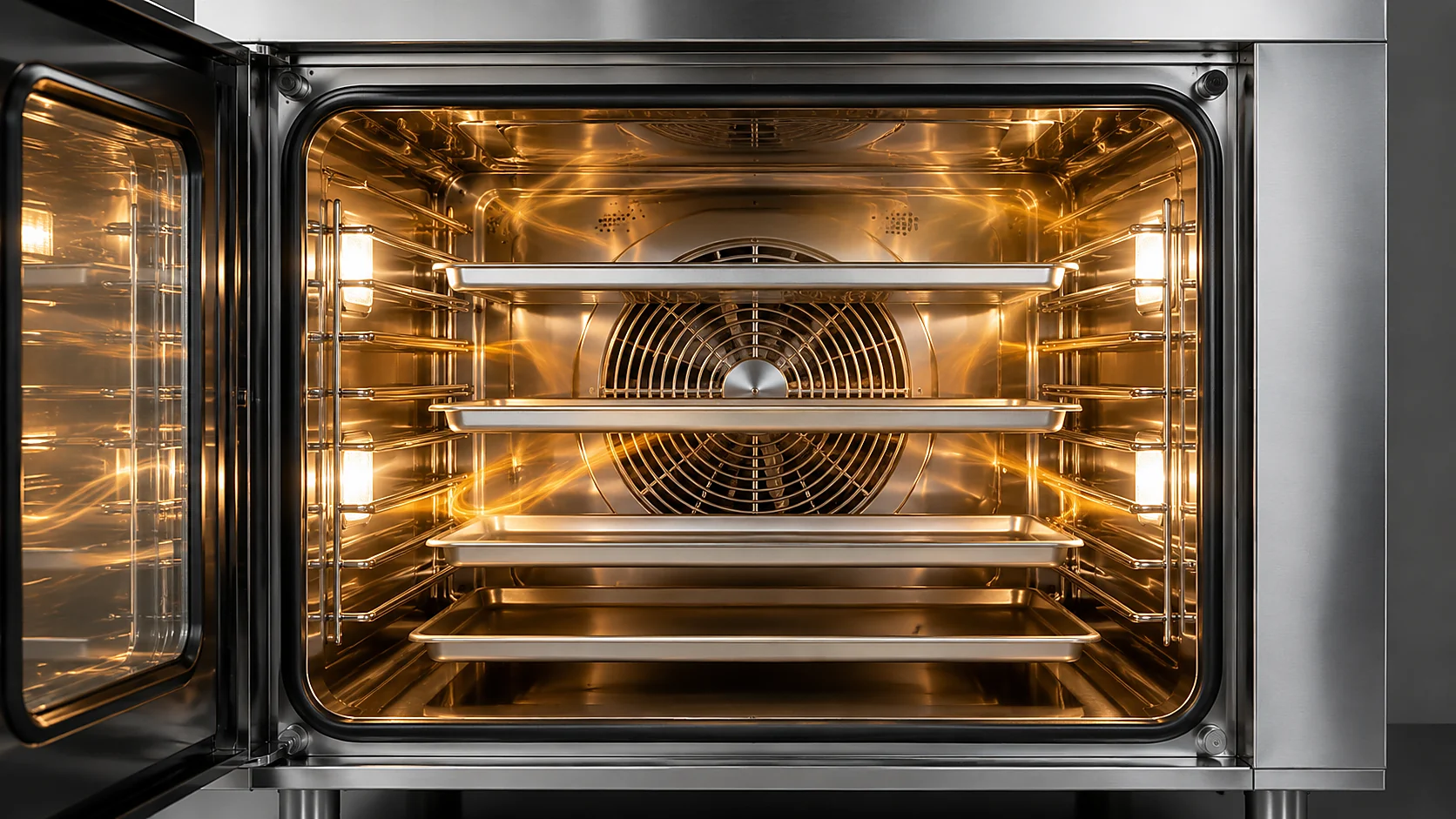
Review the chamber, tray system and airflow arrangement
Internal construction affects loading efficiency, air distribution, cleaning access and consistency between trays. Final details vary by oven category and model, so chamber information should be checked before order confirmation.
Floor-standing ovens for demanding production environments
Larger floor-standing commercial ovens may be suitable for bakeries, commissary kitchens, hotel production departments and food factories that require multiple chambers, higher loading capacity or longer operating cycles.
A structured process for commercial oven sourcing
PRIME Commercial Equipment coordinates product comparison and procurement steps for overseas commercial kitchen projects.
Requirement review
Review menu, output, utilities, dimensions, destination market and required oven type.
Model comparison
Compare suitable configurations, capacities, control systems and installation conditions.
Specification confirmation
Confirm technical details, accessories, documentation, packing and commercial terms.
Order coordination
Coordinate production follow-up, inspection information and export shipment preparation.
Build a more complete commercial kitchen package
Commercial ovens can be coordinated with preparation, washing and stainless steel equipment for consolidated procurement.
Frequently asked questions
Which commercial oven type is suitable for a restaurant?
The choice depends on the menu and production process. Convection ovens are commonly considered for general baking and roasting, while combi ovens support multiple cooking modes. Pizza and bakery operations may require dedicated deck or pizza ovens.
What information is required before receiving a quotation?
Provide the required oven type, products being cooked, expected capacity, tray or pan standard, voltage, frequency, phase, gas type if applicable, installation dimensions and destination country.
Can commercial ovens be supplied in different voltages?
Voltage and electrical configuration depend on the selected model and factory. The destination voltage, frequency and phase should be confirmed before production.
Can PRIME coordinate several types of kitchen equipment together?
Yes. PRIME Commercial Equipment can coordinate commercial ovens with refrigeration, stainless steel preparation equipment, sinks, shelving and dishwashing equipment for consolidated kitchen procurement projects.
Are gas and electric oven configurations both available?
Availability varies by oven category and model. The most suitable heating method should be selected according to local utilities, operating cost, installation conditions and the required cooking process.
What should be checked before installing a floor-standing oven?
Confirm equipment dimensions, access route, floor loading, ventilation, electrical or gas connection, water and drainage requirements, service clearances and local installation standards.
Send your menu, capacity and utility requirements
We will help organize the required information, compare suitable commercial oven configurations and coordinate the next quotation steps.