Commercial Cooking Equipment
Commercial Fryers for Foodservice Kitchens
PRIME Commercial Equipment coordinates gas, electric, countertop, tube-type, flat-bottom and pressure fryer options for restaurants, fast-food kitchens, hotels, catering facilities and commercial foodservice projects.
Selection Before Quotation
Match the fryer to the food, output and utility conditions
Commercial fryers should not be compared by exterior size alone. Heating method, oil capacity, recovery performance, tank structure, cold zone, controls, drainage, cleaning access and destination-market utilities all affect the final specification.
PRIME helps overseas buyers organize the requirement before supplier comparison so different fryer configurations can be quoted on a consistent basis.
Commercial Fryer Range
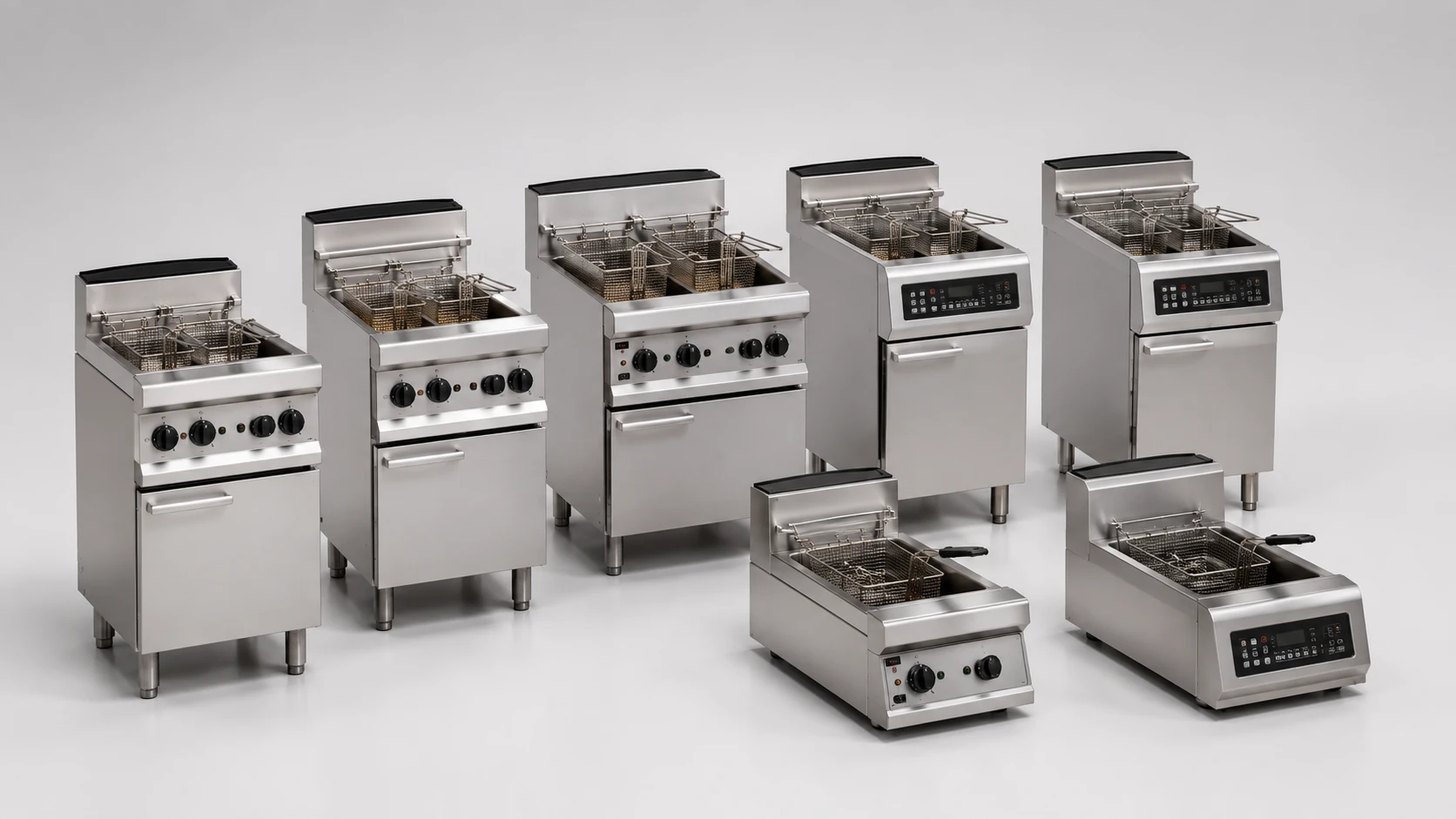
Fryer configurations for different foodservice operations
The appropriate structure depends on the menu, service rhythm, utility plan, floor space, food residue and maintenance routine. Final specifications vary by model and factory.
Gas Commercial Fryers
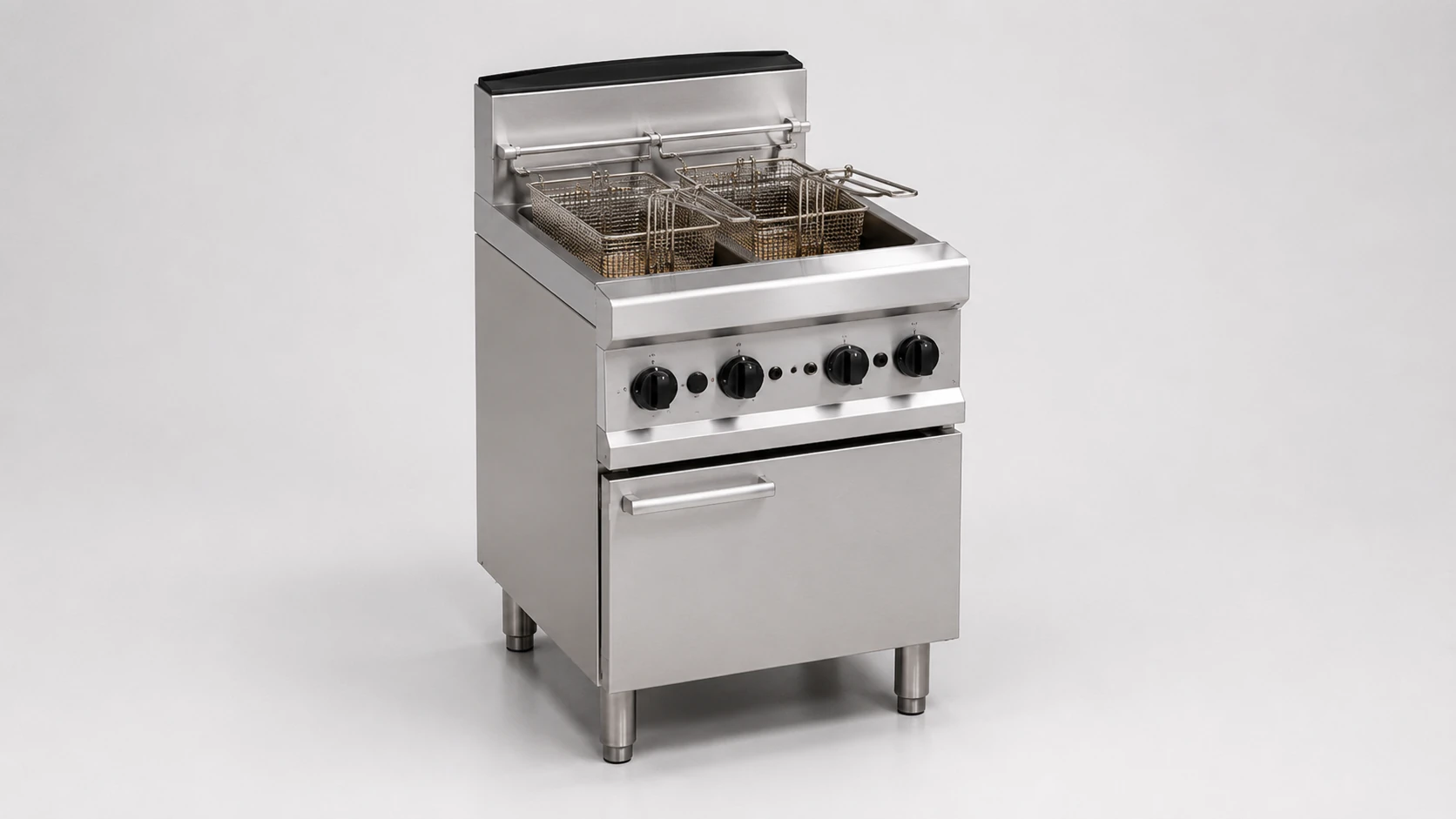
Floor-standing gas fryers for restaurants and high-volume kitchens requiring rapid heat input and continuous frying. Confirm natural gas or LPG, inlet pressure, heat input and connection details.
Electric Commercial Fryers
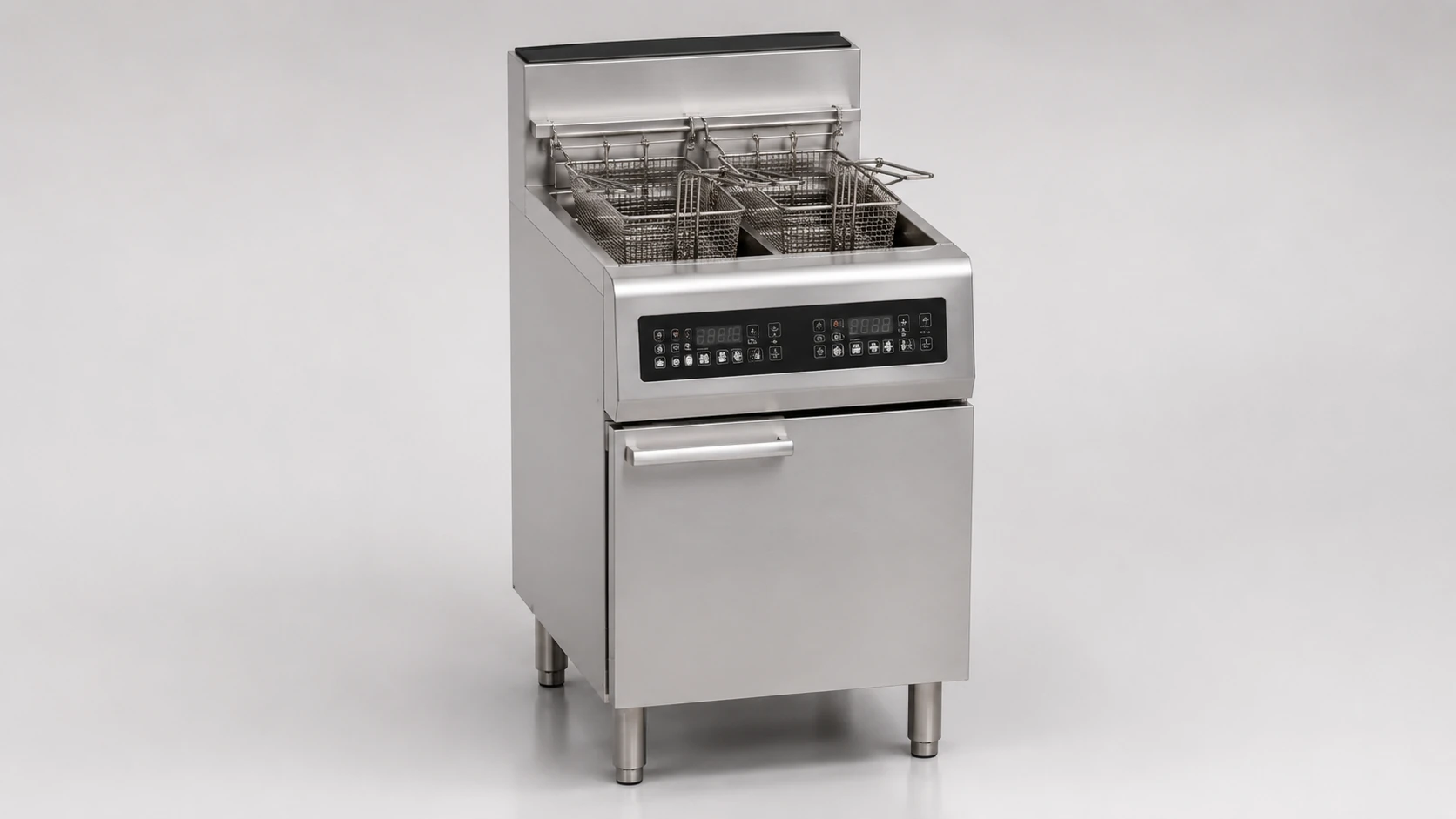
Electric fryers for kitchens where gas is unavailable or electrical cooking is preferred. Voltage, frequency, phase, rated power, wiring and plug requirements must be confirmed before production.
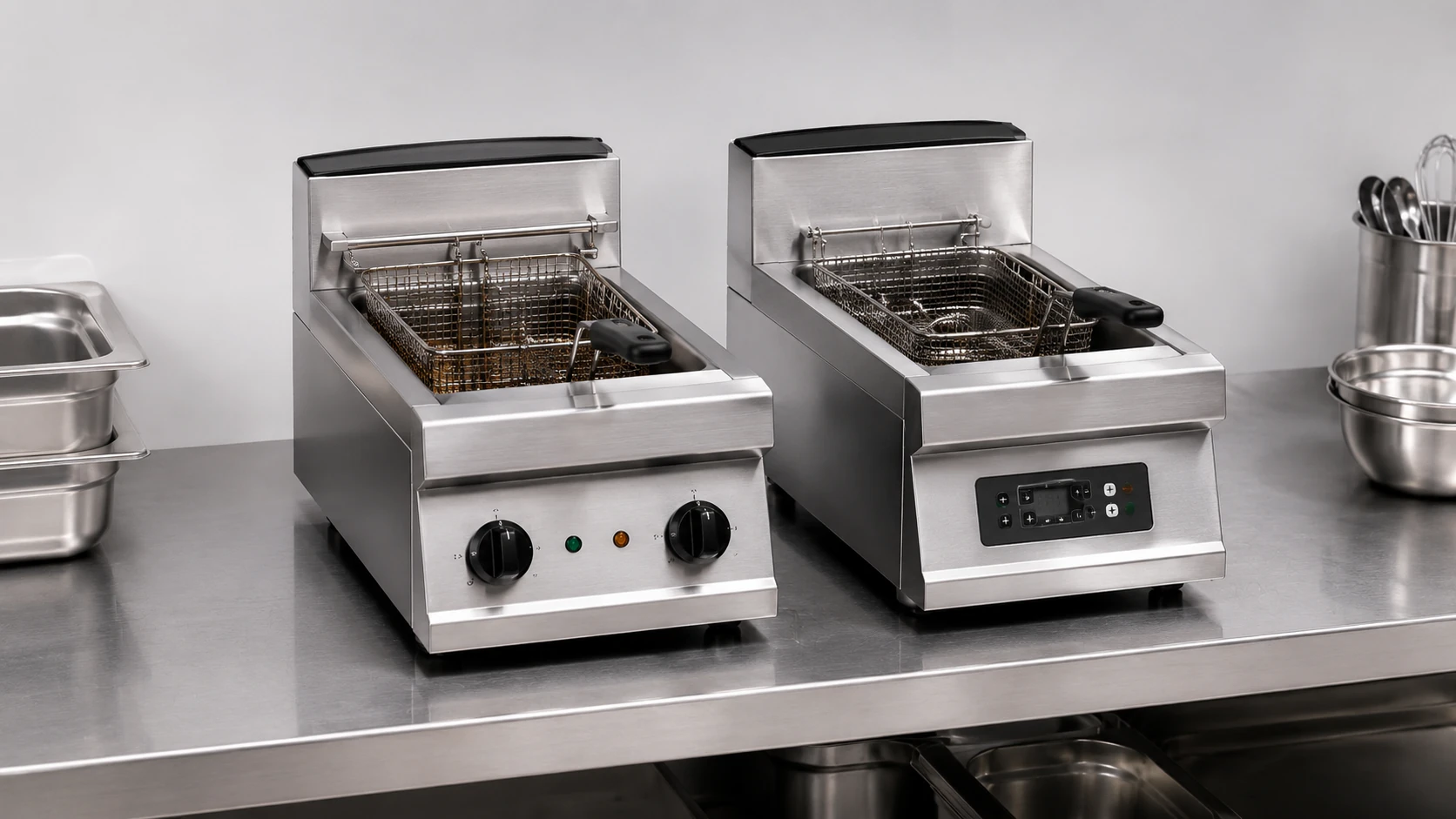
Countertop Fryers
Compact single-tank or twin-tank fryers for cafés, snack shops, bars and kitchens with limited floor area. Selection should reflect batch size, available power and counter dimensions.
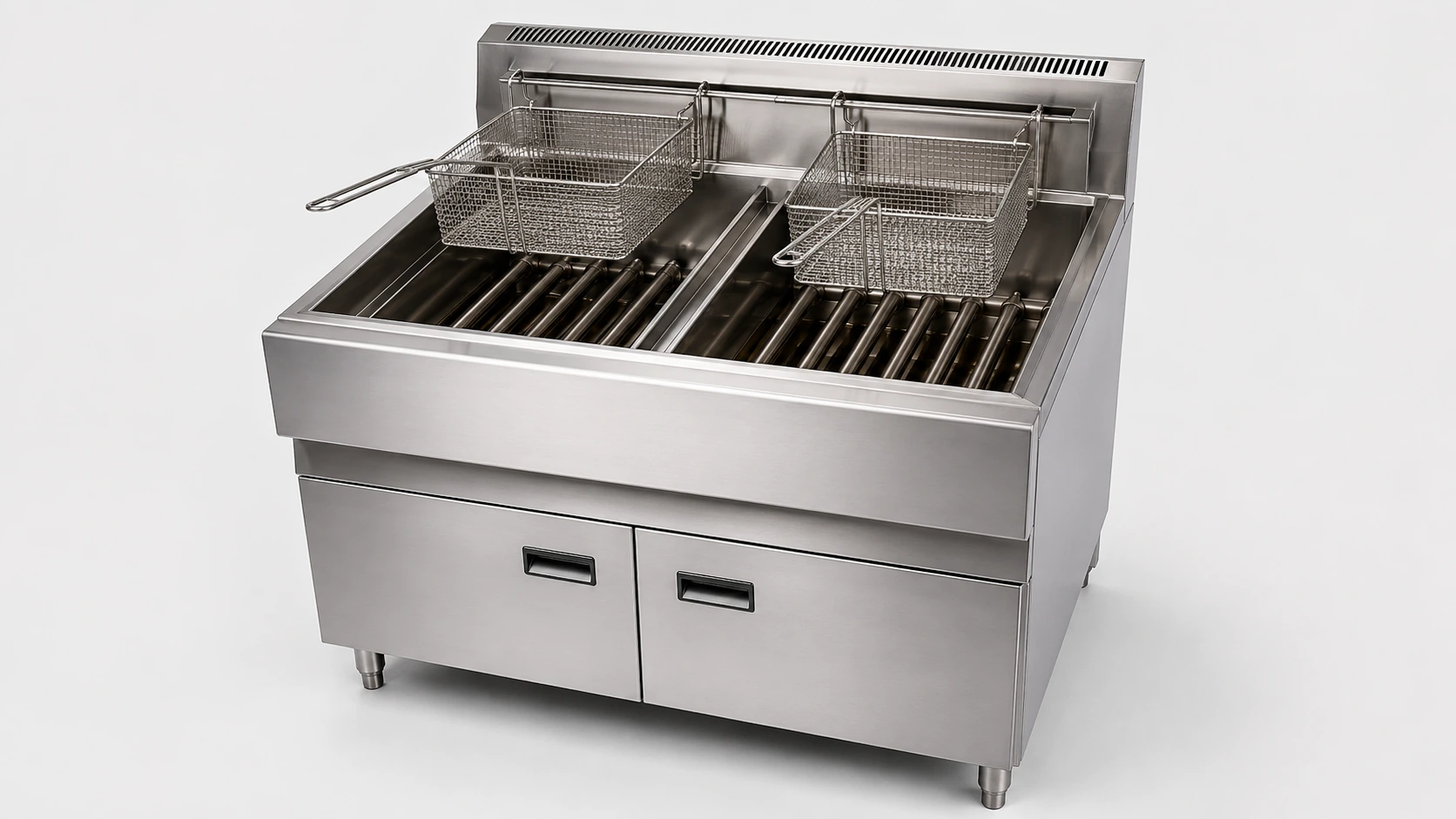
Tube-Type Fryers
Tube-type fryers use heat-transfer tubes within the oil tank. Food particles can settle below the heated area, making this structure suitable for breaded foods and applications that generate more crumbs and sediment.
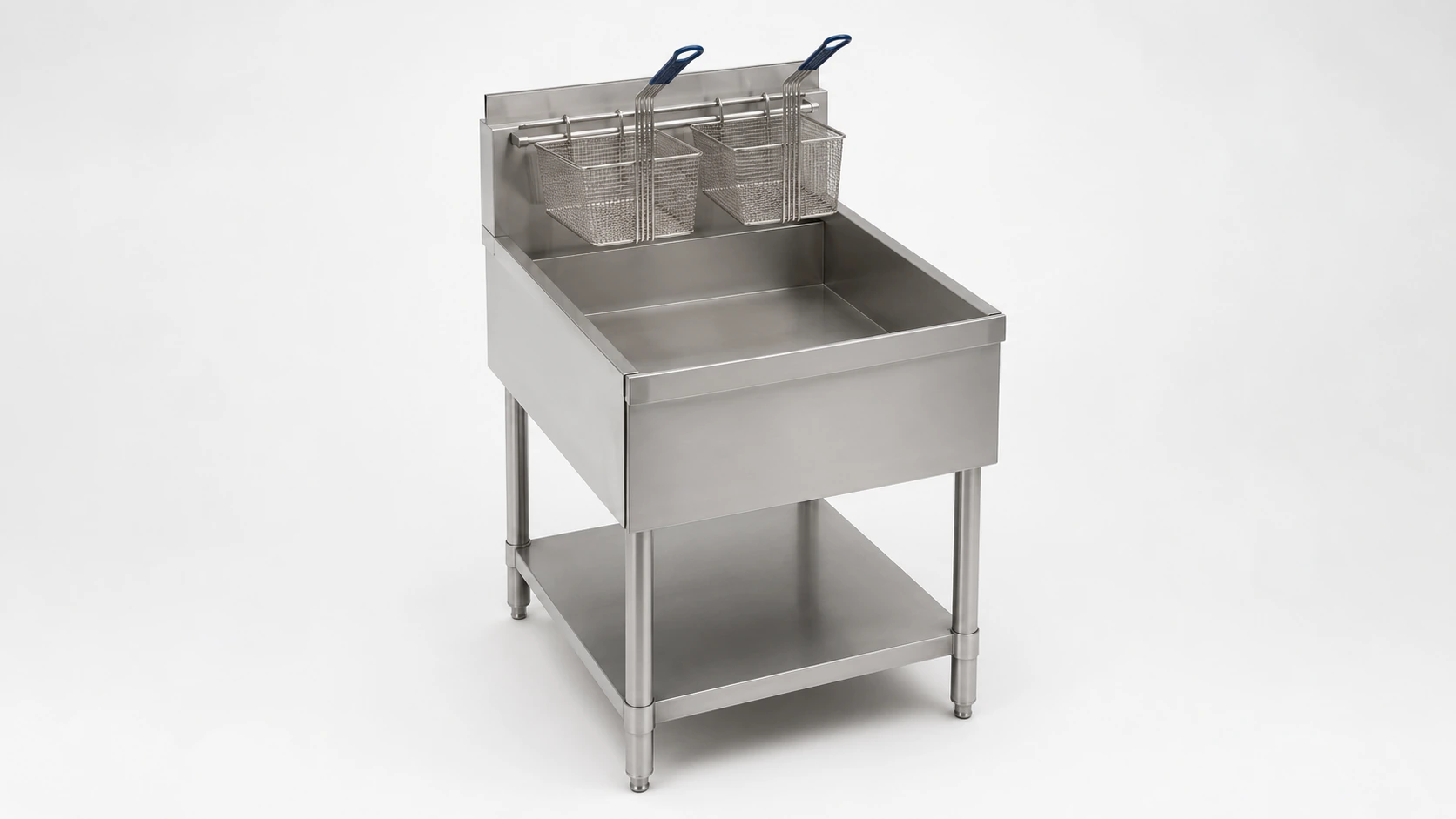
Flat-Bottom Fryers
Flat-bottom fryers provide a broad, unobstructed tank area without internal heat-transfer tubes. They are commonly considered for donuts, tempura, fritters and other delicate or wet-batter foods.
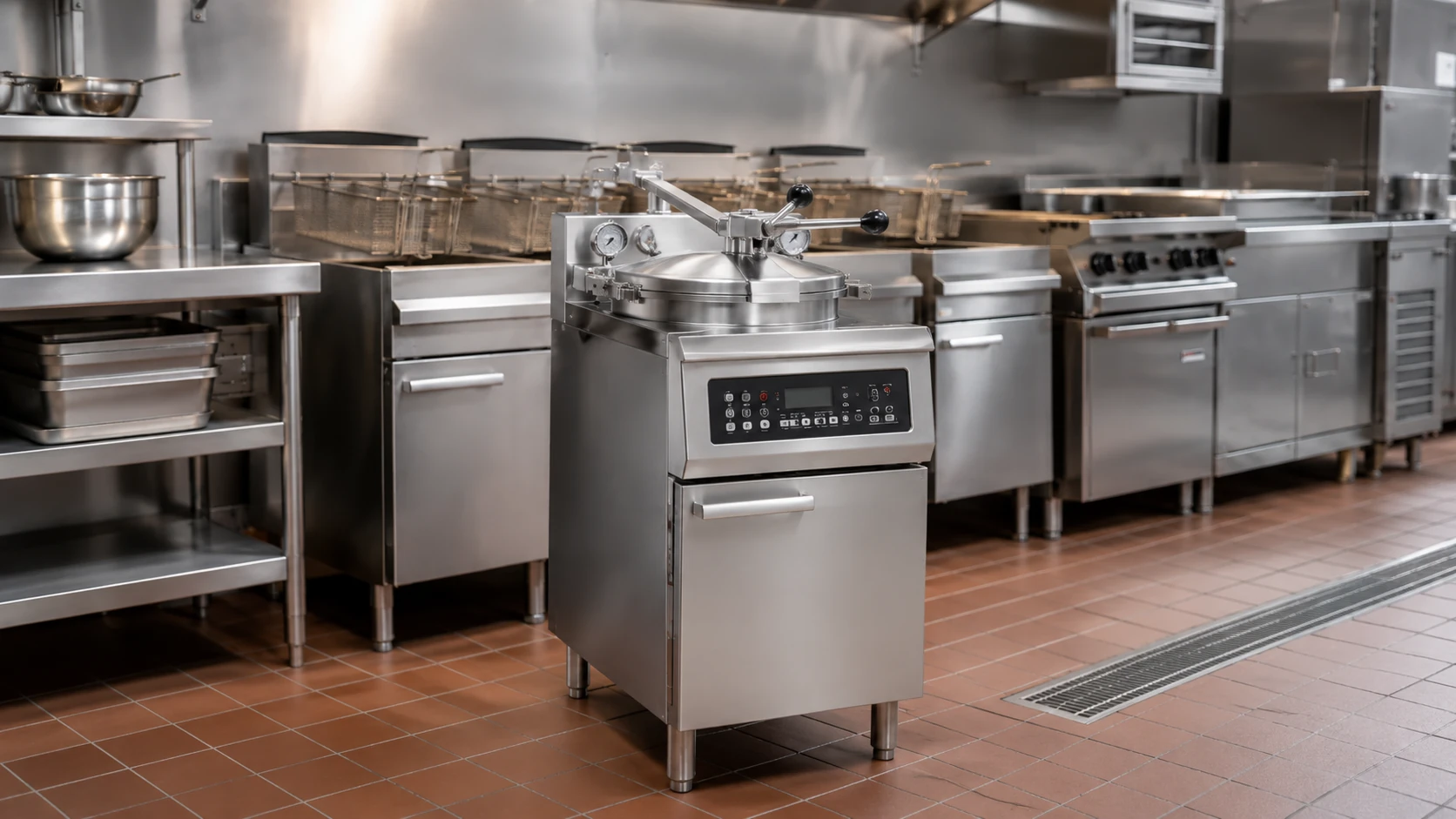
Pressure Fryers
Pressure fryer systems for applications such as fried chicken and selected meat products. Pressure controls, lid locking, relief devices, operating instructions and applicable safety requirements require careful confirmation.
Energy Comparison
Gas or electric commercial fryer?
Neither heating method is automatically better for every kitchen. Selection should follow utility availability, required recovery, operating pattern, installation conditions and local requirements.
| Selection factor | Gas fryer | Electric fryer |
|---|---|---|
| Energy source | Natural gas or LPG supply with confirmed pressure and connection. | Electrical supply with confirmed voltage, frequency, phase and rated load. |
| Installation planning | Gas line, shut-off, combustion air and ventilation conditions require review. | Circuit capacity, breaker, wiring, plug or terminal connection require review. |
| Heat recovery | Depends on burner input, tank design and operating load. | Depends on element power, heat-transfer arrangement and electrical capacity. |
| Common applications | High-volume restaurant lines and kitchens with suitable gas infrastructure. | Malls, cafés, compact kitchens and projects where electric cooking is preferred. |
| Quotation data | Gas type, pressure, heat input, connection and destination requirements. | Voltage, frequency, phase, rated power, wiring and plug requirements. |
Specification Decisions
Six factors that shape a commercial fryer quotation
Food Type
Describe fries, chicken, seafood, dough products or other menu items, including crumb and sediment load.
Peak Output
Provide expected portions or batches during peak service rather than only daily volume.
Energy Source
Confirm natural gas, LPG or electricity and provide the available utility data.
Oil Capacity
Review recommended oil fill, usable frying area and recovery demand. Oil volume is not the same as hourly output.
Tank Structure
Confirm tube-type, flat-bottom or pressure construction together with single-tank, double-tank and basket arrangements.
Cleaning Access
Check drain valve position, cold zone, removable parts, filtration options and service clearances.
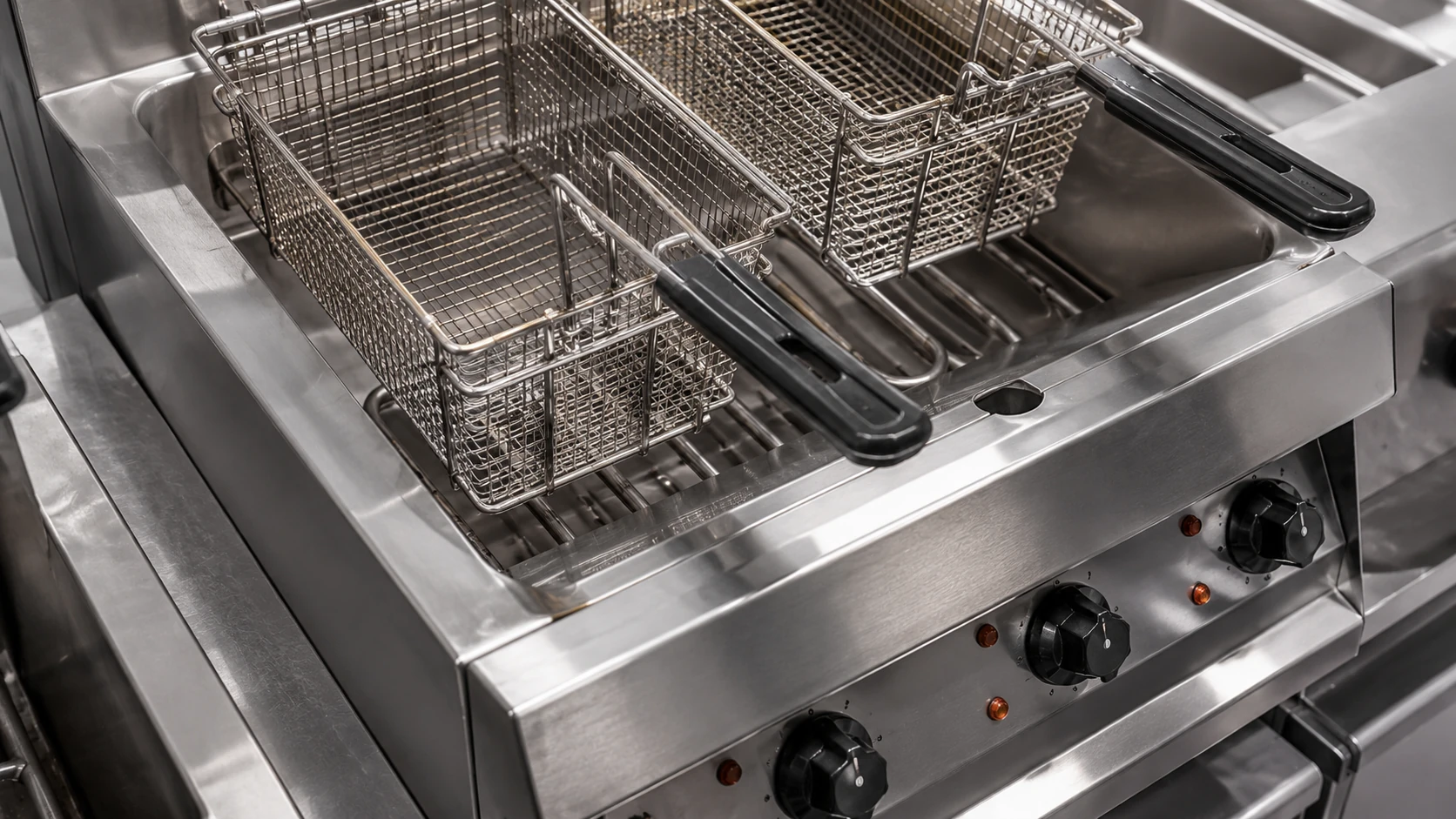
Tank and Control Details
Review the working structure, not only the cabinet
External appearance can be similar while tank geometry, heating arrangement, basket dimensions, drain position and control method differ substantially.
Foodservice Applications
Fryer formats for different operating environments
Fast-Food Restaurants
Fryers selected around peak service, recovery demand, basket workflow and repeatable batch production.
Hotels & Catering
Flexible fryer configurations for varied menus, banquet production and coordinated commercial cooking lines.
Cafés & Snack Shops
Countertop electric fryers for compact spaces and lower-volume fried food preparation.
Central Kitchens
Higher-capacity equipment considered with oil management, cleaning access, production rhythm and project utilities.
PRIME Procurement Support
From fryer requirement to export-ready order
PRIME coordinates the information required to compare models, clarify specifications and prepare a more workable commercial proposal.
Requirement Review
Review food type, output, fryer format, quantity, utility conditions and destination market.
Configuration Matching
Compare suitable gas, electric, countertop, tube-type, flat-bottom or pressure fryer directions.
Specification Confirmation
Confirm tank, basket, controls, voltage or gas data, dimensions, accessories and documents.
Order Coordination
Coordinate quotation, packing, production communication and export delivery preparation.
Quotation Checklist
Information needed for a commercial fryer quotation
Send reference pictures or a BOQ when the exact model is not yet known. Clear utility and application information reduces unsuitable quotations.
Commercial Fryer FAQ
Frequently asked questions
What type of commercial fryer is suitable for a restaurant?
The appropriate fryer depends on the food, peak output, available utilities, kitchen space, residue level and operating workflow. Countertop, tube-type, flat-bottom and pressure fryers serve different applications.
Should I choose a gas or electric commercial fryer?
Choose according to the available utility infrastructure, required capacity, installation conditions and local requirements. Gas quotations need the gas type and pressure; electric quotations need voltage, frequency, phase and rated electrical load.
What is the difference between a tube-type fryer and a flat-bottom fryer?
Tube-type fryers use heat-transfer tubes within the oil tank and are commonly considered for breaded products that create more crumbs. Flat-bottom fryers provide a broad unobstructed tank area and are often considered for donuts, tempura and wet-batter products.
What electrical information is required for an electric commercial fryer?
Confirm voltage, frequency, phase, rated power, circuit or breaker conditions, and whether the unit requires a plug, hard wiring or a specific terminal connection.
Can commercial fryers use different tank and basket configurations?
Depending on the model, options may include single tank, twin tank, single basket, twin basket and independently controlled tanks. Final availability should be confirmed before quotation.
What information is required before receiving a commercial fryer quotation?
Provide the fryer type, energy source, food application, expected output, oil-capacity preference, tank structure, voltage or gas details, quantity, destination country and any certification, documentation or packaging requirements.
Related Cooking Equipment
Coordinate a complete commercial cooking line
Start Your Fryer Project
Send your food, capacity and utility requirements
PRIME will help organize the requirement, compare suitable commercial fryer configurations and coordinate the next quotation and export-delivery steps.