Commercial Bakery and Dough Preparation Equipment
Commercial Bakery and Dough Preparation Equipment from PRIME supports mixing, kneading, sheeting, dividing, rounding and proofing processes for bakeries, pizza shops, pastry kitchens, hotels and food-production projects.
How to select Commercial Bakery and Dough Preparation Equipment
Equipment selection should follow the dough formula, product type, batch definition, production rhythm, available floor space and local electrical configuration. Similar-looking machines may have very different rated capacities and working limits.
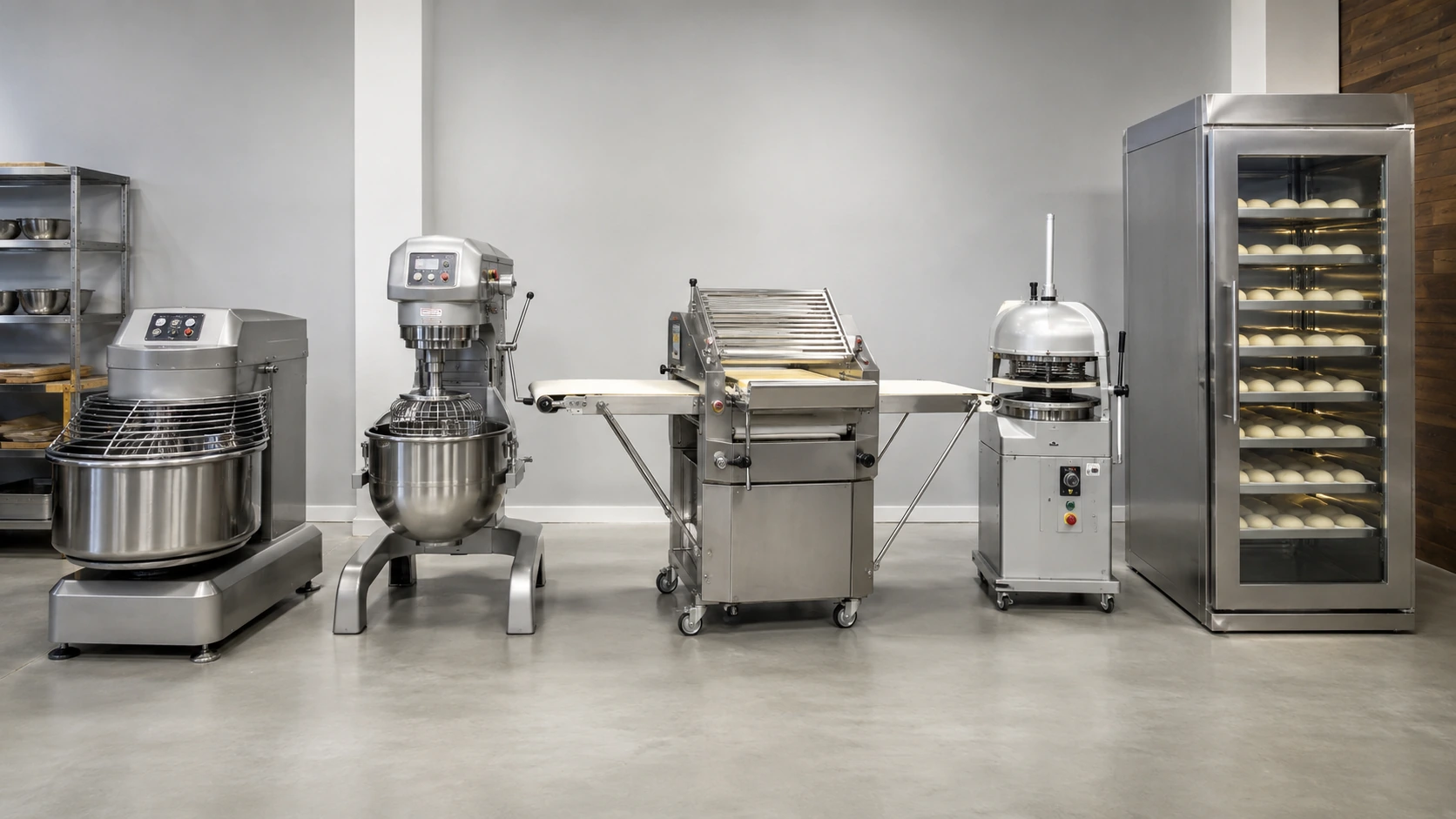
Bakery equipment for mixing, sheeting, forming and proofing
The correct machine should be selected around the actual dough process and production requirement. Bowl litres, machine width or external appearance alone are not enough for a reliable comparison.
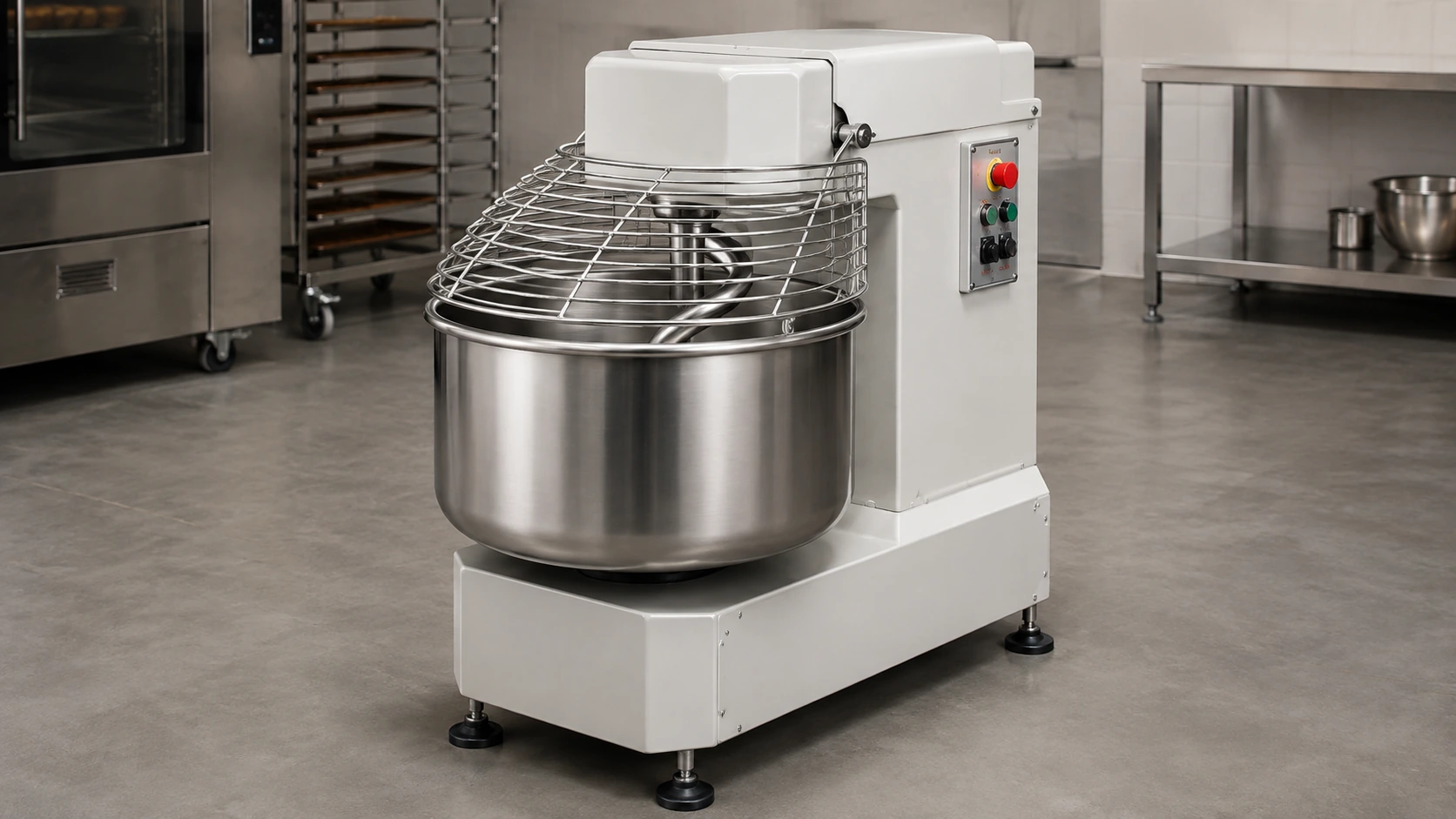
Spiral Dough Mixers
Heavy-duty mixers for bread, pizza, bagel and artisan dough. Confirm flour capacity, finished-dough capacity, hydration, mixing speeds, bowl structure and the minimum and maximum working batch.
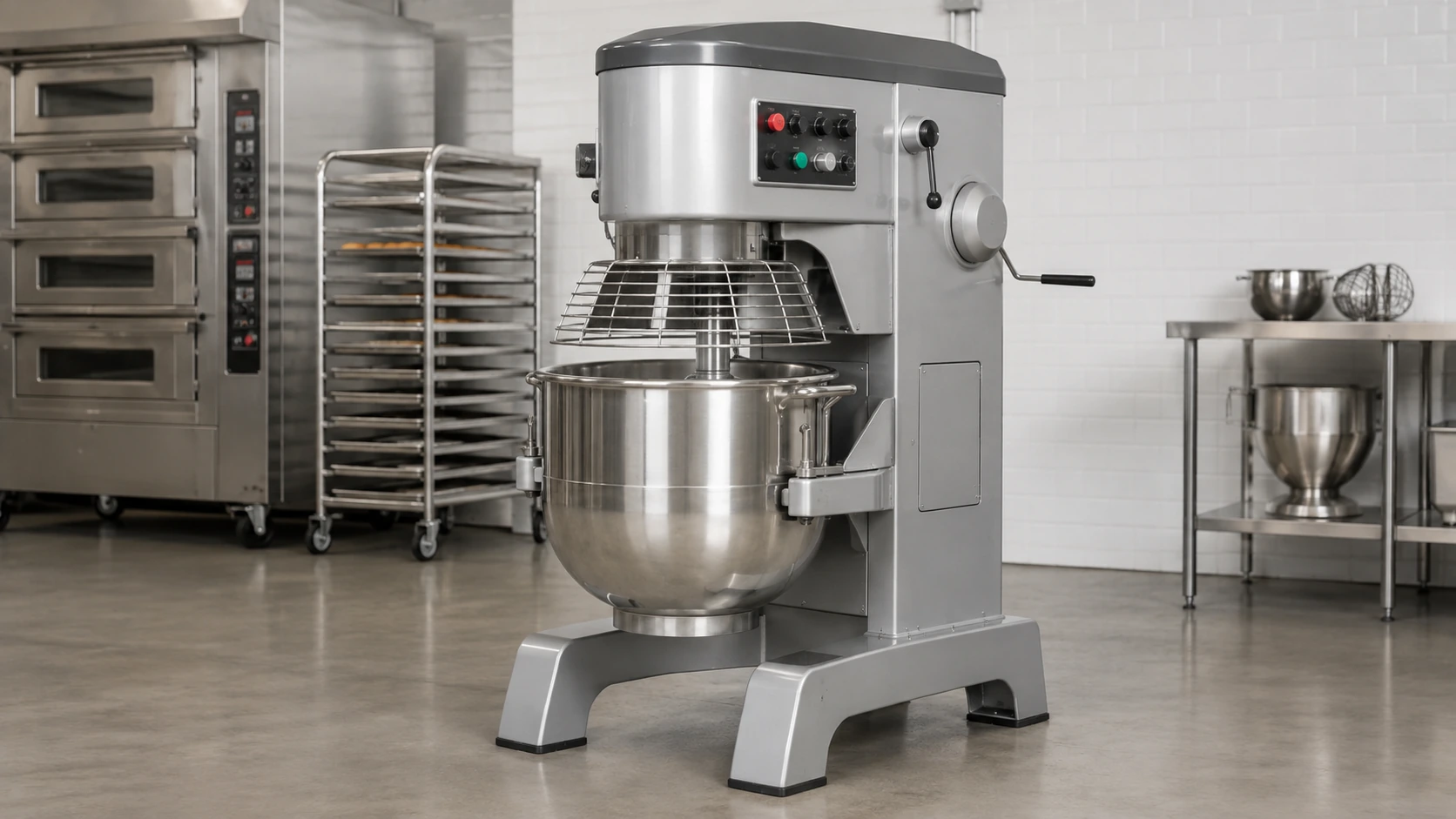
Planetary Mixers
Multipurpose mixers for batter, cream, icing, fillings, mashed products and selected dough applications. Compare bowl size together with attachment type, speed range, motor duty and actual product load.
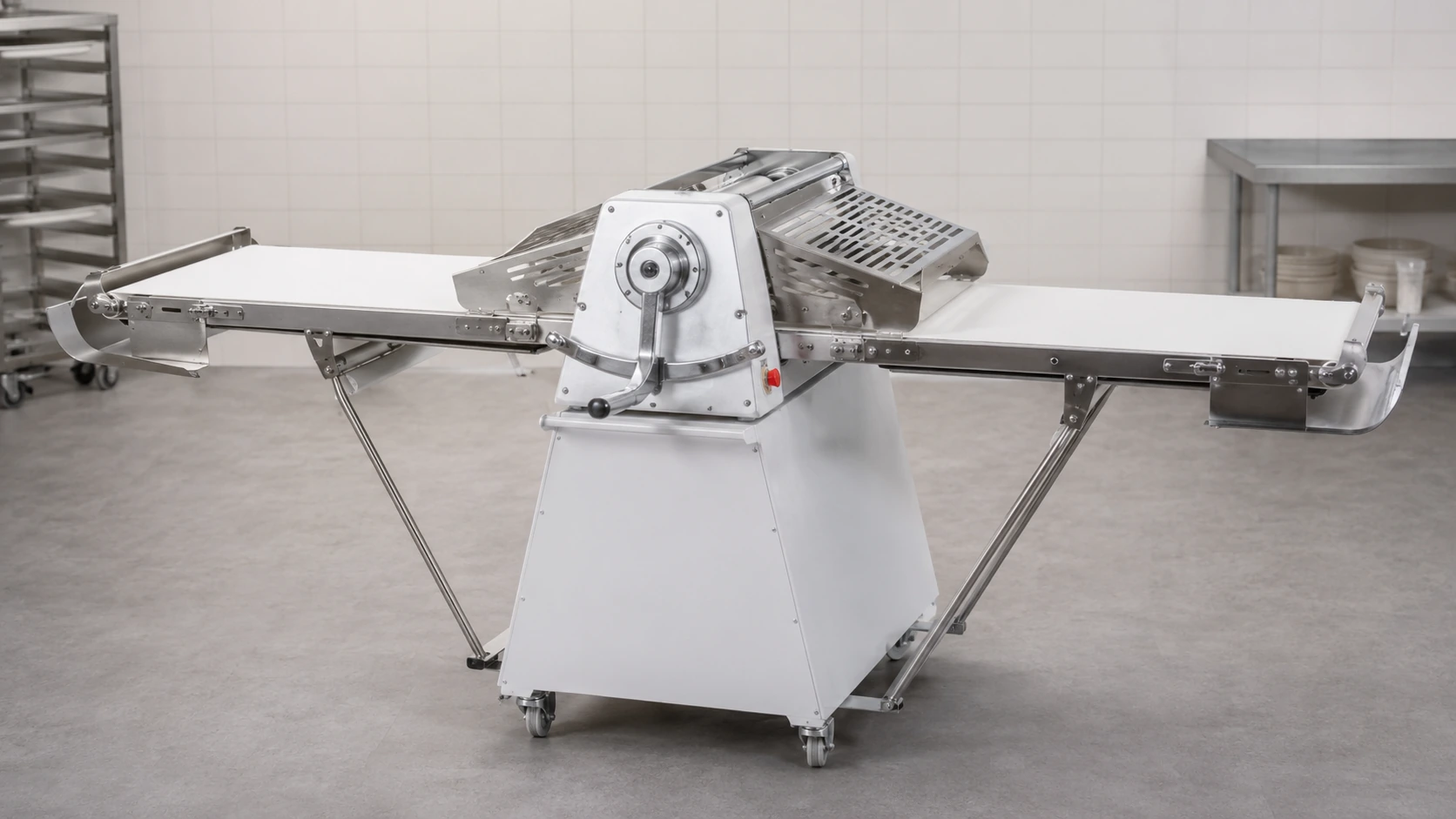
Dough Sheeters
Tabletop or floor-standing machines for pastry, croissant dough, pizza bases, fondant and laminated dough. Confirm belt width, roller opening, final thickness, reversing control and table-folding requirements.
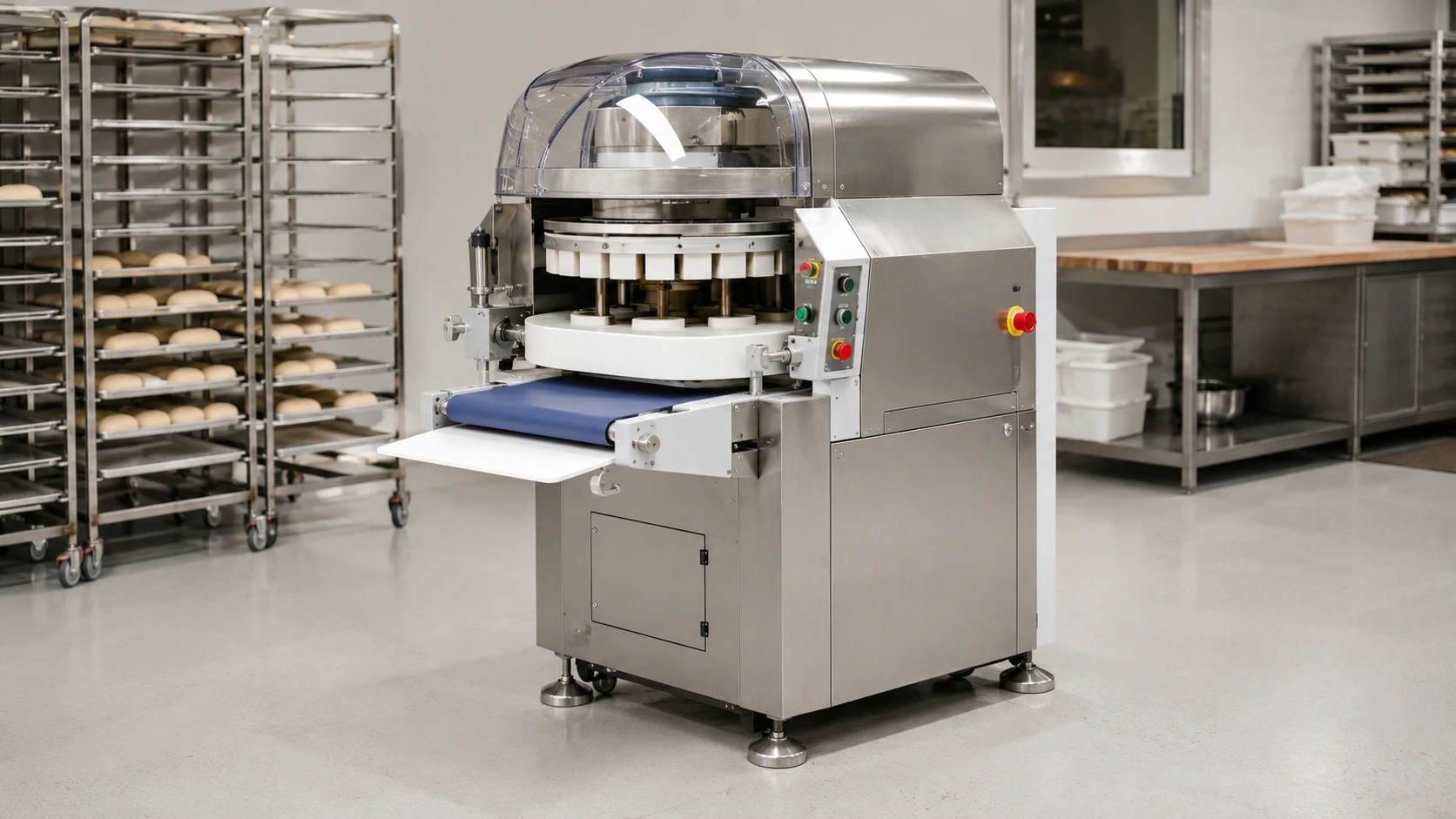
Dough Dividers & Rounders
Machines for dividing bulk dough into repeatable piece weights and preparing rounded portions for buns, rolls, bread and pizza. Confirm piece-weight range, pieces per cycle, dough condition and required output.
Compare bakery machines by production stage
| Equipment Type | Main Process | Typical Products | Main Selection Data |
|---|---|---|---|
| Spiral Mixer | Dough mixing and kneading | Bread, pizza and artisan dough | Flour capacity, dough capacity, speeds and hydration |
| Planetary Mixer | Multipurpose mixing | Batter, cream, filling and selected dough | Bowl volume, attachment, speed and motor duty |
| Dough Sheeter | Rolling and laminating | Pastry, croissant and pizza dough | Belt width, roller opening and final thickness |
| Divider & Rounder | Portioning and rounding | Buns, rolls, bread and pizza dough | Piece-weight range, pieces per cycle and output |
| Dough Moulder | Final shaping | Loaves, baguettes and rolls | Product shape, dough weight, roller and belt settings |
| Proofer | Controlled fermentation | Bread, buns, pastry and pizza dough | Rack capacity, temperature, humidity and tray format |
Spiral mixer or planetary mixer?
The two machine types overlap in some applications, but they are normally selected for different production priorities.
Choose a Spiral Mixer
For bread and pizza dough as the main workload, larger dough batches and consistent kneading performance.
- Flour and dough capacity
- Hydration and dough stiffness
- One-speed or two-speed cycle
Choose a Planetary Mixer
For varied products that may require dough hooks, flat beaters and wire whips within the same kitchen.
- Batter, cream and fillings
- Multiple attachment options
- Smaller or changing batches
Do Not Compare Litres Alone
Bowl volume does not directly equal usable dough capacity. Check the rated load for the actual recipe.
- Flour weight
- Finished-dough weight
- Minimum working batch
Confirm Duty Cycle
Review batch frequency, expected operating hours, mixing time, cooling intervals and cleaning workflow.
- Motor duty
- Production rhythm
- Safety and service access
Plan bakery equipment around the complete dough process
A workable bakery line should follow how ingredients and dough move through production, rather than treating each machine as an isolated purchase.
Ingredient Preparation
Organize flour, water, yeast, oil, sugar and other ingredients around a clean weighing and handling area.
Mixing & Kneading
Select a spiral or planetary mixer according to recipe, capacity, hydration and production frequency.
Resting & Sheeting
Use resting time, work tables and dough sheeters according to pastry, pizza or laminated-dough requirements.
Dividing & Moulding
Control piece weight, rounding and final shape for rolls, loaves, baguettes and pizza portions.
Controlled Proofing
Match cabinet or rack capacity to temperature, humidity, tray format and required fermentation time.
Commercial Ovens
Coordinate the preparation line with convection, deck, rack, combi or pizza ovens according to the final product.
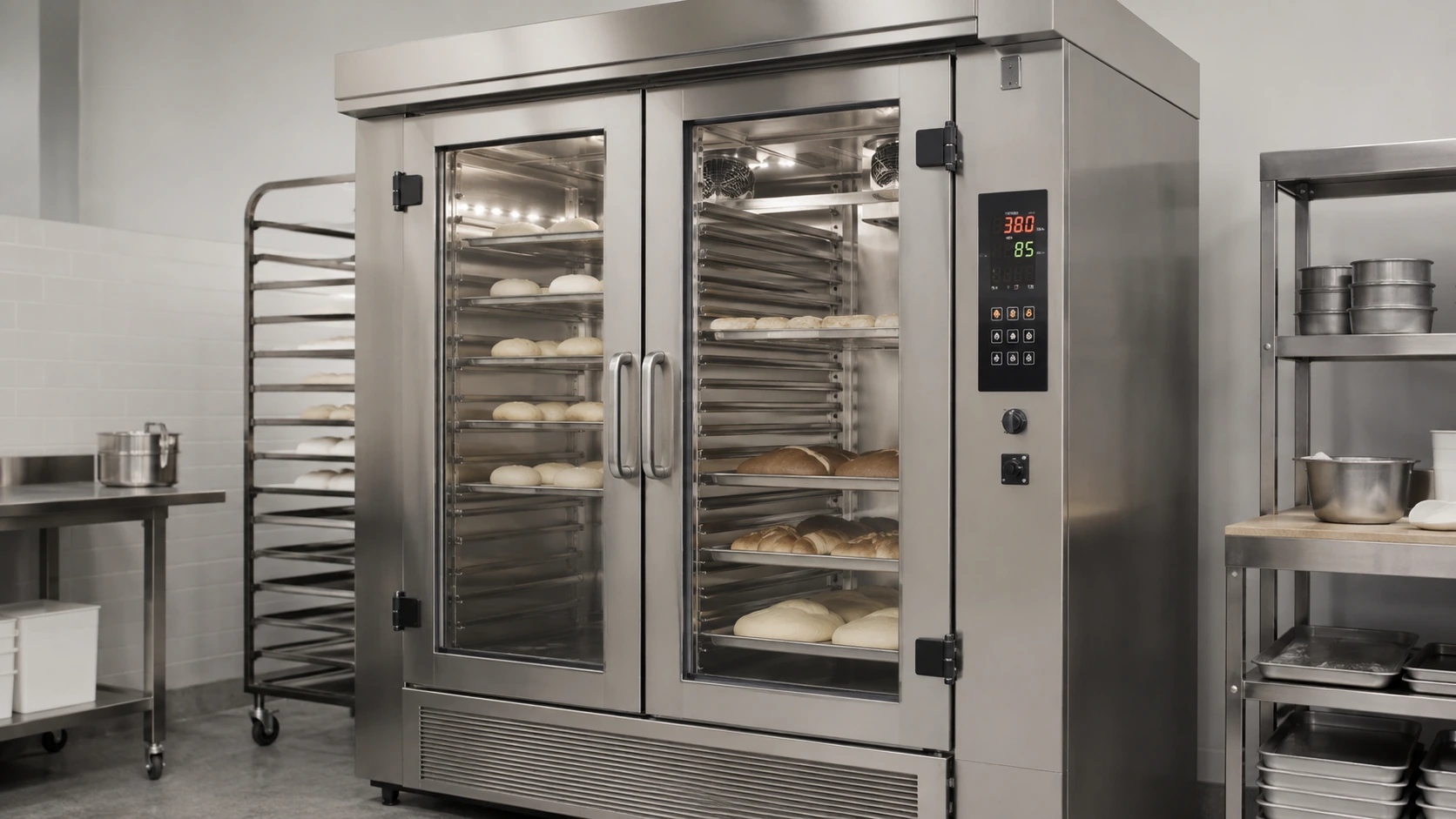
Match the proofer to racks, trays and fermentation requirements
A proofer should be selected according to the actual rack or tray format, usable interior dimensions, temperature and humidity control method, door clearance and surrounding workflow.
Six details that shape the final bakery equipment quotation
Clear operating information helps suppliers compare equivalent configurations and reduces unsuitable model recommendations.
Bakery Product
Confirm bread, pizza, croissant, pastry, cake, buns or another specific production requirement.
Capacity Definition
Clarify flour weight, finished-dough weight, batch quantity, pieces per cycle or hourly output.
Dough Characteristics
Provide hydration, stiffness, fat content, fermentation method and any difficult or high-load recipe details.
Product Dimensions
Confirm dough-piece weight, sheet width, final thickness, product length and tray or rack format.
Power Configuration
Provide voltage, frequency, phase, rated-power limits and plug or hard-wiring requirements.
Production Layout
Confirm machine sequence, aisle space, door width, table height, cleaning access and packing limits.
Dough preparation equipment for different operating environments
The machine combination should follow the product mix, batch size, production volume, labor plan and available space.
Commercial Bakeries
Spiral mixers, dividers, moulders, proofers and ovens for bread, rolls and wholesale production.
Pizza Shops
Mixing, dividing, rounding and sheeting equipment matched to pizza dough and oven output.
Pastry & Café Production
Planetary mixers, dough sheeters and controlled proofing for pastry, cake and laminated products.
Central Kitchens
Higher-capacity mixing and forming equipment coordinated around batch production and delivery schedules.
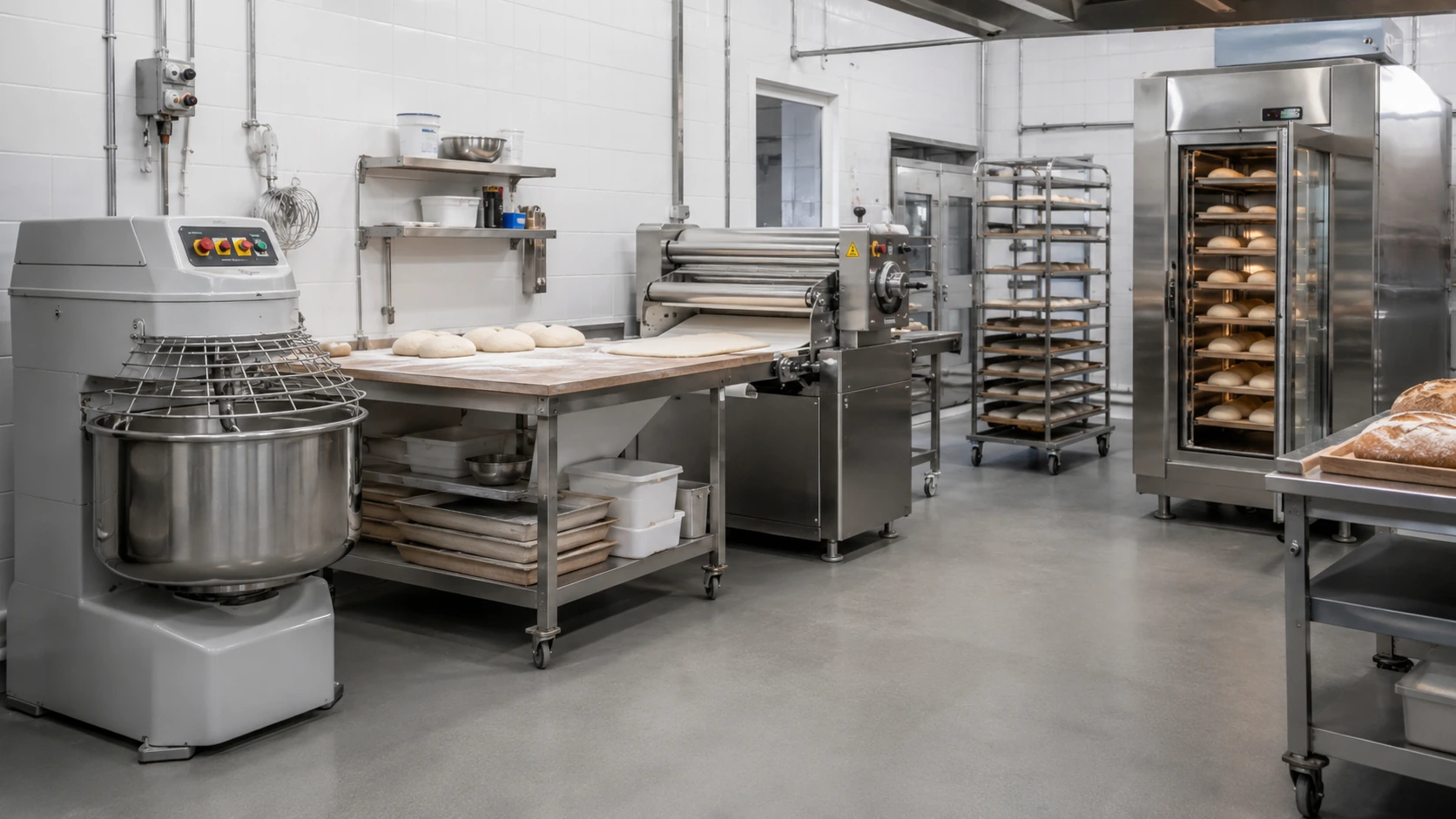
Review access, guards and food-contact components before ordering
Safety and cleaning details vary by model. The final specification should identify which guards, switches, removable tools and cleaning procedures are included.
Guards & Interlocks
Check bowl guards, roller guards, emergency stop, covers and any available interlock functions.
Food-Contact Parts
Review bowls, hooks, beaters, belts, rollers and product-contact surfaces by material and finish.
Cleaning Access
Confirm removable tools, belt access, bowl clearance, flour-dust areas and surrounding service space.
Operator Workflow
Consider working height, rack movement, lifting, discharge direction and access around each machine.
Coordinate the complete bakery equipment requirement
PRIME works as a sourcing and procurement coordinator, helping overseas buyers organize requirements, match suitable supply resources and confirm the information needed for quotation, production and export delivery.
Requirement Review
Review product type, dough formula, capacity, equipment list, quantity and destination market.
Equipment Matching
Coordinate suitable mixer, sheeter, divider, proofer and supporting equipment directions.
Specification Confirmation
Confirm dimensions, capacity definitions, electrical data, controls, accessories and documents.
Order Coordination
Coordinate quotation, production communication, packing information and export preparation.
Information needed for a bakery equipment quotation
Send a product list, reference picture or production requirement
The exact model is not required at the first step. PRIME can help organize the equipment direction and identify the technical data required for supplier comparison.
Frequently asked questions
What is the difference between a spiral mixer and a planetary mixer?
Should mixer capacity be compared by bowl volume?
What information is required for a dough sheeter quotation?
Does a commercial proofer require water and drainage?
Can bakery equipment and commercial ovens be coordinated together?
What should be included in a Commercial Bakery and Dough Preparation Equipment inquiry?
Coordinate the complete bakery and commercial kitchen line
Start your commercial bakery and dough preparation equipment project
Send the bakery product, dough capacity, production output, voltage, equipment list, quantity and destination market.