Commercial Meat Processing Equipment
Commercial Meat Processing Equipment from PRIME supports slicing, grinding, bone cutting, tenderizing, chopping and sausage filling for restaurants, hotels, butcher shops, supermarkets, central kitchens and food-production projects.
How to select Commercial Meat Processing Equipment
Machines with similar external dimensions may have very different permitted product temperatures, feed sizes, output ratings, safety structures and cleaning requirements. Selection should follow the actual raw material and finished-product target.
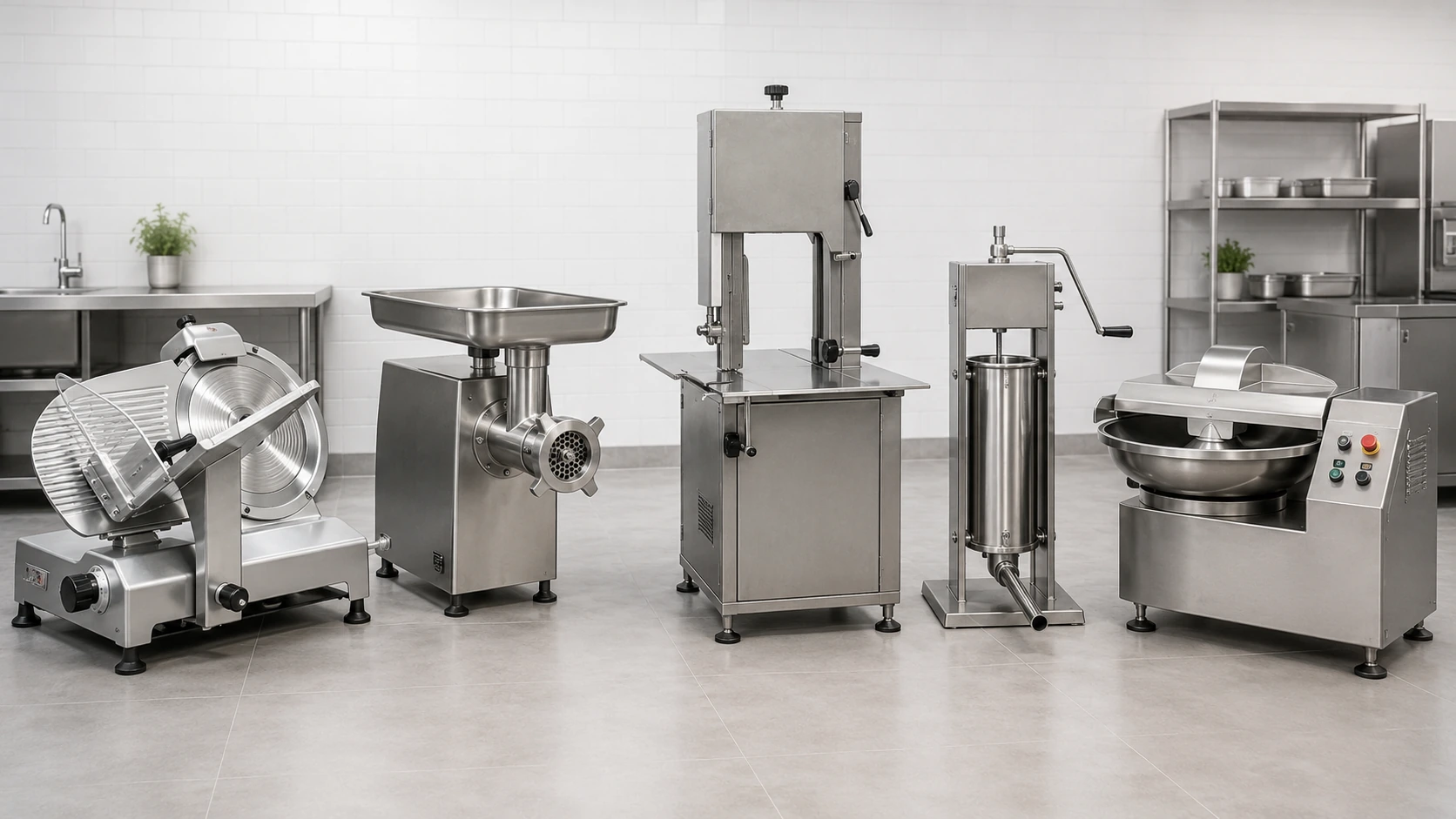
Meat-processing equipment for slicing, grinding, cutting and filling
Each machine should be matched to the meat condition, required output, finished-product specification, operating rhythm and cleaning procedure.
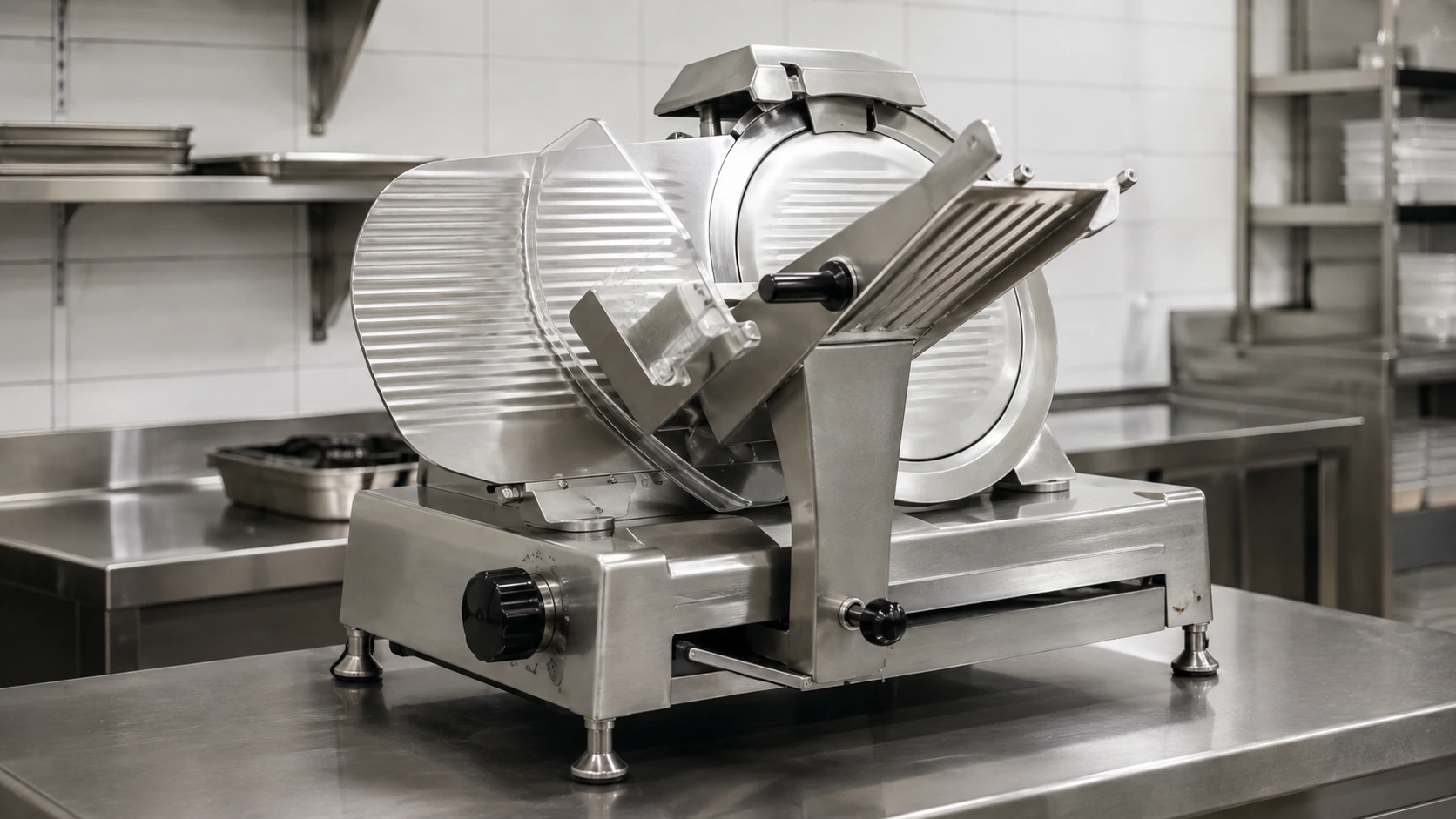
Commercial Meat Slicers
Gravity-feed, vertical, manual, semi-automatic or automatic slicers for deli meat, ham, sausage, cooked meat, cheese and selected chilled boneless products.
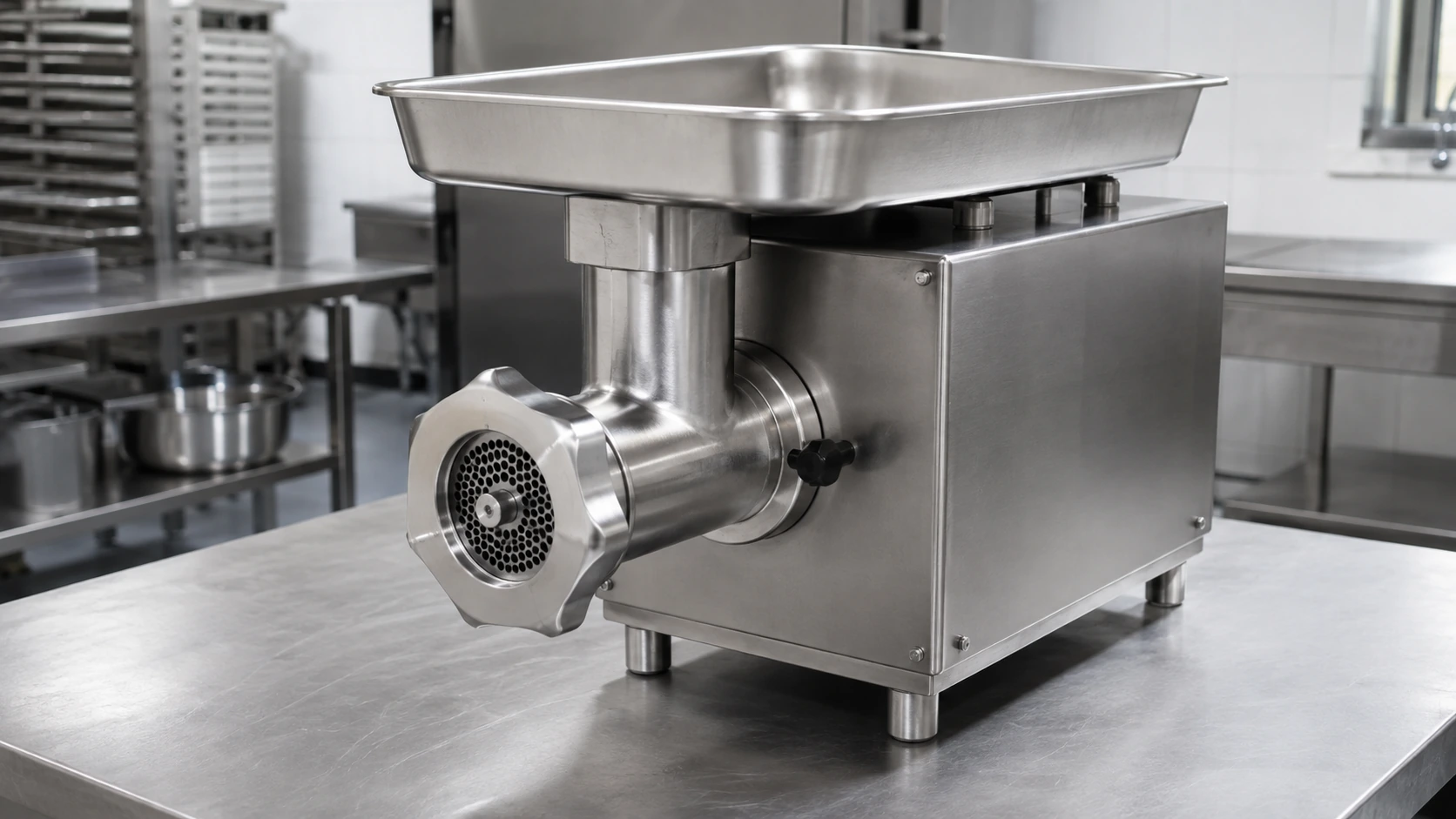
Meat Grinders & Mincers
Commercial grinding equipment for minced meat, burger mixtures, dumpling fillings, sausage preparation and other boneless meat applications.
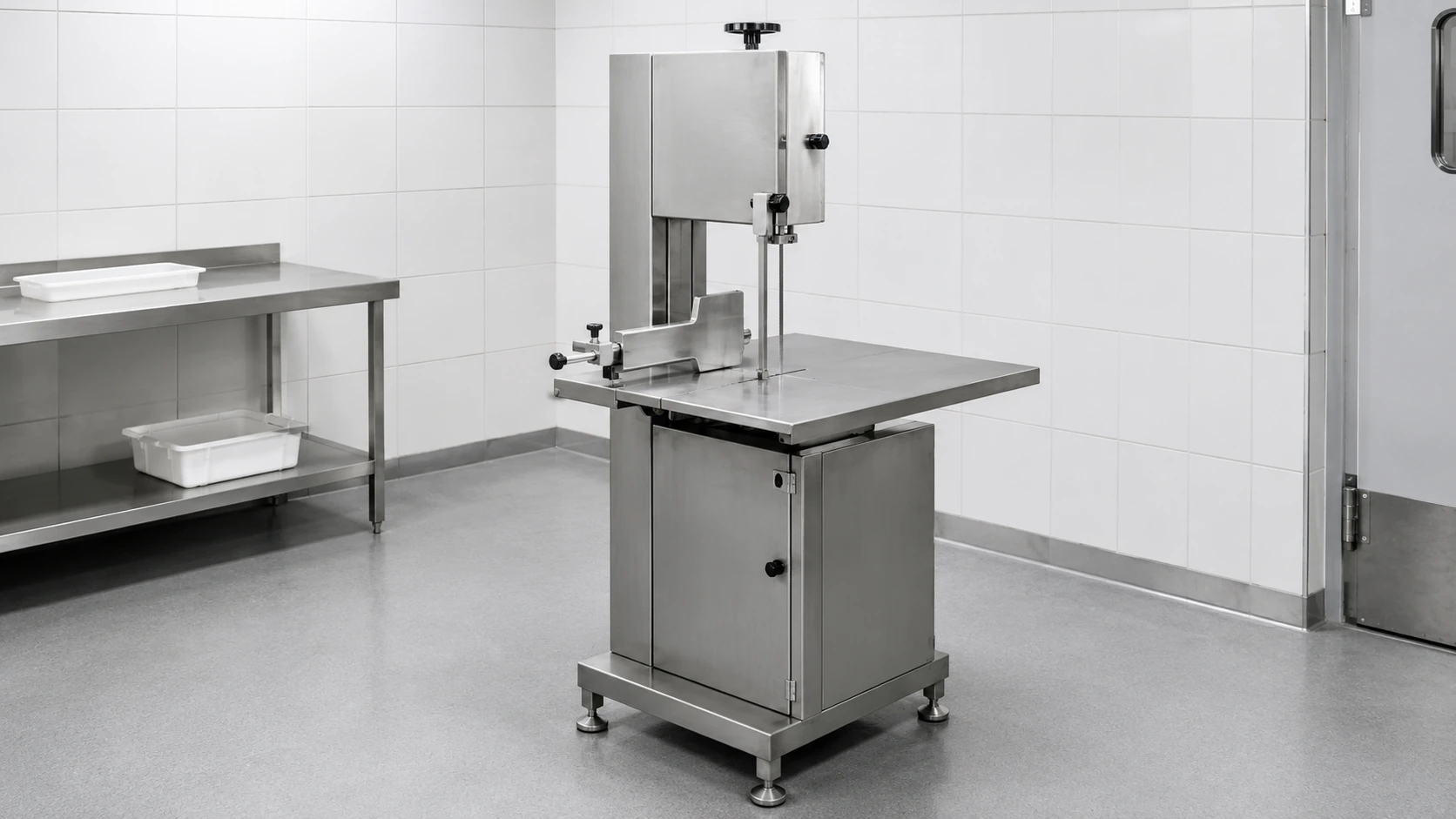
Commercial Bone Saws
Floor-standing saws for bone-in meat, frozen blocks, poultry, fish, ribs and portion cutting. Selection should confirm clearance, blade specification, table size and product condition.
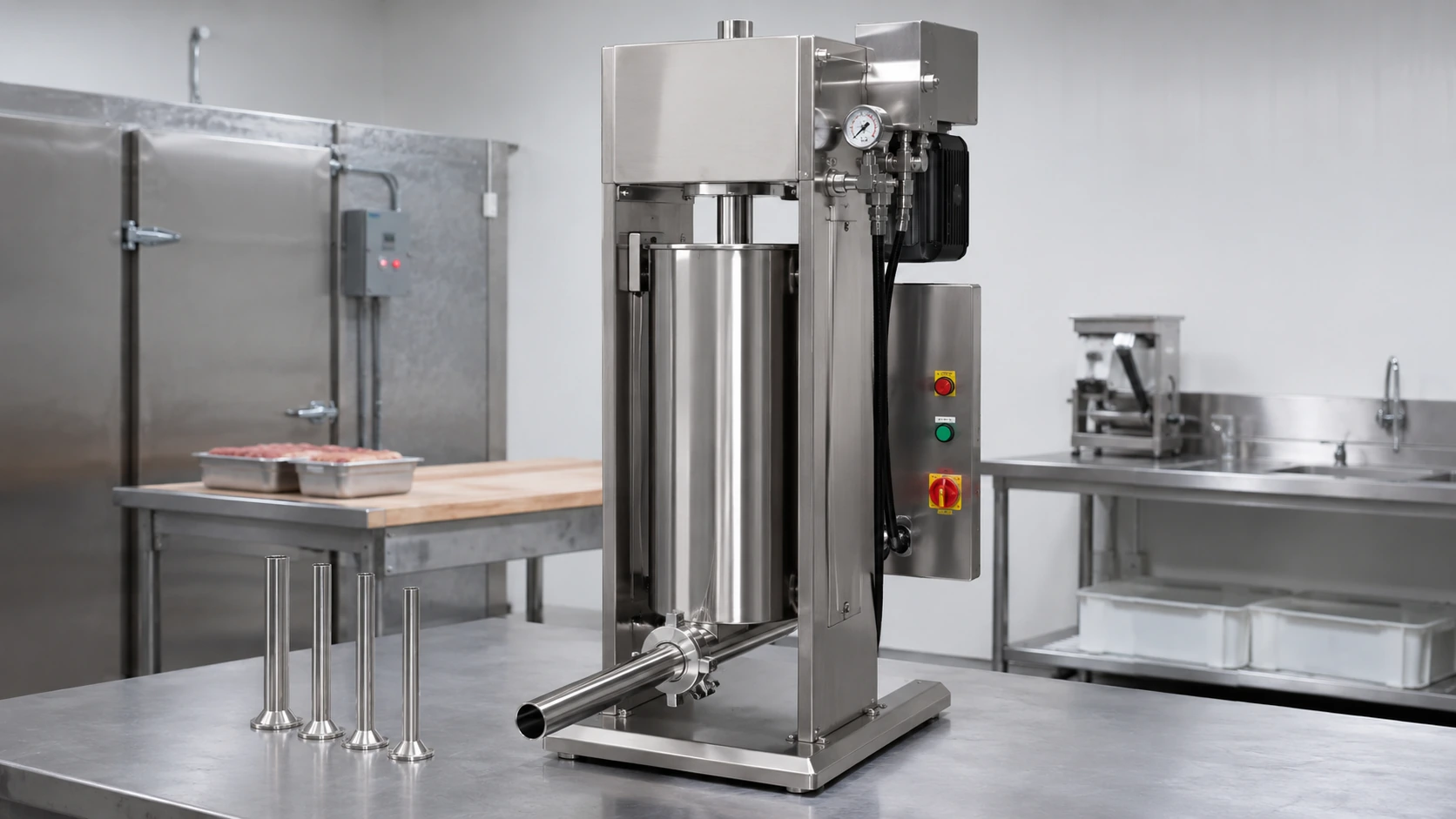
Sausage Stuffers
Manual, electric or hydraulic equipment for filling fresh sausage, cooked sausage and selected processed-food mixtures. Confirm cylinder capacity, speed and tube sizes.
Tenderizers & Strip Cutters
Equipment for steak tenderizing, meat strips, stir-fry ingredients and portion preparation.
- Blade or roller set
- Cutting width
- Maximum feed size
Bowl Cutters
High-speed chopping machines for sausage emulsions, fine fillings and processed-meat mixtures.
- Bowl capacity
- Knife speed
- Batch definition
Mixer-Grinders
Combined mixing and grinding equipment for higher-volume preparation and more uniform mixtures.
- Hopper capacity
- Mixing function
- Grinding output
Accessories & Spares
Confirm spare blades, plates, saw bands, stuffing tubes, pushers and cleaning components.
- Consumable parts
- Replacement schedule
- Packing with machine
Compare meat-processing equipment by preparation process
Use equivalent raw material, feed size and output conditions when comparing supplier quotations.
| Equipment Type | Main Process | Typical Material | Main Selection Data |
|---|---|---|---|
| Meat Slicer | Uniform slicing | Deli meat, ham, sausage and chilled boneless meat | Blade size, thickness, carriage and operating mode |
| Meat Grinder | Grinding and mincing | Fresh or tempered boneless meat | Output, feed size, plate size and hole diameter |
| Bone Saw | Bone and frozen-product cutting | Bone-in meat, frozen blocks, poultry and fish | Cutting clearance, blade, table and motor duty |
| Sausage Stuffer | Filling and portioning | Prepared sausage mixture | Cylinder capacity, filling speed and tube size |
| Tenderizer / Strip Cutter | Tenderizing or strip cutting | Boneless steaks and portions | Product size, blade set and cutting width |
| Bowl Cutter / Mixer-Grinder | Fine chopping, mixing or combined processing | Fillings and processed-meat mixtures | Batch capacity, knife or grinding system and speeds |
Match the machine to fresh, chilled, tempered or frozen meat
Meat temperature and bone condition directly affect cutting load, feed method, machine structure and safe operating limits.
Fresh & Chilled Meat
Common for slicing, grinding, tenderizing and filling, subject to product firmness, fat ratio and feed dimensions.
Tempered Meat
Some industrial slicers and grinders accept controlled-temperature tempered product. Confirm the permitted range by model.
Frozen Meat
Frozen blocks normally require dedicated sawing, cutting or heavy-duty grinding structures rather than standard slicers.
Bone-In Products
Use machines specifically designed for bone cutting. Standard slicers and grinders should not be treated as substitutes.
Six details that determine the final meat-equipment quotation
Clear operating data helps suppliers recommend comparable machines and prevents unsuitable model selection.
Raw Material
Confirm meat type, temperature condition, bone condition and maximum feed dimensions.
Required Process
Define slicing, grinding, bone sawing, tenderizing, strip cutting, chopping, mixing or filling.
Production Target
Provide kilograms per hour, pieces per minute, batch size and expected daily operating hours.
Finished Specification
Confirm slice thickness, grinding-hole size, strip width, portion size or sausage diameter.
Cleaning Requirements
Review removable parts, food-contact surfaces, drainage, sanitation method and cleaning clearance.
Power & Layout
Provide voltage, frequency, phase, machine space, access width and installation location.
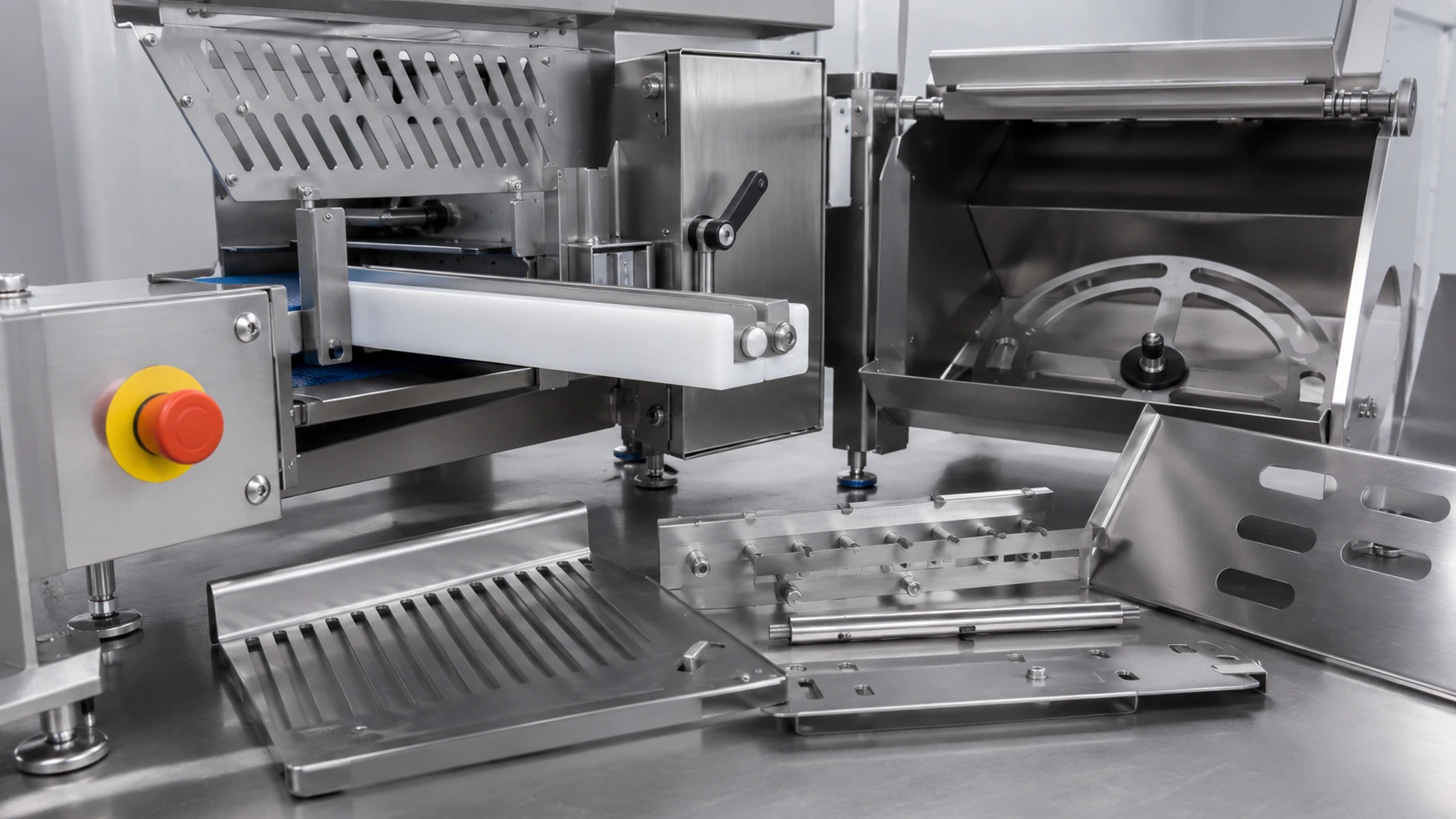
Review guards, emergency controls and removable food-contact parts
Safety and hygiene configurations vary by machine and destination market. The final quotation should identify the included protection, cleaning access and replacement components.
Commercial meat-processing equipment for different operations
The final machine combination should follow the product mix, hourly output, labor plan, hygiene zoning and available floor area.
Restaurants & Hotels
Slicers, grinders and compact preparation machines for daily menu production and portion control.
Butcher Shops & Supermarkets
Bone saws, slicers, grinders and stuffers for back-room preparation and retail-counter support.
Central Kitchens
Higher-capacity grinding, slicing, mixing and portioning equipment coordinated around batch output.
Food-Production Areas
Equipment combinations selected around raw-material condition, sanitation flow and production schedule.
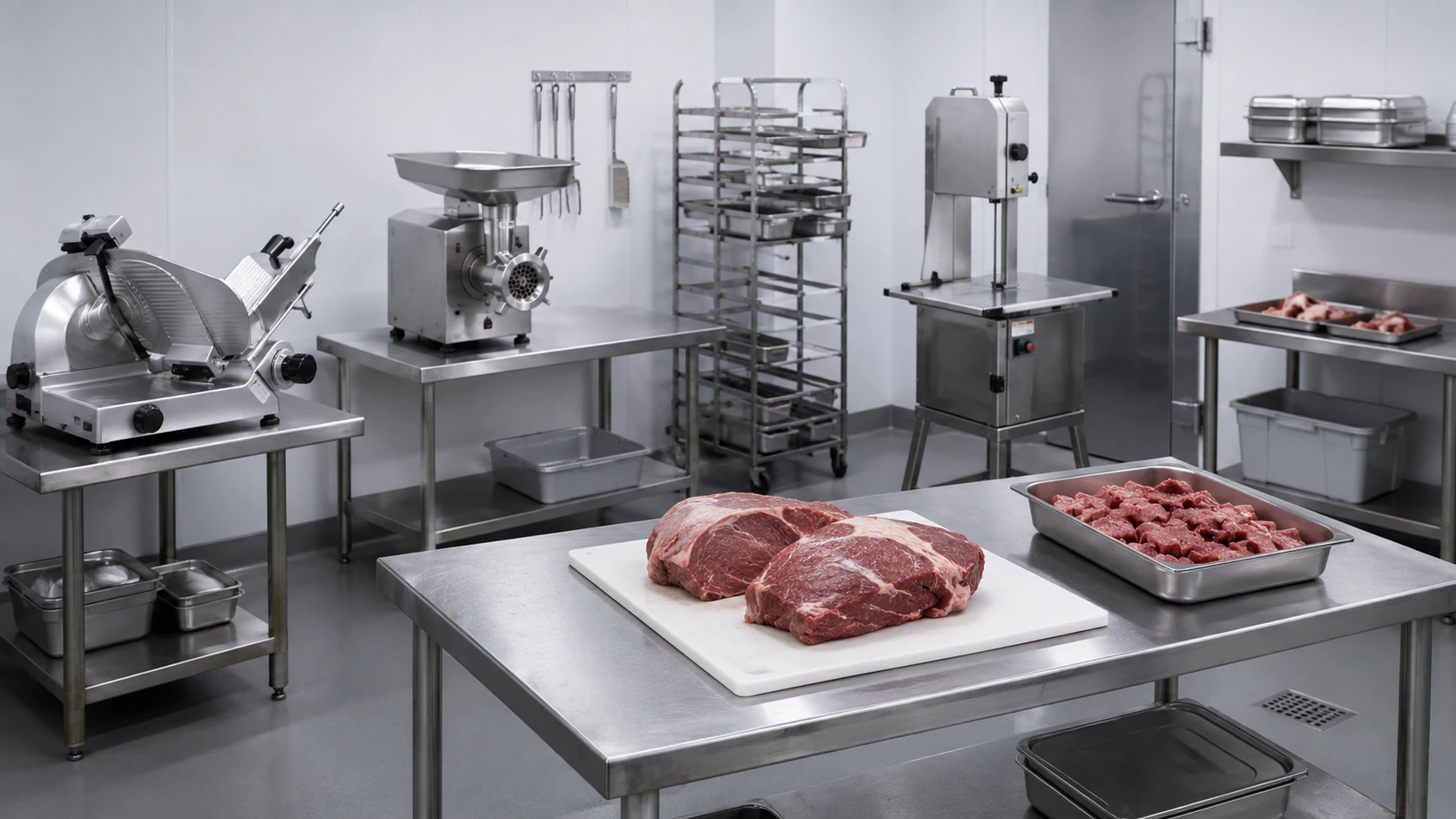
Coordinate meat-processing equipment from requirement to shipment
PRIME works as a sourcing and procurement coordinator, helping overseas buyers organize requirements, compare suitable structures and confirm the data needed for quotation, production and export delivery.
Requirement Review
Review meat condition, required process, output target, machine list, quantity and destination market.
Equipment Matching
Coordinate suitable slicer, grinder, saw, stuffer and supporting-equipment directions.
Technical Confirmation
Confirm output, dimensions, electrical data, safety structure, cleaning access and accessories.
Order Coordination
Coordinate quotation, supplier communication, production details, packing and export preparation.
Information needed for a meat-processing equipment quotation
Send a machine list, reference picture or production requirement
The exact model is not required at the first step. PRIME can help organize the equipment direction and identify the technical information needed for supplier comparison.
Frequently asked questions
What equipment is commonly used for commercial meat preparation?
Can one machine handle both fresh and frozen meat?
What information is required for a meat-grinder quotation?
What should be checked when selecting a commercial bone saw?
Can PRIME coordinate several meat-processing machines together?
What should be included in a Commercial Meat Processing Equipment inquiry?
Coordinate the complete food-preparation and kitchen equipment requirement
Start your commercial meat-processing equipment project
Send the meat condition, required process, output target, voltage, equipment list, quantity and destination market.