
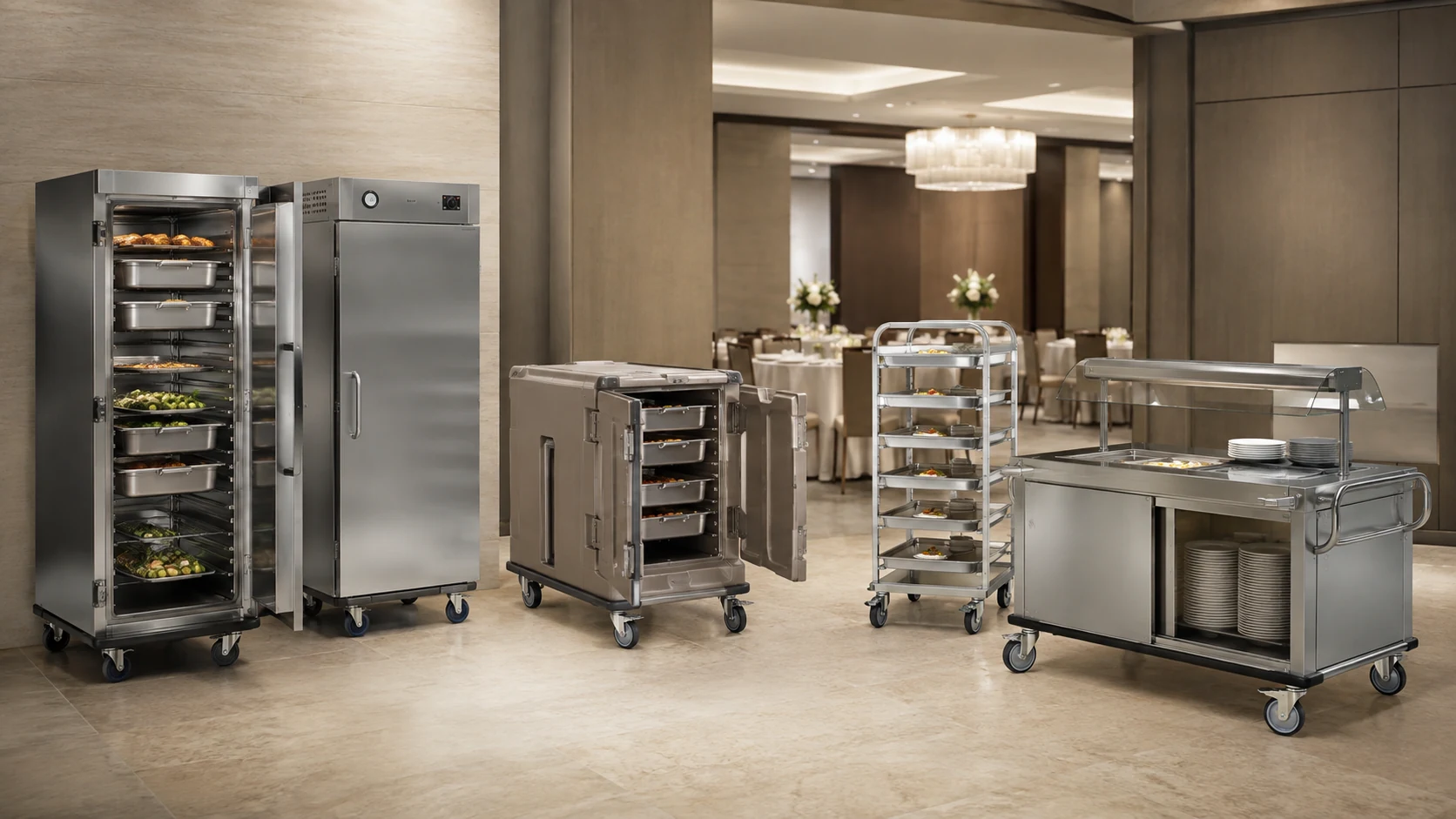
Commercial Mobile Catering Equipment
PRIME coordinates commercial mobile catering equipment for hotels, banquet halls, hospitals, schools, catering companies and institutional foodservice projects. Compare mobile heated holding cabinets, banquet transport carts, tray delivery trolleys and portable serving stations before quotation.
Commercial mobile catering equipment for flexible food transport and service
Commercial mobile catering equipment is designed for more than simple storage on wheels. Depending on the application, the equipment may need to maintain temperature, protect prepared meals, organize trays, move safely through corridors and support fast service at the destination.
The correct structure depends on food type, transport time, tray or GN-pan size, loading capacity, door sealing, castor diameter, floor conditions, braking requirements and whether active heating is needed. Buyers should also review local operating procedures and the FDA Food Code when planning food holding and delivery.
- Active heated holding and passive insulated transport
- GN-pan, banquet tray and portioned-meal configurations
- Single-door, double-door and open-rack structures
- Castors, brakes, handles, bumpers and shelf accessories
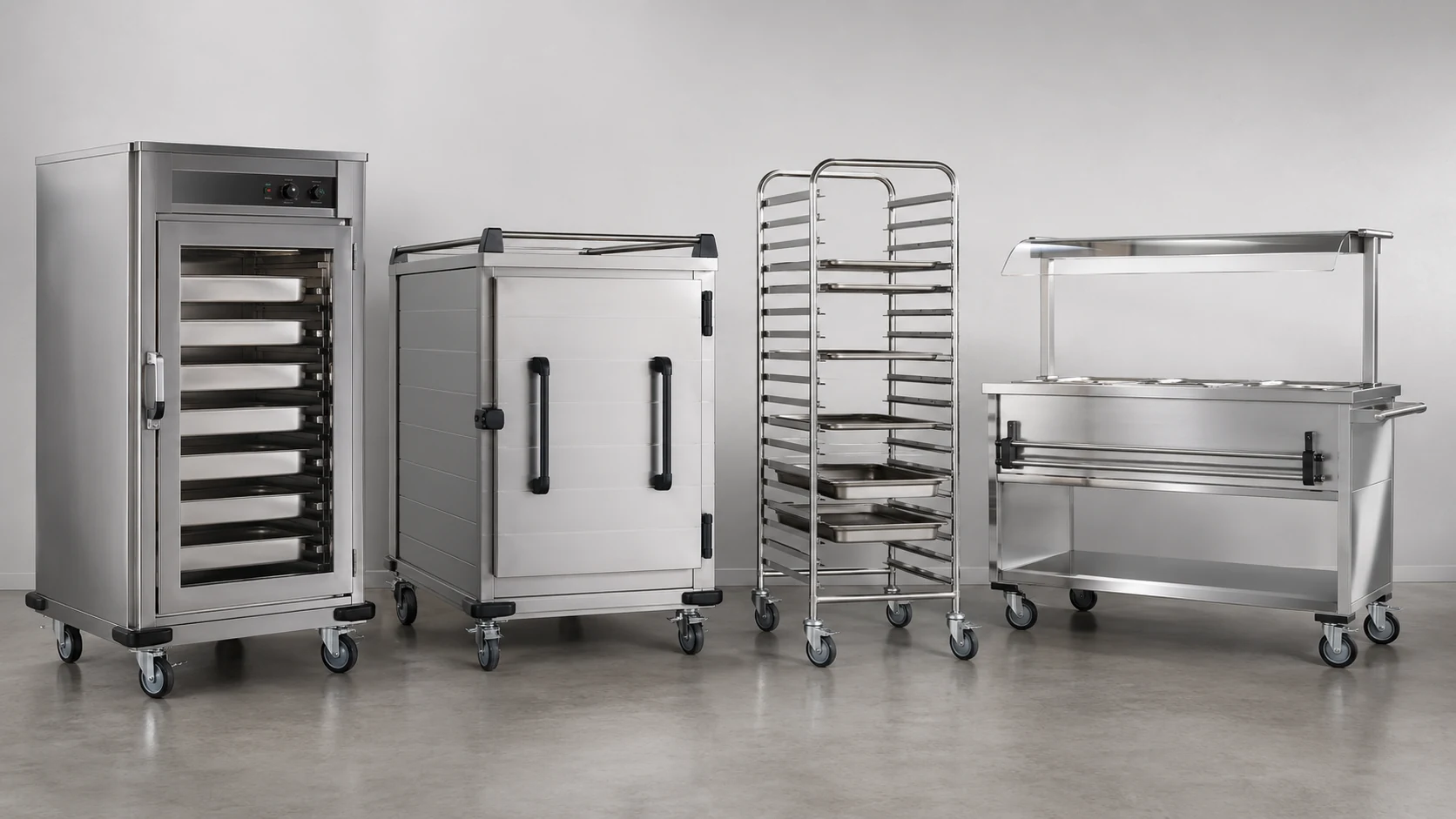
Commercial mobile catering equipment for different delivery workflows
These four core directions cover common heated holding, banquet transport, tray delivery and mobile service requirements.
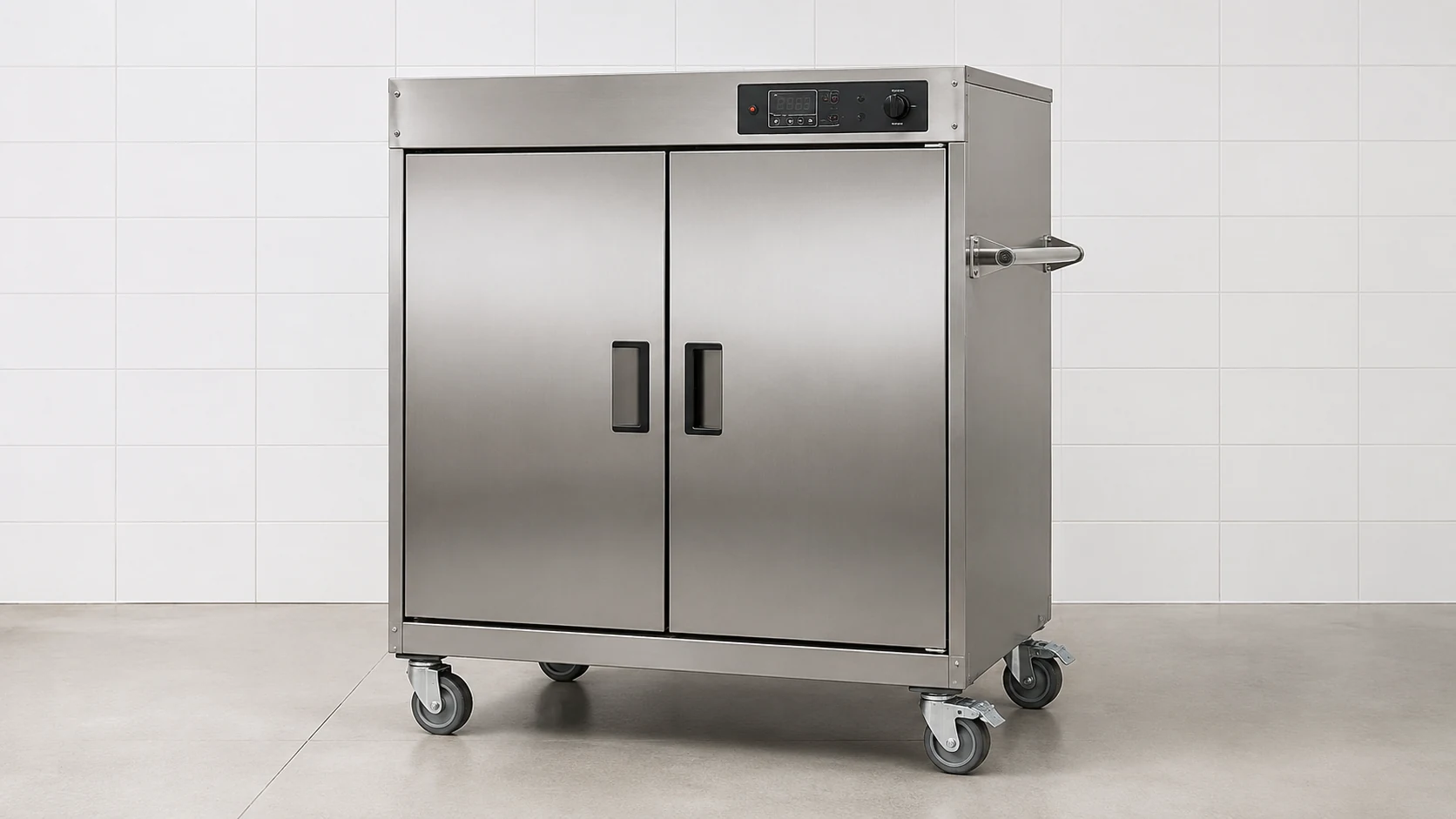
Mobile Heated Holding Cabinets
Electrically heated cabinets for staging and moving prepared food between kitchens, banquet areas and service points. Models may use adjustable shelf rails, digital or mechanical controls and one or two insulated doors.
Confirm temperature range, recovery performance, pan capacity, power supply and whether the unit will operate while stationary only.
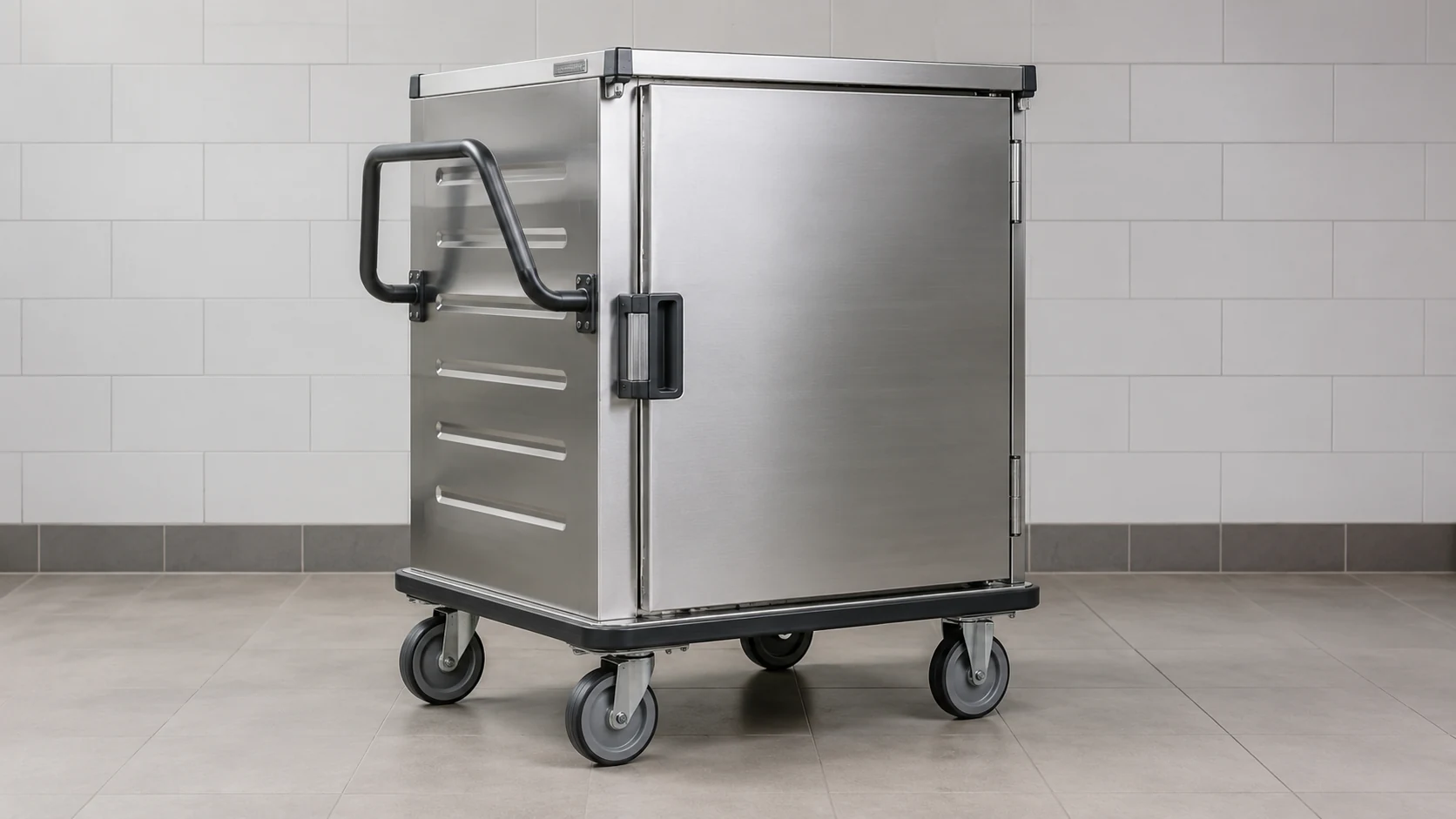
Banquet Food Transport Carts
Enclosed carts for moving prepared meals, covered pans and banquet trays from the production kitchen to dining rooms or event spaces. Insulation, door sealing and internal rail layout should match the expected journey.
Review cart width, handle placement, bumper protection, threshold clearance and castor selection before confirming a model.
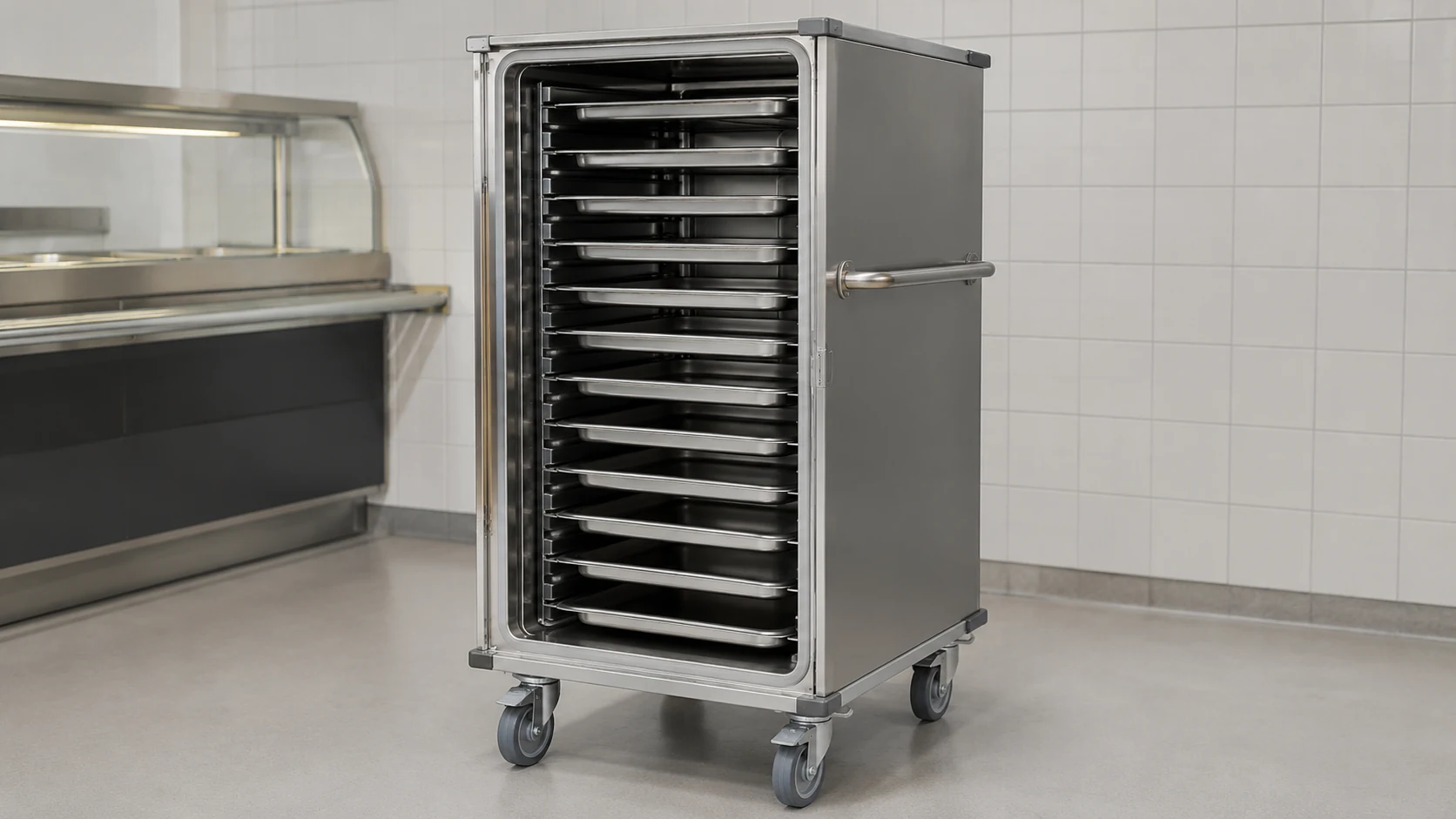
Tray Delivery Trolleys
Multi-level trolleys for portioned meal trays, banquet pans or institutional foodservice trays. Open-rack and enclosed formats can be reviewed according to hygiene, route length and service method.
Buyers should provide tray dimensions, rail spacing, loading quantity, overall height and any required cover or door structure.
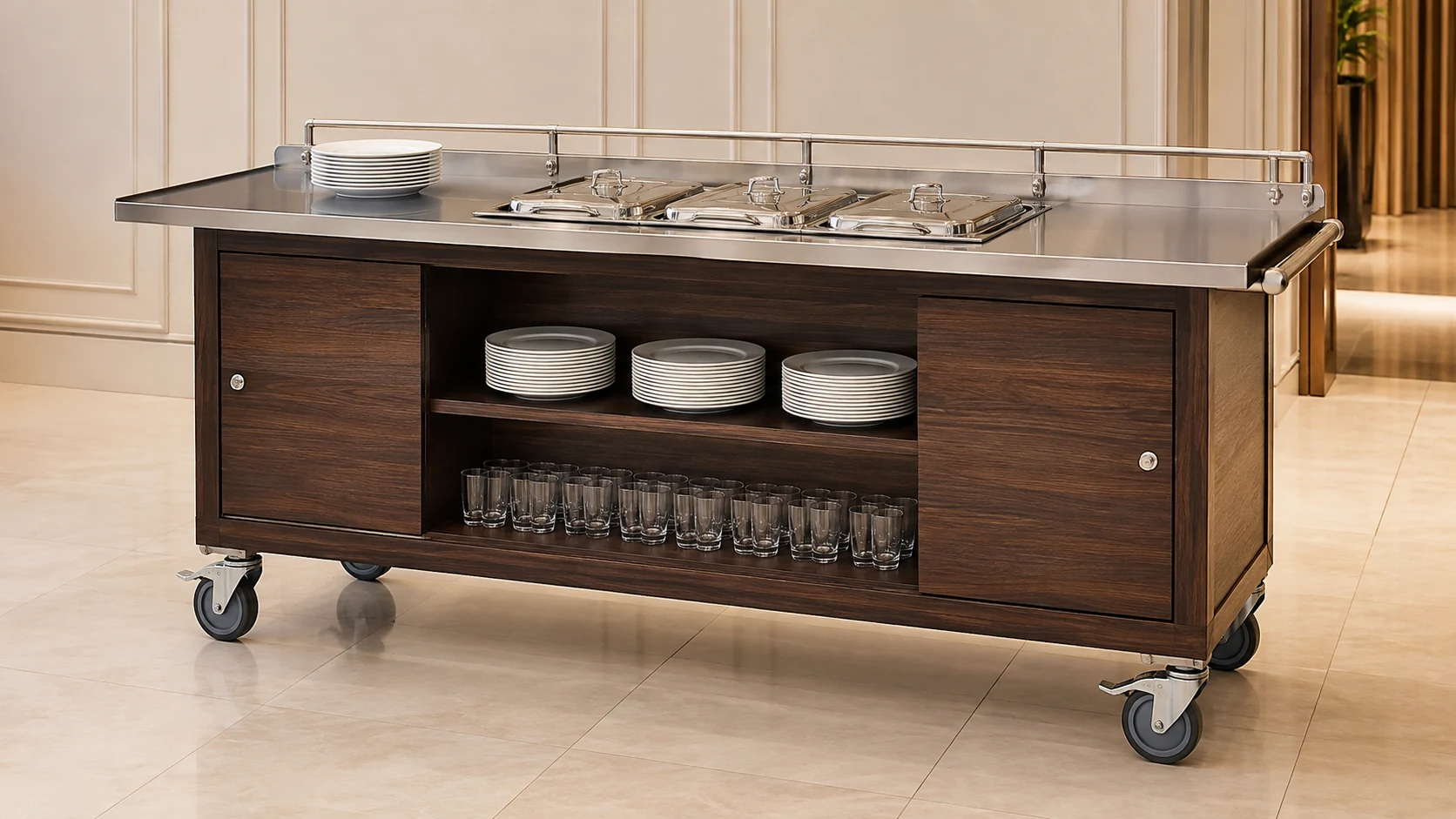
Mobile Serving Stations
Movable counters for beverages, tableware, condiments, plated food or temporary event service. Structures may include stainless steel tops, timber-look panels, cupboards, open shelves and serving rails.
Confirm intended use, top configuration, storage arrangement, finish, handle position and the required castor and brake layout.
How to select commercial mobile catering equipment
A workable cart should match the food, transport route, capacity, temperature requirement and floor conditions rather than being chosen by overall dimensions alone.
Food or Tray Type
Specify GN pans, banquet trays, portioned meal trays, plates or other items that will be carried.
Holding Method
Confirm active heating, passive insulation, ambient transport or a combination of holding functions.
Required Capacity
Provide tray quantity, GN-pan count, rail spacing, load weight and expected service volume.
Transport Route
Review distance, ramps, lifts, doorways, floor joints and thresholds along the actual movement path.
Castors & Braking
Confirm wheel diameter, fixed or swivel arrangement, brake quantity, bumper protection and noise requirements.
Electrical Standard
Heated units require confirmation of voltage, frequency, phase, plug type, cable length and available power.
Commercial mobile catering equipment for hotels, healthcare and events
Capacity and structure should reflect the service route, meal volume, temperature requirement and operating environment.
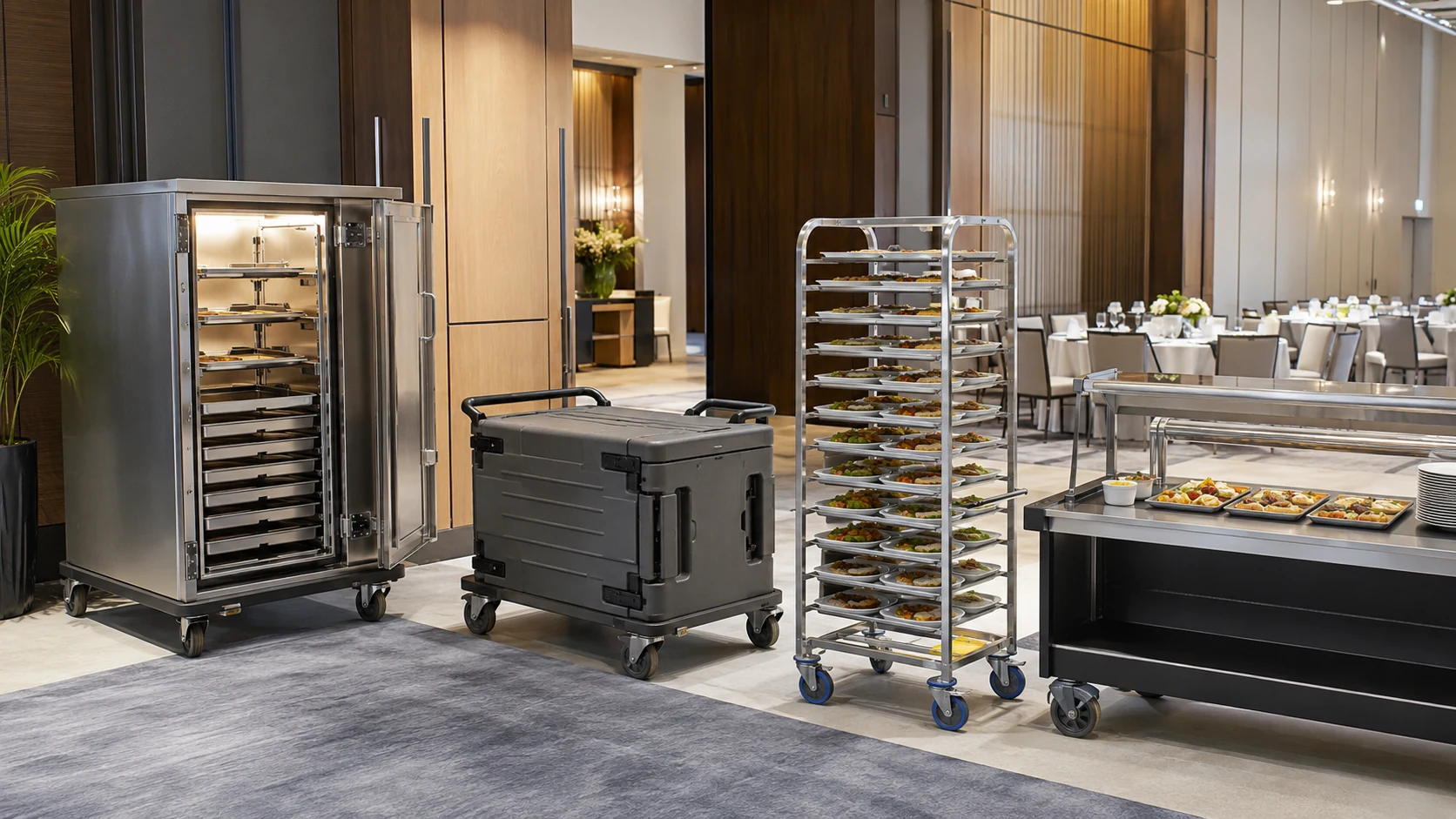
Hotels & Banquet Halls
Meal staging, banquet-pan transport and service-room delivery.
Hospitals & Healthcare
Organized meal-tray movement across wards and dining areas.
Schools & Canteens
High-volume tray and prepared-food distribution between kitchens and halls.
Event Catering
Portable holding and temporary serving equipment for off-site functions.
Central Kitchens
Staging, route preparation and dispatch of prepared food and trays.
Convention Venues
Flexible movement between production areas, meeting rooms and service points.
Quotation details for commercial mobile catering equipment
Accurate matching requires dimensions, loading data, transport conditions and utility information rather than only a reference picture.
Load Format
Tray size, GN-pan dimensions, rail spacing and total loading quantity.
Temperature
Active heated holding, insulated transport or ambient meal movement.
Mobility
Castor size, brake arrangement, push handles, bumpers and floor conditions.
Utilities
Voltage, frequency, plug type, cable arrangement and available power.
Send a product photo, tray drawing or transport route
PRIME can review photographs, equipment schedules, floor plans, existing quotations or complete foodservice lists and organize missing technical details before supplier matching.
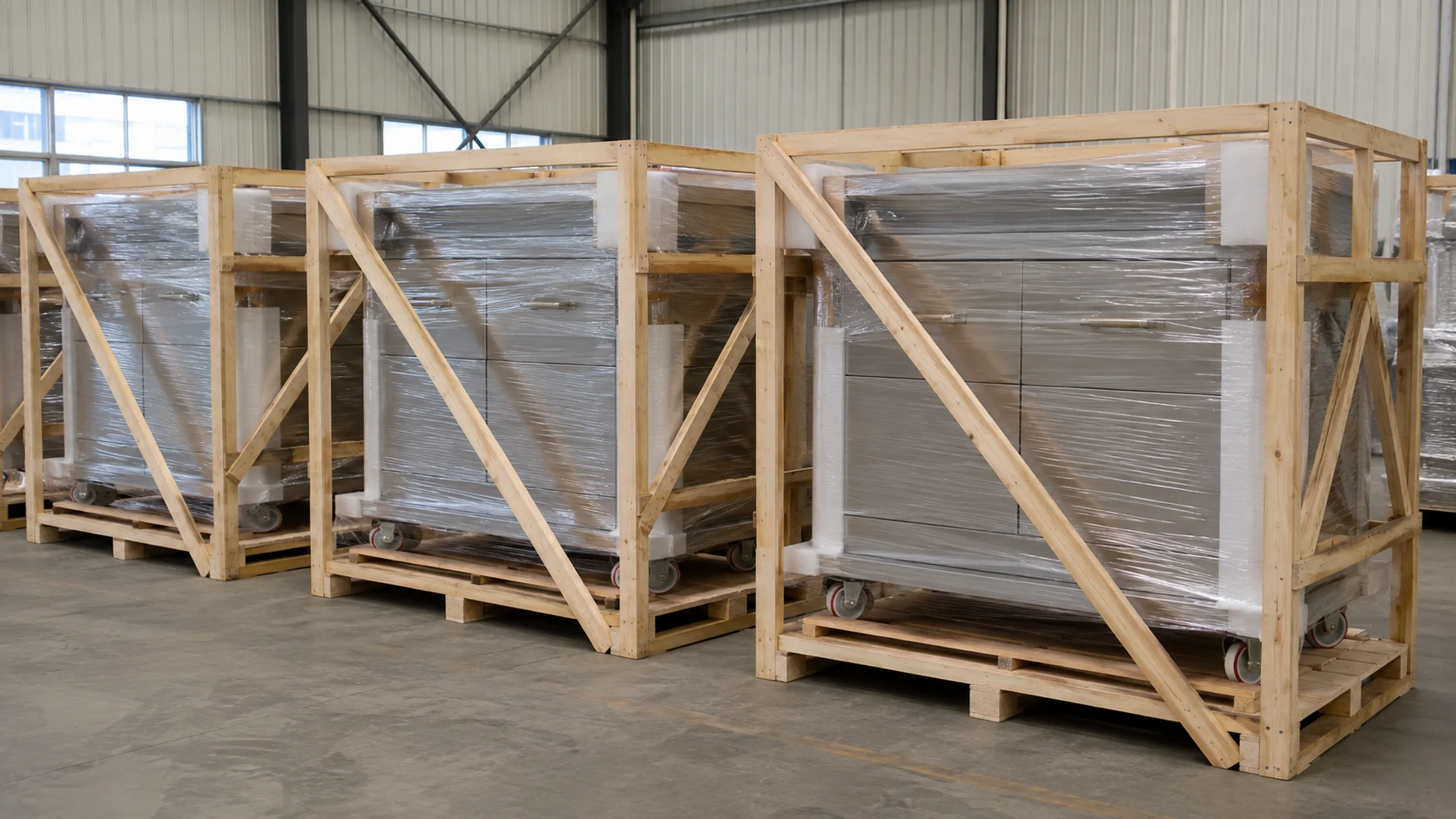
Commercial mobile catering equipment sourcing and export coordination
PRIME helps overseas buyers organize specifications, compare suitable supply directions and confirm mobility, holding, packing and delivery details before shipment.
Requirement Review
Organize food type, tray size, capacity, holding method and transport route.
Supplier Matching
Match heated cabinets, banquet carts, tray trolleys and mobile service stations.
Technical Confirmation
Review dimensions, rails, doors, seals, handles, castors, brakes and power data.
Packing Coordination
Confirm protective film, foam corners, wheel restraint, pallets and reinforced wooden frames.
Commercial mobile catering equipment purchasing FAQ
These questions cover the main issues buyers should clarify before comparing carts, cabinets and tray delivery systems.
What is the difference between a heated cart and an insulated transport cart?
What tray information is required for a delivery trolley quotation?
How long can a banquet transport cart hold food?
How should castors and brakes be selected?
Can mobile catering carts be customized?
How is large mobile catering equipment packed for export?
Start your commercial mobile catering equipment project
Send the equipment type, tray dimensions, required capacity, holding method, quantity, voltage and destination country. PRIME will help organize the requirement and coordinate suitable supply options.