Commercial Kitchen Hygiene Equipment for Foodservice Sanitation
Source commercial kitchen hygiene equipment for hand washing, knife and utensil sanitation, entrance cleaning, washdown, cleaning-tool management and waste handling across professional foodservice and food-production environments.
Build the hygiene system around people, tools, entry control and cleaning workflow
Commercial kitchen hygiene equipment, also described as foodservice sanitation equipment, covers personnel hygiene, tool sanitation, entrance cleaning, washdown, cleaning-tool management and waste handling. Selection should follow contamination risk, operating zone, user volume, cleaning method, utilities, drainage, material requirements and destination-market hygiene rules rather than applying one universal sanitation claim to every model.
Commercial kitchen hygiene equipment for different sanitation controls
A complete hygiene plan may combine several equipment types. Selection should follow the actual process and the degree of control required at each point.
Coordinate hand washing with the correct control, water and installation method
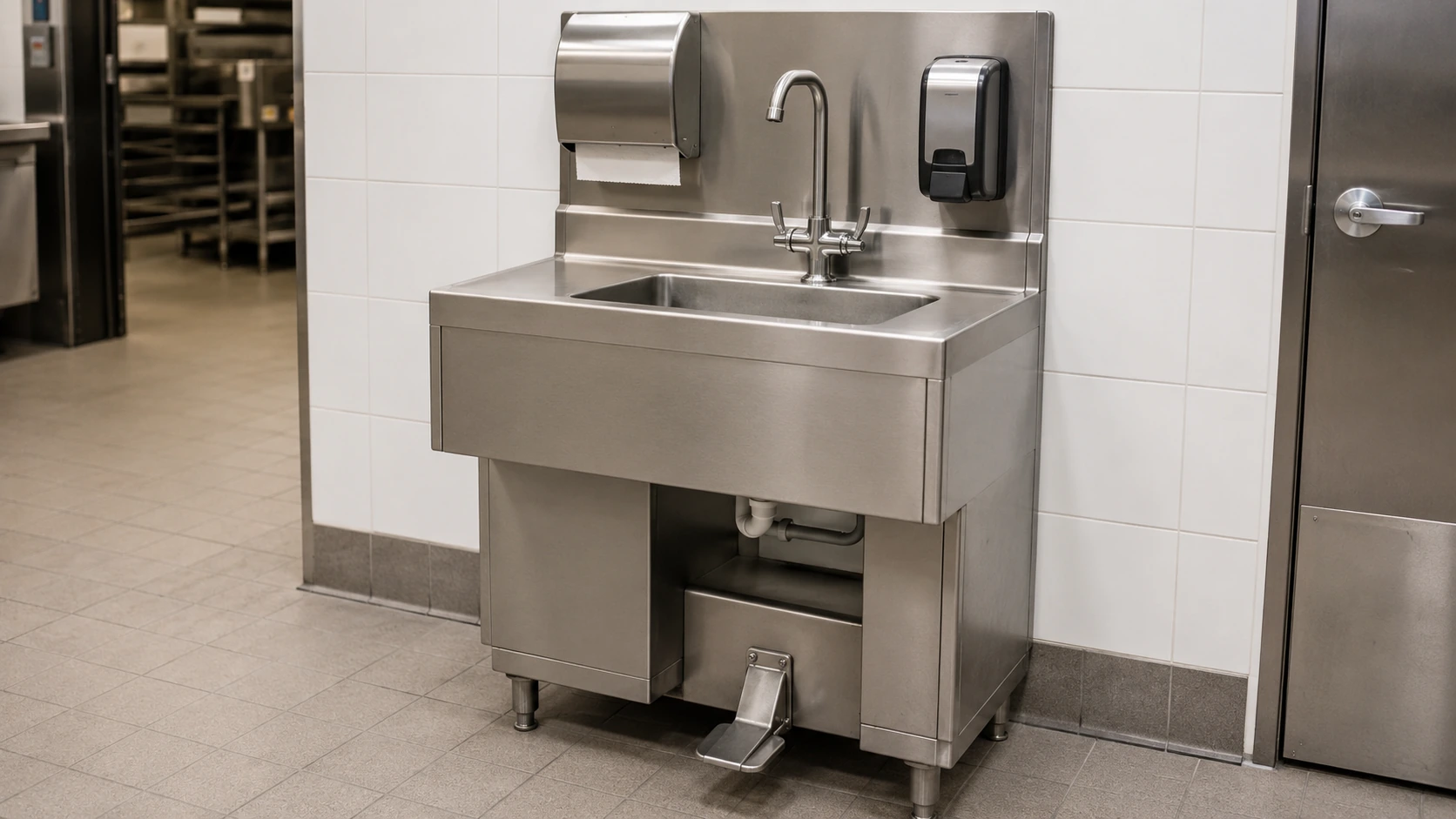
Hand-wash equipment may be wall-mounted, floor-standing, cabinet-style or integrated into a hygiene entrance. The control can be manual, knee-operated, foot-operated or sensor-based according to the application and project requirement. Where a dedicated wash point is required, coordinate the hygiene station with commercial stainless steel sinks, bowl depth, backsplash and drainage before fabrication.
Confirm the sanitizing method, capacity and operating requirement
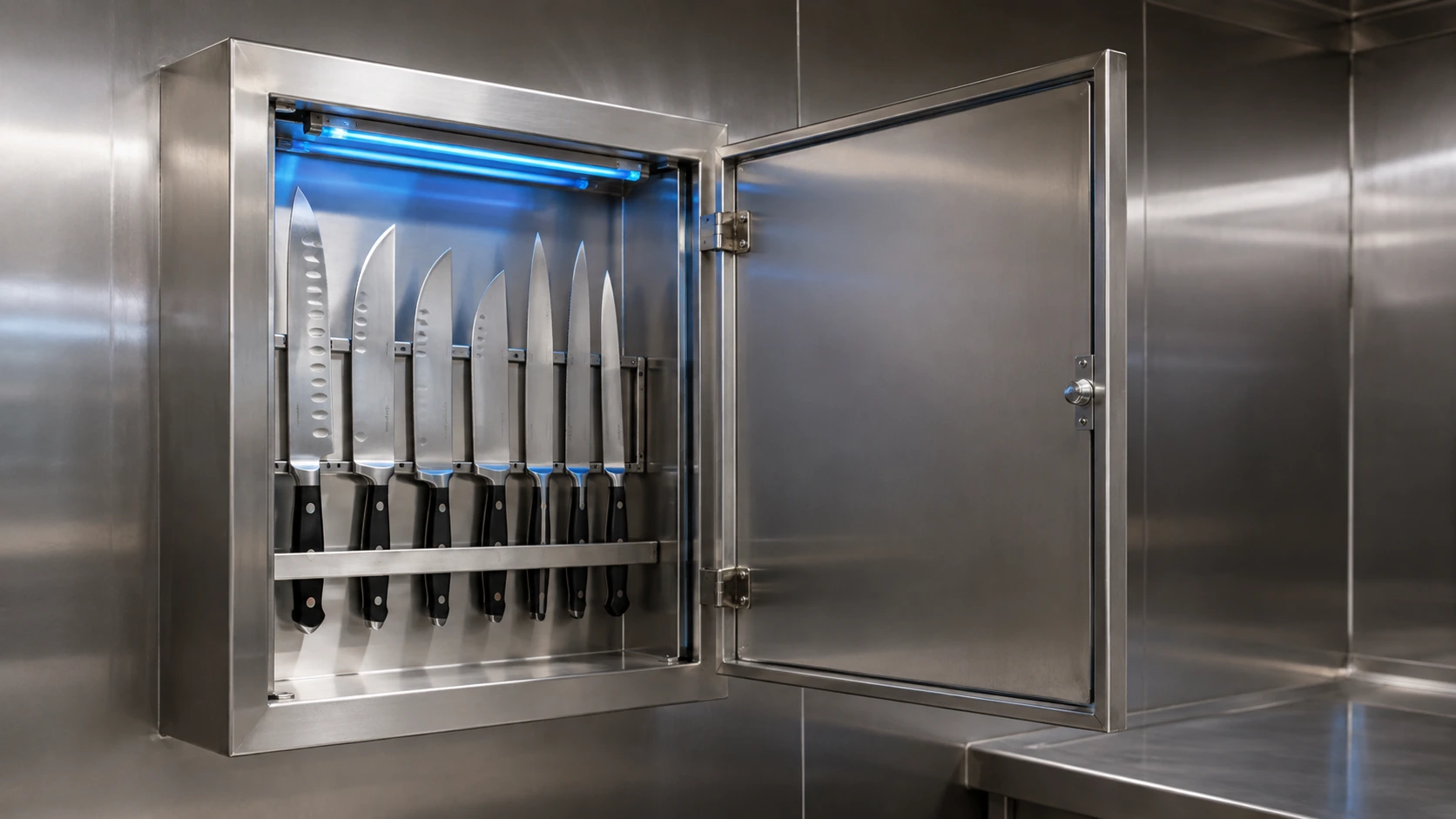
Knife and utensil sanitation equipment may use hot water, heated cabinets or another specified process. The quotation should clarify tool quantity, blade length, holder design, target temperature, holding time, electrical supply, drainage and the hygiene requirement applicable to the destination market.
Control footwear cleaning before access to sensitive production zones
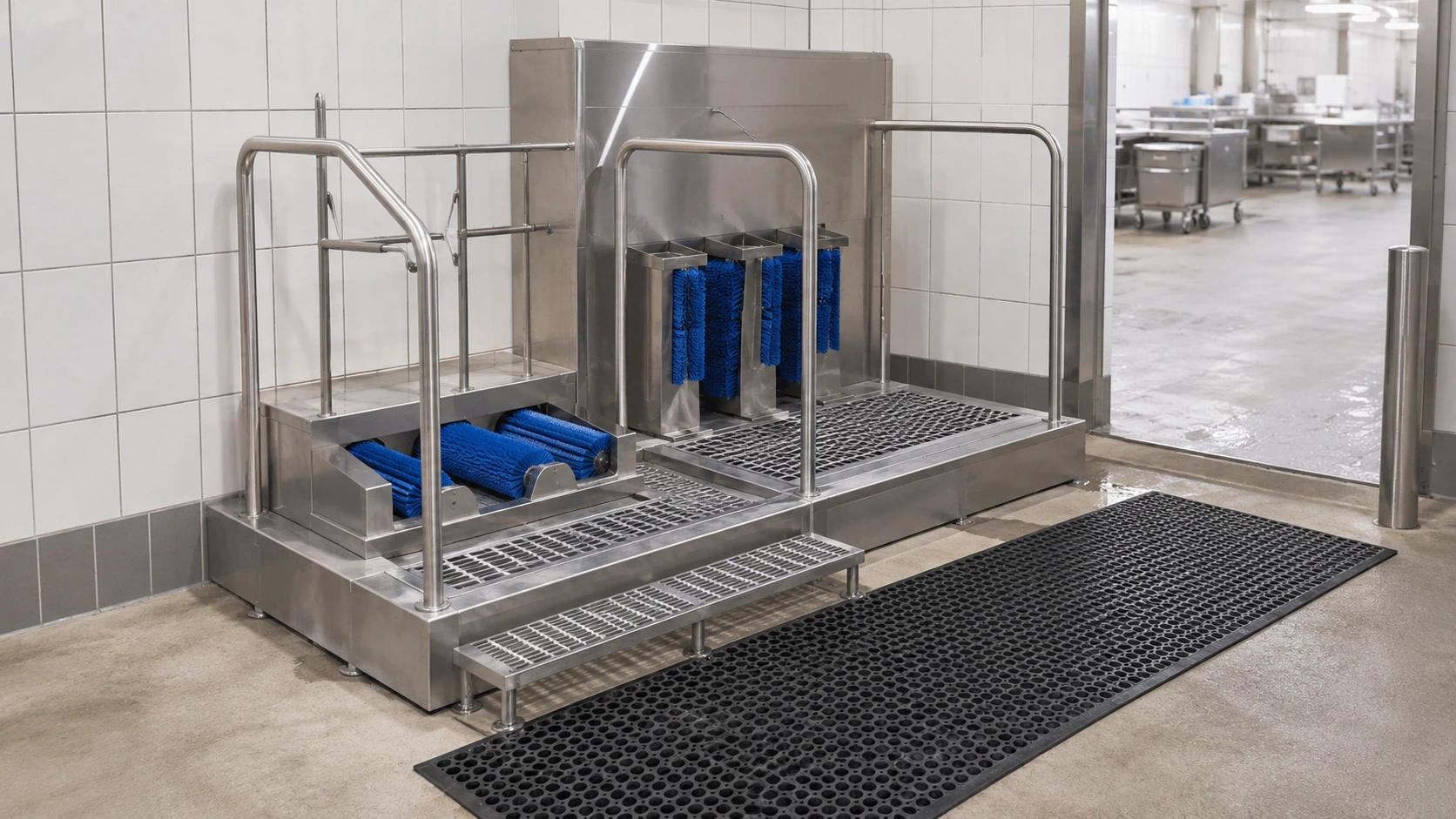
Boot and sole cleaning stations are commonly positioned at production-area entrances. Confirm whether the system should clean soles only, soles and boot sides, or combine footwear cleaning with hand washing or access control.
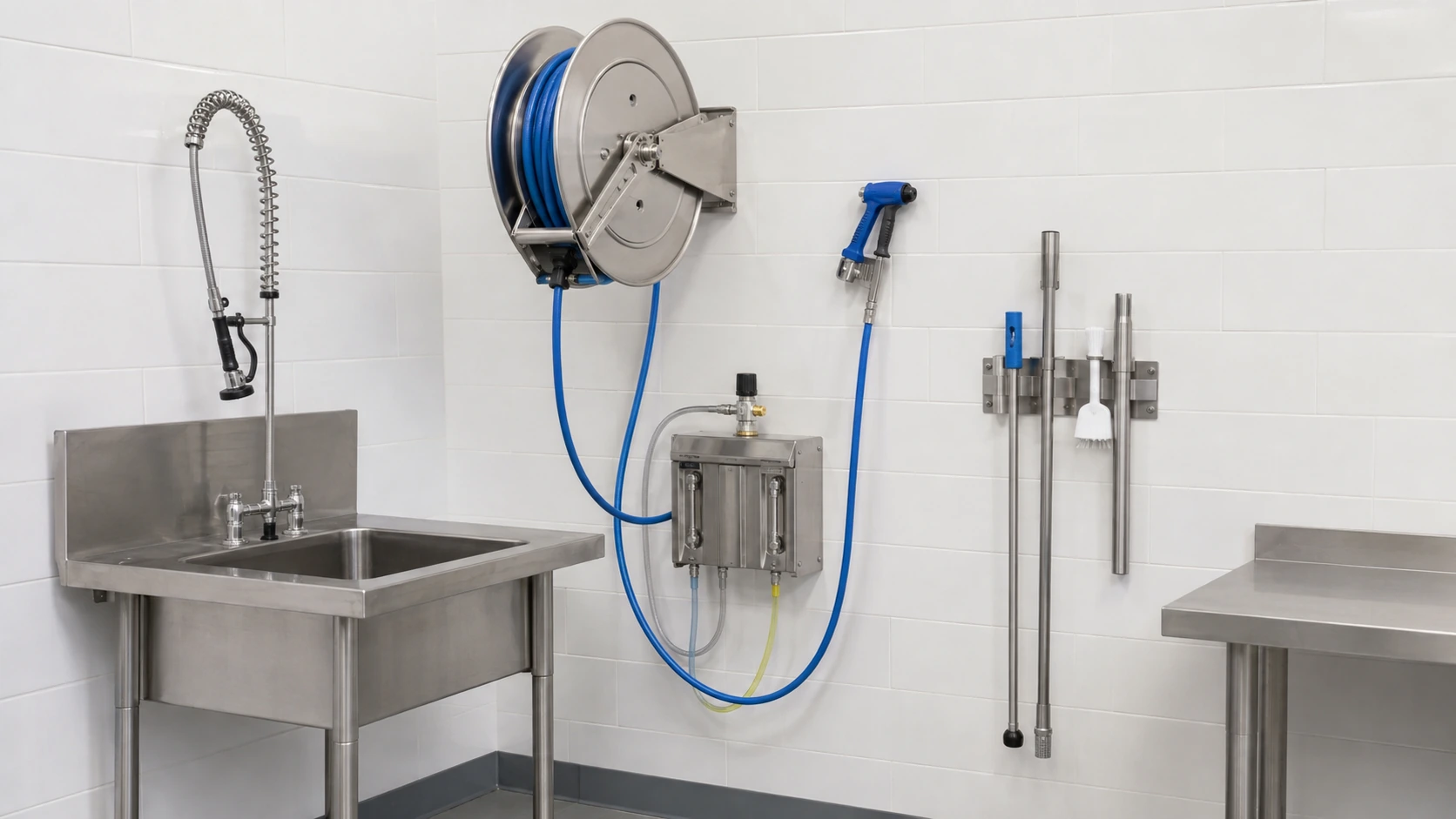
Match hose reach, pressure, temperature and chemical control to the cleaning task
Washdown stations may combine hose reels, spray guns, foam applicators, mixing units, sinks and tool holders. The system should be selected around the cleaning area, required reach, water pressure, water temperature, chemical compatibility and drainage. In dishroom zones, review the station together with commercial pre-rinse units and dish tables & sorting equipment so cleaning, rack movement and waste handling do not conflict.
Keep cleaning tools, chemicals and textiles organized by zone
Commercial cleaning stations can combine utility sinks, mobile trolleys, wall-mounted tool racks, chemical storage, cloth and mop storage, open shelving and closed cabinets. The arrangement should support separation between clean, used and chemical-handling items.
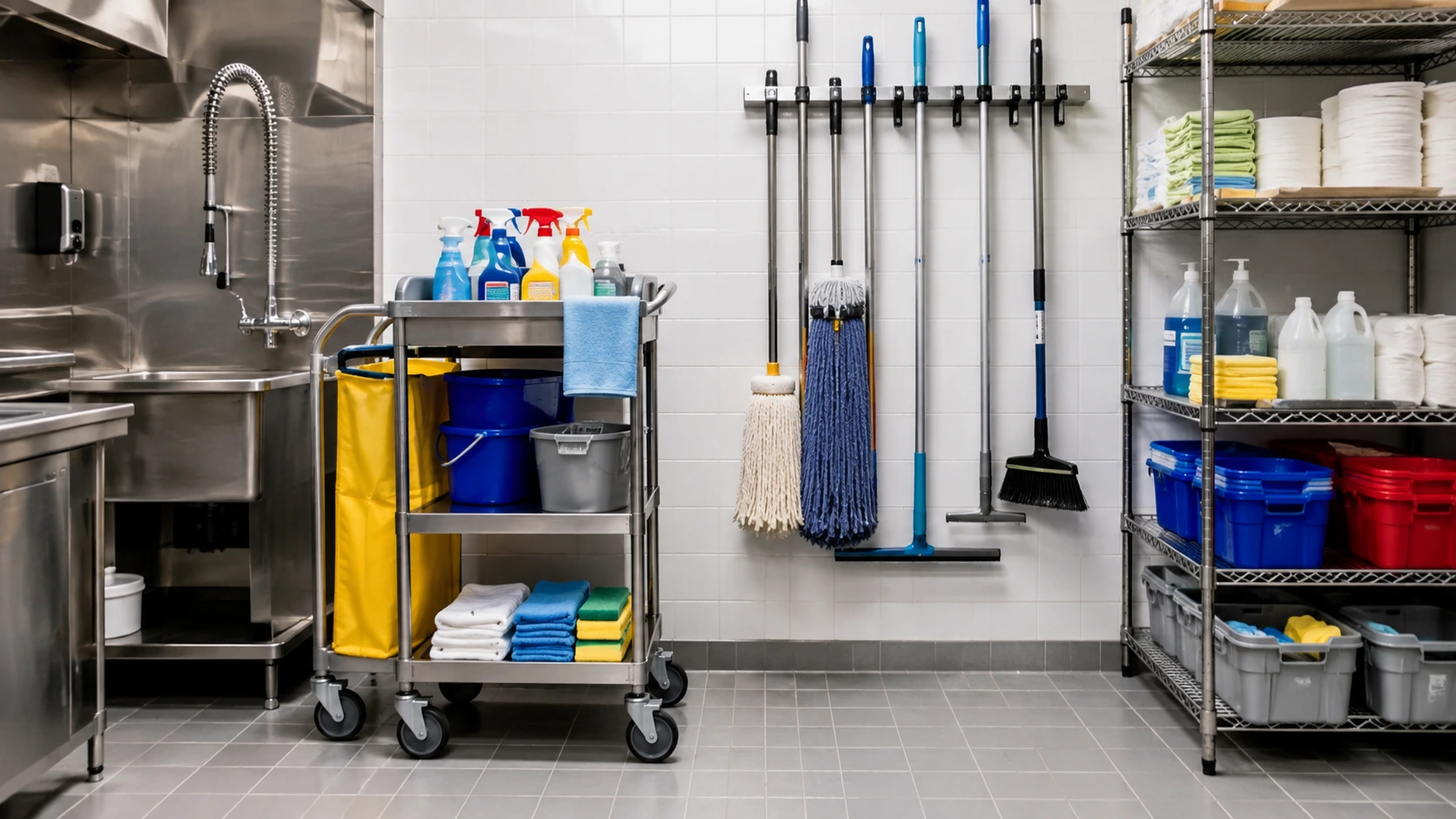
Separate storage from active food preparation
Cleaning chemicals and used tools should be positioned according to the facility hygiene plan, with clear separation from food, clean utensils and production-contact surfaces.
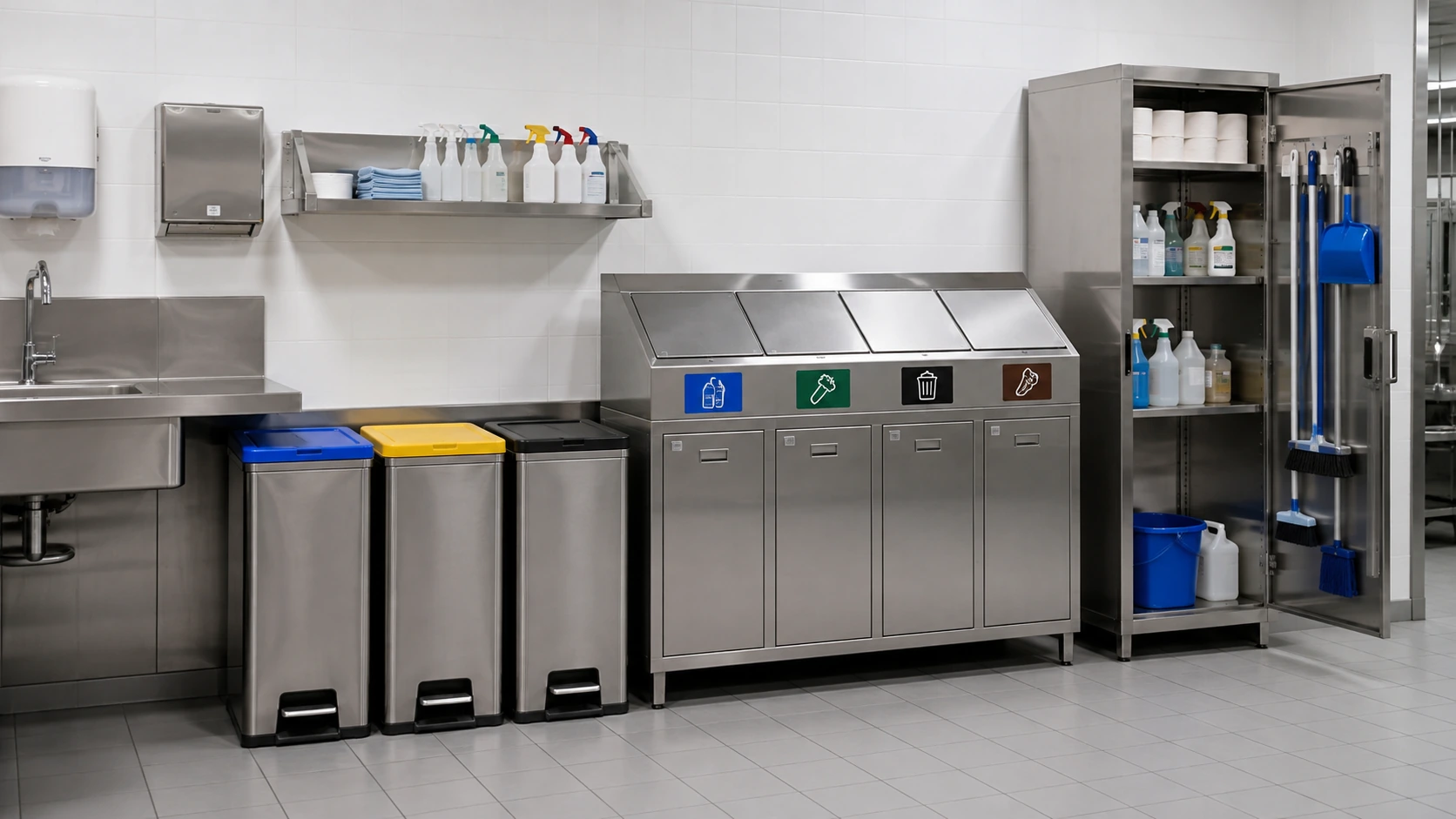
Coordinate waste separation, hands-free access and cleaning storage
Waste-handling equipment may include pedal bins, stainless steel sorting cabinets, removable containers, utility storage and washing points. Confirm waste streams, bin volume, lid type, internal container removal and the available cleaning space.
Build controls into entry, production, cleaning and waste-handling stages
The equipment list should reflect where hygiene controls are needed rather than placing all sanitation equipment in one room.
Hygiene equipment for foodservice and food-production environments
The required hygiene intensity, utilities, equipment material and workflow vary significantly across commercial kitchens and processing facilities.
Commercial kitchen hygiene equipment selection information
Send the room layout, operating process, expected users, utility schedule and destination compliance requirements whenever available.
| Selection Item | Information to Confirm |
|---|---|
| Equipment Type | Hand-wash station, knife sanitizer, boot cleaner, washdown station, cleaning storage or waste equipment. |
| Installation Area | Kitchen, entrance, food-processing room, dishroom, cleaning room or waste-handling area. |
| User Capacity | Single user, multiple users or continuous personnel passage. |
| Control Method | Manual handle, knee control, foot pedal, sensor or access-controlled operation. |
| Water Supply | Cold, hot or mixed water, pressure, temperature and connection size. |
| Drainage | Drain position, pipe size, trap, floor drain and required floor slope. |
| Sanitizing Method | Hot water, heated cabinet or another specified process according to the application. |
| Temperature & Time | Required target temperature, holding time, display and control arrangement. |
| Tool Capacity | Number, type and maximum dimensions of knives, utensils or removable tools. |
| Boot Cleaning Scope | Sole only, boot sides, hand-wash integration or access-control requirement. |
| Washdown Requirement | Hose length, pressure, temperature, spray gun, foam and chemical dosing needs. |
| Electrical Supply | Voltage, phase, frequency, installed power and plug or hardwire requirement. |
| Stainless Steel | SUS 304 or another specified grade, thickness, finish and component scope. |
| Certification | Destination-market electrical, plumbing, water-contact, hygiene or safety requirement. |
| Quantity & Destination | Order quantity, destination country, shipping method and packing requirement. |
Coordinate hygiene tasks, utilities, compliance and export delivery
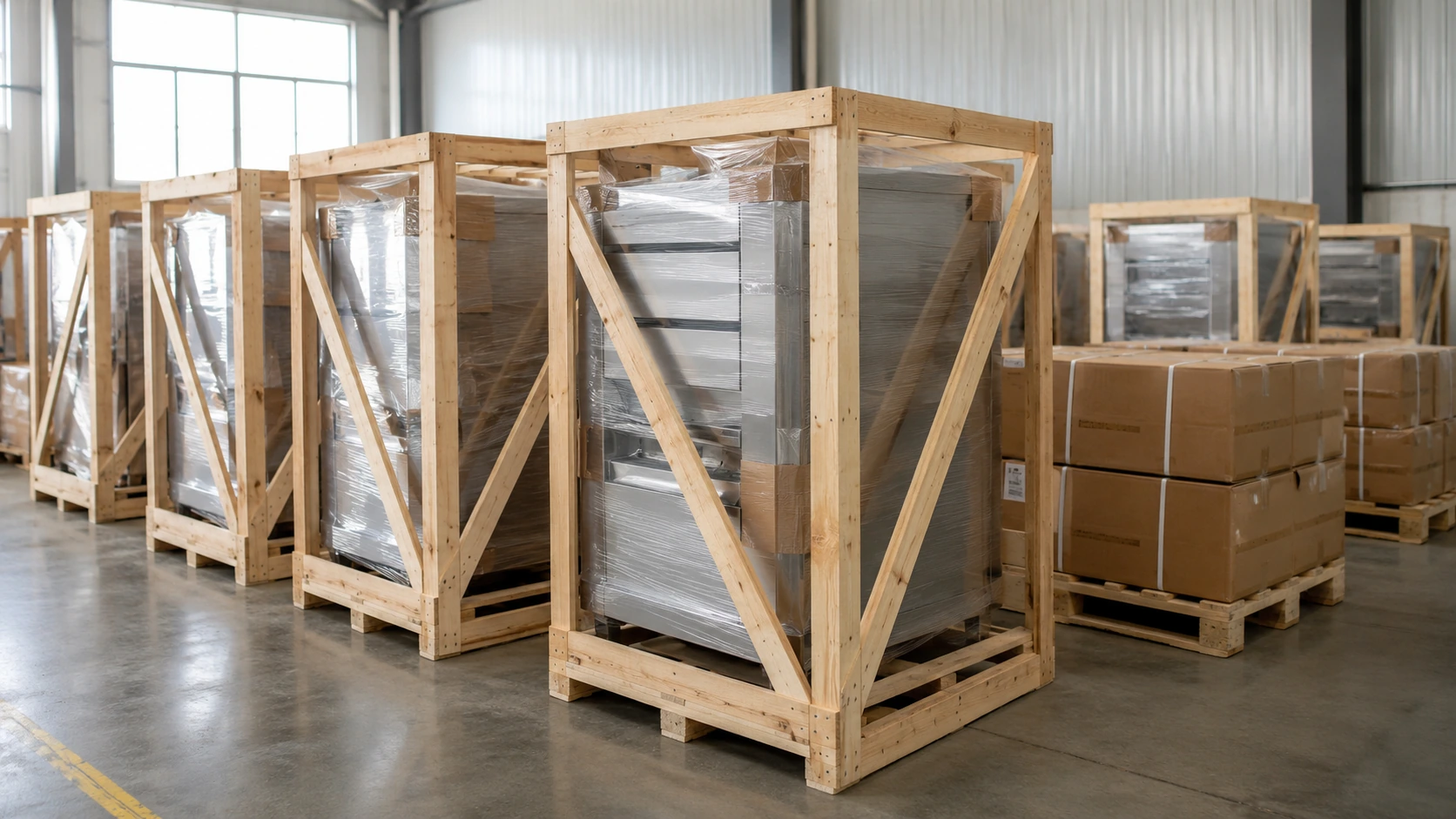
PRIME helps overseas buyers organize commercial kitchen hygiene requirements before supplier comparison and coordinate equipment type, material, utility conditions, accessories, spare parts, packaging and mixed loading.
Connect hygiene equipment with the surrounding washing and stainless steel system
Use the related pages below to coordinate dishwashing preparation, heavy-duty washing, stainless steel sinks, handling equipment and project procurement.
Commercial kitchen hygiene equipment questions
Final configuration depends on the hygiene task, process zone, utilities, capacity, material and destination-market requirements.
What equipment is included in commercial kitchen hygiene equipment?
Should a hand-wash station use foot, knee or sensor control?
How do I select a knife sanitizing cabinet?
What is the difference between sole cleaning and full boot cleaning?
Can a washdown station include foam or chemical dosing?
Can hygiene equipment be supplied in SUS 304 stainless steel?
Can PRIME supply several hygiene equipment types in one shipment?
What information is required before quotation?
Send the hygiene task, installation area, utilities and capacity requirement
Include equipment type, users or tools, control method, water, drainage, voltage, temperature, stainless steel grade, certification, quantity and destination country.